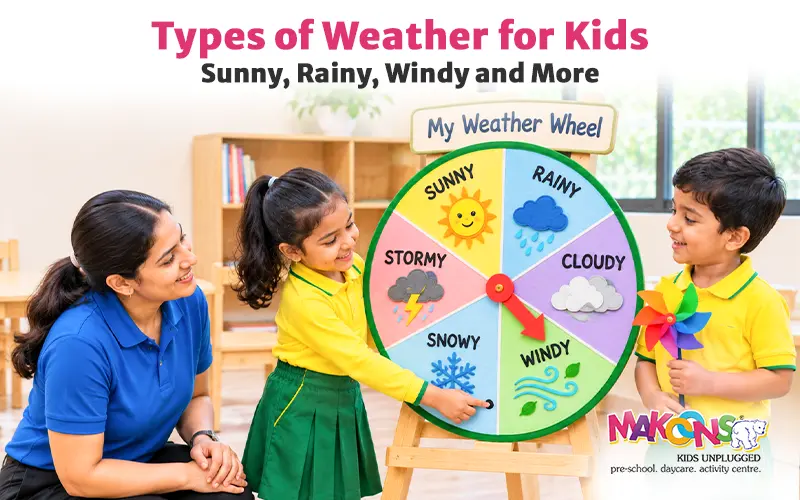
Has there ever been a time when you looked out of your window and saw bright sun or dark clouds and/or rain falling? All of these are characteristics of various weather patterns. Sometimes the day is a hot one and sunny, sometimes it may be windy, cold or rainy. Weather is everywhere we look and makes each day of our lives a little different and interesting.
Weather is the state of the air and sky in a specific place and time. It can alter over the course of a day or day to day. Weather for kids explanation about the types of weather makes children aware about the nature, seasons and world around them.
Let's Learn About Some Typical Weather Types:
1. Sunny Weather
When the weather is sunny, that's when the sun is bright in the sky and there are very few clouds. It's a generally warm or hot day for outdoor activities.
Sunny weather happens
Children can enjoy playing in the park, riding bicycles, flying kites or having a picnic with their families. Plants need sunlight to grow and make food, too.
Fun fact: Light and warmth come from the sun but do not look at the sun as it can damage our eyes. Apply sunscreen and wear sunscreen, hats or sunglasses as needed to protect the skin.
2. Rainy Weather
The process of water droplets in the clouds that fall to the ground is known as rainy weather. When water is in the air (in a vapor state) and condenses and rains down as small droplets of water.
Rainwater is used for irrigation, recharges rivers and lakes and provides fresh water for people and wildlife. Children like listening to the rain, watching puddles and playing with colourful umbrellas.
Fascinating fact: After such a rain sometimes one can see a beautiful rainbow in the sky. It develops when the sun goes through the small water droplets in the air.
3. Windy Weather
Windy weather is when the air is moving from one place to another. The wind can be gentle and pleasant at times, or very strong at other times.
It is a mild breeze that is refreshing, especially on warm days. It can cause the leaves to shake on trees, move clouds in the sky and help children to fly their kites.
But under extreme winds, tree branches may break and buildings may be damaged. Children should remain inside and out of windows during a storm.
Did you know? Wind can be used for sailboat propulsion and to generate electricity from wind turbines.
4. Cloudy Weather
Cloudy weather means that there are clouds in the sky. The clouds can sometimes appear white and fluffy, like cotton balls. They are dark and grey the rest of the time.
Clouds are formed by very small droplets of water and ice suspended in the air. They can reflect some sunlight and can chill the weather.
Cloudy skies may also bring rain, depending on the type of clouds and weather conditions.
Clouds are not all the same shape or size, here's a fun fact! Children can imagine animals, objects and face shapes in them.
5. Stormy Weather
Strong winds, heavy rain, thunder and lightning are typically associated with stormy weather. Some storms can become powerful and cause damage to trees, houses and roads.
Lightning is what causes the thunder that we hear; when the lightning heats up the air around it rapidly. Lightning is a flash of light in the air.
During a thunderstorm, children should stay inside a safe building, avoid standing under trees and stay away from open areas.
Did you know, lightning is very hot and moves quickly in the sky in a split second?
6. Snowy weather
It is characterized as weather that is cold enough for the water droplets in the clouds to freeze, or become snow crystals. The crystals stick together and fall from the clouds as snowflakes.
The ground is blanketed in snow, the trees and buildings are covered in white, and the sky is clear and blue. Children living in snowy places enjoy making snowmen, building snow forts and having snowball fights.
Snow also acts as a source of water when it melts down.
Did you know: Each snowflake is a unique pattern and most snowflakes are six-sided!
7. Foggy Weather
Foggy weather is weather with extremely fine water droplets close to the ground that make things hard to see. May occur on cool damp mornings, or in humid air.
The fog may cause roads, buildings and trees to be hazy. Extra care should be taken by drivers since visibility is reduced.
A tidbit of information: Fog is just a cloud low to the ground!
Also Read: Solar System Names for Kids: Planets Made Simple
Why is It That Learning About Weather is Important?
Knowing about weather enables children to make plans for their daily activities. It also helps them to learn about safety and what kind of clothing to wear.
In the summer we wear cotton clothes, in the rainy season, we have an umbrella and in the cold season, we wear warm clothes like jackets etc. Weather also affects farmers, plants, animals and the availability of water.
Weather for Kids' information inspires curiosity and fosters a respect for nature.
Activities For Kids To Enjoy While The Weather is Blowing
Children can enjoy simple and fun activities to find out about the various types of weather. Below are some of the kids' activities of weather interest:
Draw a sun, cloud, raindrop or snowflake on a weekly weather chart to indicate the weather of the day.
Cotton Cloud Craft: Make fluffy cloud pictures with cotton balls, paper and glue.
Use shaving foam to fill a clear glass, and then pour blue colored water over the foam to watch the rain develop.
Wind Test: Go outside with a light ribbon and do a test to see how it moves when the wind blows.
Weather Diary: Have children record the sky in the morning, either by writing or drawing, what they see.
These activities are engaging and help children to relate the classroom learning to everyday life experiences.
Conclusion
Our world is interesting and beautiful in the context of weather. Each day of sunshine, rain, wind, snow, teaches us something different.
Learning about different types of weather helps children to understand nature and develop respect towards nature. So the next time you see the sky, observe the sky and you might see something different.