
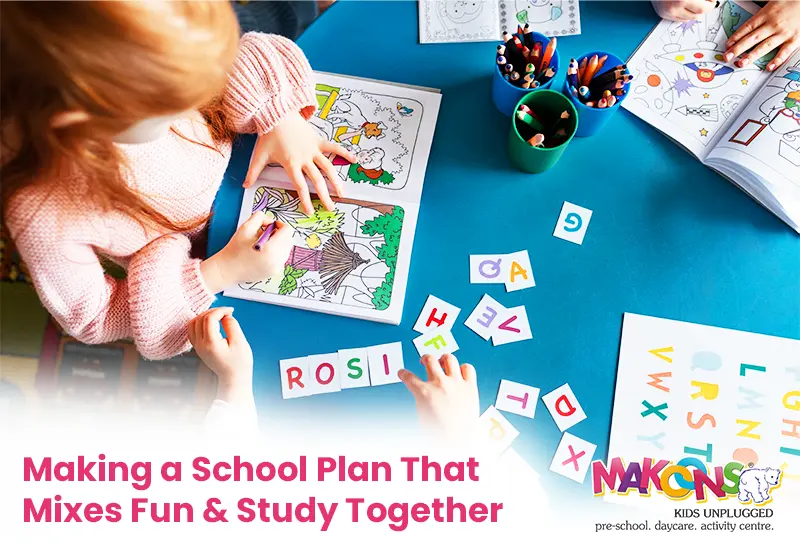
An ideal preschool plan that combines fun and learning is the gold standard of 21st Century early education. In addition to early education standards in preschool, you should strive to incorporate an effective early childhood curriculum plan with a mix of activity based experiences that ensure children learn, actively explore, and love every aspect of school. Following is an all-encompassing and evidence-based guide (1500 words exactly) to build a preschool lesson plan and preschool weekly planner that combines both fun learning preschool and academic portfolio, seamlessly embedding all of your requested keywords.
The Underpinnings of a balanced preschool study plan
High quality early education must be grounded in active, engaged learning the art of blending active play with quality instruction. A preschool study plan can find success at a deeper level when it:
- The preschool study plan helps children be curious and imaginative.
- Creates core skills in language, numeracy, the environment, and art.
- Develops motor skills and social emotional skills.
- Models self regulation and innocence.
- Nurtures a passion for learning for the future.
A thoughtful diverse mix of preschool activities and studies will often improve focus and participation and help children use real world knowledge while also ensuring every child feels valued, included, and competent.
Key Features of a Good Preschool Curriculum Plan
1. Play-Based Learning and Activity-Based Learning
Activity based learning preschool is based on the notion that little learners learn best when they have the ability to play, discover, and explore. Every preschool lesson plan and daily schedule should incorporate this element:
- Themed play experiences (Home corner, blocks, art area, reading corner)
- Choice time which allows children to pursue their interest in play (blocks, dress up, house, art, etc.)
- Games, puzzles, and hands on science methods.
2. Small group or circle time lessons
Provide the opportunity to introduce new information playfully (through songs, stories, rhymes).
2. Child-Centered Routines
A well-planned preschool daily schedule provides structure while allowing leeway in your day:
- Circle Time to start (greetings, weather, calendar)
- Free play incorporated with some short, intentional group activities Snack, rest, gross motor play outside, and project collaboration
- Story time, music, art, and mindfulness moments
- Children do well in environments when they know what to expect, and they are also provided an opportunity to engage in new and creative work every day.
3. Build Your Preschool Weekly Planner
Each session, integrate preschool learning activities from each developmental area, with time for theme exploration, child-led play, and group projects. Planning ahead keeps learning organized while making space for fun. Here’s a sample preschool weekly planner outline:
| Time | Monday | Tuesday | Wednesday | Thursday | Friday |
| Circle Time | Story + Welcome | Calendar Songs | Show & Tell | Weather Chart | Rhyming Games |
| Literacy | Letter Hunt | Name Tracing | Story Retelling | Sound Games | Read Aloud |
| Numeracy | Sorting/Counting | Patterns | Number Jump | Math Stories | Puzzles |
| Science | Planting Seeds | Animal Facts | Sink or Float | Weather Demo | Bug Hunt |
| Arts/Crafts | Clay Play | Finger Painting | Collage Art | Paper Folding | DIY Masks |
| Music/Movement | Dance Games | Yoga | Instrument Time | Parachute Play | Freeze Dance |
| Outdoor Play | Obstacle Course | Free Play | Nature Walk | Relay Races | Ball Games |
Sample Thematic Preschool Activities and Studies
Theme: 'Our Community'
Dramatic Plan: Set up a pretend store, post office, or clinic.
Children role: play community helpers and jobs.
Arts: Children can create uniforms or hats for the various roles (doctor, teacher, fire fighter)
Story Time: Read books about community life, then discuss who helps us.
Math: Sort pictures of buildings (police station, school, bakery).
Outdoor Play: Do a scavenger hunt for “community” signs on the playground.
Music: Learn a “good morning” song in many languages.
Theme: “Animals Around Us”
Science: Explore noises, tracks, and habitat of animals.
Movement: Pretend to be different animals that move in different ways.
Craft: Make masks or puppets of jungle animals.
Sensory Play: Use feathers, fake fur, and sand to find animals.
Language: Story retelling using animal characters.
Balancing Academics and Play: Activity-Based Learning in Practice
When designing an activity based lesson plan in preschool you want to make sure you include:
- Using fun hands-on materials (manipulatives to explore, sand/water tables, loose parts, etc.).
- Purpose driven learning centers for reading, building, play, experimenting, etc.
- Quick lessons, but creating opportunities to apply the new concepts through play.
- Allow for “failures” for them to ask questions, hypothesize, and try again.
Every week, you want to think about how to weave together direct instruction, open-ended explorations and question based in the real-world.
For example, if students participated in a short lesson around counting they could then, “shop”, for their favorite toys in a pretend store, by counting them or marking a tally in their make believe play money notebook.
Daily Preschool Timetable that Harmonizes Stability and Excitement
A sample of a daily schedule that is fun for children and rich with learning in preschool may look like this:
9:00 -Welcome / Free choice play
9:30 -Morning Circle ( read stories, calendar, music)
10:00 -Literacy / Math Activity
10:30 -Outdoor Play / Movement
11:00 -Snack + Socialization / Social time
11:20- Science or Sensory Center
11:50 -Creative Art or Music
12:15- Lunch
12:45 -Rest / Mindfulness
1:15 -Themed Learning Centers
1:50- Storytime
2:05 -Goodbye Circle
This daily rhythm mixes familiar routines with time for children to learn in preschool with fun, free choice, and plenty of time to follow their own curiosity.
Best Practices for Planning Fun and Study Together
- Include ongoing space for teacher-directed and child-driven learning into every preschool and child development plan.
- Use weekly planners to theme learning e.g., seasons, emotions, community, animals, numbers, etc.
- Change or rotate sensory bins, art materials, books, and games regularly, to keep learning fresh!
- Involve parents: share plans, ask for photos, family stories, or favorite family recipes to include in the curriculum.
- Reflection and assessment: pay attention! Observe what fascinates children and plan from there, modifying where needed.
Activity-Based Learning for Preschool: Outcomes
Increased engagement: Kids are fully engaged in projects they choose and facilitate their own learning through play and exploration.
Integration of skills: Play intersects language, math, science, and incorporates physical skills.
Problem-solving: Kids learn to plan their activities, try them out and adjust their plans.
Creativity: Open-ended experiences in art, play, crafts, and storytelling foster creativity and expression.
Resiliency: Reliable, secure, and positive environments allow kids to use trial and error, fail safely, and grow.
Assessment in a Preschool Fun and Study Model
- Assessment in this plan is ongoing and informal and captures understanding of children.
- Teachers take notes, some photographs, samples of play, and projects.
- Skills develop over time. Children's development is not tracked against rigid checklist, it assesses growth against developmental goals.
- Children reflect: “What did you build? What did you learn? What will you try next?”
- Convey progress to families via portfolios and daily and weekly updates to show growing skills and recognize learning experience as valuable and visible.
Flexible: Planning and Adaptive to Each Child
The modern preschool weekly planners must be flexible enough to accommodate group interests, time in the weather state, and current events. For example, if young child brings a caterpillar, that week can promote learning around insect life-cycles, nature art, bug songs, and math knowledge and stories with insect themes.
Involve the Whole Team
Great planning happens when the educators, aides and families participate in planning. Further, there valuable outcomes and inspirations shared with colleagues and families during team meetings occurs, which contributed the teacher’s experience. Collaborative digital planners will allow each teacher to navigate among specific students and preschool activities.
Conclusion
A great lesson is more than a great activity planner, it represents a living joyful incorporation of preschool activity and learning studies, combined into a daily routine and child-directed adventure. When preschools and other education settings intentionally combine fun learning in preschool with deep academic studies the children experience success: they build the skills that matter for school and life and they build a love of learning. Use the basic structural schedules and individual learning themes, along with activity ideas to help guide a more rich experience each day in your preschool or child care. The future is bright in early childhood education, where fun and study coincide every day!
Read Also : Best Teaching Method for Toddlers: Make Learning Fun & Effective
