
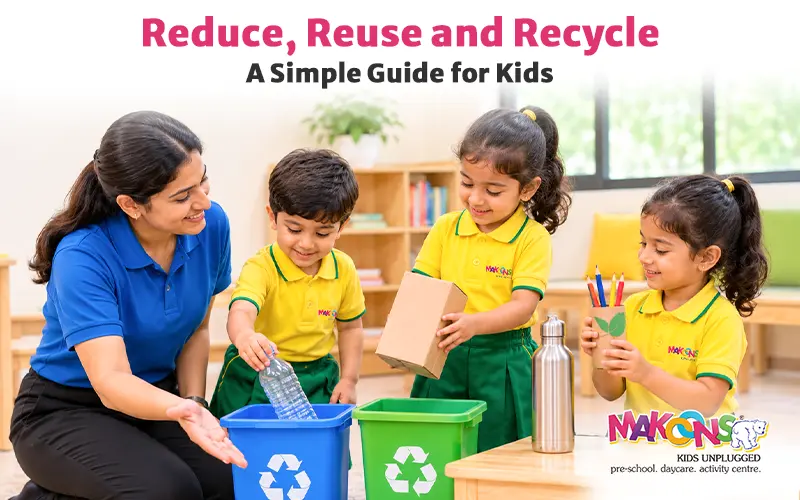
Have you ever thought about what happens to the things we throw away, like plastic, bottles, newspapers, wrappers and some boxes? If it is not properly managed then this waste can harm our environment but fortunately, there are 3 simple things we can do to save our planet: Reduce, Reuse and Recycle.
The three habits are the 3Rs for kids. They infuse children with a sense of responsibility for nature, for resource conservation and for caring for their surroundings. Little things can make a huge difference such as turning off lights or using a reusable water bottle.
1.Reduce - Use Less Waste Less.
Reduce – use less and avoid waste. It is the first and most crucial step, as it will result in less rubbish when we use less.
For instance, instead of purchasing a new toy each time, we can care for the toy that we already have. It is also important to not waste food, water, electricity and paper.
Some simple ways your kids can help prevent waste:
Switch off the light and fan when not in use.
Turn off the water when brushing your teeth.
Bring a water bottle to school that can be used multiple times.
Use both sides of a paper sheet before throwing it away.
Don't purchase products that are over-packaged.
Eat only as much as you can eat.
Just remember, you don't have to sacrifice anything in order to reduce waste. It basically refers to the need to make wise use of the resources and make proper choices.
2. Reuse – Give Things a Second Life
Reuse – reuse rather than discard. There are numerous items that may appear to be trash but can actually be valuable. Consider the possibilities of re-using something before it is thrown away.
For instance, a glass jar can be transformed into a pencil holder, an old cardboard box can be transformed into a toy house and old clothes can be used as cleaning cloths.
Useless to useful: creative ways children can recycle everyday objects:
Use old bottles to make small pots for plants.
Use empty jars to store crayons and stationery.
Use excess coloured paper to make greeting cards.
Give away toys, books and clothes that you no longer have a use for.
Use regular newspapers for arts and crafts.
Use cardboard boxes to make cars, houses or storage boxes!
Re-using items saves us money and helps to cut down rubbish going to landfill. It also helps kids come up with ideas and find new ways to use common items.
3. Recycle – Make something new out of waste
Recycling is basically the process of using used material to make new ones. Some material can be reused instead of throwing it in the dustbin.
For example, old newspapers, glass bottles and some plastic products.
Some materials that can be recycled are:
Paper: Newspapers, cardboard and notebooks.
Plastic: some bottles and containers
Glass : Non-plastic containers made from metal.
Metal: Aluminium cans and some metal containers.
However, not all items can be recycled. Depends on the materials also if it's dirty or mixed. That's why it is important to separate dry and wet waste.
Why Is It Important To Use The 3Rs?
Our planet provides us with everything we need like clean air, water, food and natural resources. But too much pollution and waste can harm the environment.
By following the principles of the 3Rs, we can do several things to help protect nature:
Reduce pollution: Less waste helps to make our air, water and land cleaner.
Conserving natural resources: Recycle Natural resources like paper , metal and other.
Safeguarding animals: Less plastic means low opportunities for animals to get stuck in some harmful waste.
Conserving energy: Energy can be saved during the production of products made from recycled materials as compared to the production of products made from virgin materials.
Cleaner Environment: Good waste disposal keeps our homes, schools and neighbourhoods clean.
Here are some recycling facts for the children that will help them to understand why everyday decisions count.
Fun Activities For Kids
Keeping children engaged in fun activities can make learning about their environment more exciting. Here are some easy environment activities for children that can be done at home or school.
Recycling Bin Game: Set up recycling bins for paper, plastic, metal and wet waste. Have kids place various objects in the proper bins.
Best Out of Waste: Make something useful or decorative from old newspapers, cardboard and empty containers.
Plant a Tree: Plant a small tree and water it frequently. Observe its growth and discuss the value of plants.
Clean-Up Challenge: Do a small clean-up job with your parents, in your garden or at your school playground.
Reuse Art Competition: Ask children to create art with recyclables that they might not have been using for something else.
The activities are fun to learn and help children to form responsible habits.
The Steps Kids Can Take To Be Eco-Friendly Every Day
The protection of the environment need not be restricted to special occasions. It should become a part of our daily routine. To help, children can begin by maintaining a clean classroom, using no single-use plastics, conserving water and reminding family members to turn off unused lights.
Children can be encouraged by parents and teachers practicing these habits as well. Children tend to mimic their parents' behavior when it comes to taking care of the environment.
Keep in mind, no one has to be flawless. It's important to make little changes day after day and inspire other people to do the same.
Conclusion
Three simple actions that can help us make our planet cleaner, greener and healthier are Reduce, Reuse and Recycle. Children can be responsible citizens by consuming less resources, re-using and recycling, if appropriate.
So, if you try to throw garbage next time then think if you can reduce, reuse or recycle that thing or not.
