
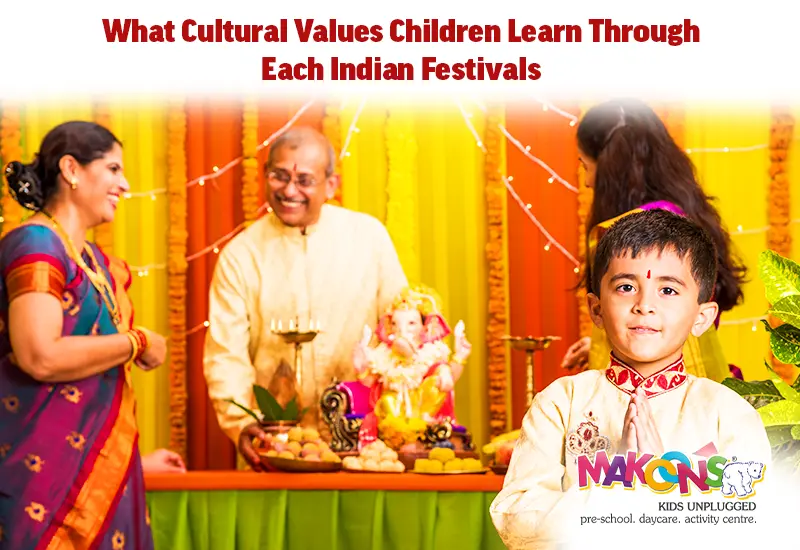
Indian festivals are a lot more than just some rituals, loud music, vibrant colours, and houses full of sweets. Every celebration has ingrained many cultural teachings, customs, and moral life lessons that have been handed down through generations. These beautiful festivals are like vibrant classrooms for small kids, where they learn a lot of life-changing rules in addition to playing and dressing up.
Let's find the values of Indian festivals and how they can be used by us to joyfully provide our kids with a solid foundation for an amazing cultural education.
1. Diwali – The victory of Good Over Evil
There is a lot more to Diwali, it is also known as the festival of lights. Rather than just lighting some diyas and popping crackers. It instills in kids the value of kindness towards everyone, truth, and inner light.
Moral life lessons from Diwali : Through this festival kids learn that virtue and truth always wins over evil.
Kids also learn about the importance of cleanliness, preparation, and togetherness.
Since so many families give food and clothing to the ones who are less fortunate during this time, it also promotes charity.
Value learned: Goodness always shines even in darkness.
2. Holi – Celebrating Unity and Forgiveness
Joy and unity are brought about by the festival of colours. Beyond the vivid colours, however, Holi imparts lessons about love, forgiveness, and beginning anew..
Faith and bravery are demonstrated by tales such as Prahlad's devotion despite Holika's brutality.
It places a strong emphasis on forgiving others, embracing peace, and repairing relationships..
Value learned: Let love and forgiveness color your world.
3. Raksha Bandhan – A Bond of Love and Protection
This beautiful Indian holiday honours the special and pure bond between siblings. Lifelong pledges of love, support, care and protection are just as important as rakhis and a lot of presents.
Kids start to understand the importance of family, relationships and responsibilities.
It promotes gratitude and mutual care, strengthening our emotional bonds.
Value learned: Protect and cherish your loved ones.
4. Janmashtami – The Joy of Divine Playfulness and Duty
The birth of Lord Krishna is celebrated throughout the whole nation with great devotion and enthusiasm.
Stories from Krishna’s childhood show his playfulness balanced with righteousness and duty.
Through some more entertaining activities like storytelling and Dahi Handi, children can learn about truth, dharma (duty), and devotion.
Value learned: Live joyfully but one should always stand up for what is right.
5. Eid – Sharing and Community Harmony
Eid teaches kids to be grateful, generous, and inclusive to all.
Eid-ul-Fitr's Zakat (charity) practice enhances the value of lending a hand to those who need it.
Also, it shows the idea of self-control throughout the whole month of Ramadan.
Young kids gain knowledge about the diversity and tolerance for different religions across the nation, which implements harmony in multicultural societies.
Value learned: Happiness grows the most when shared.
6. Navratri and Durga Puja – Celebrating Inner Strength
These festivals worship Goddess Durga’s power and courage.
Children are taught to be courageous, resilient, and respect women through beautiful stories of her defeating Mahishasura.
These 9 days of Navratri shows us the values like faith, discipline, and the sense of purity.
Value learned: Believe in your own strength and also respect the strength in others.
7. Ganesh Chaturthi – Wisdom and New Beginnings
Lord Ganesha is widely known as the remover of obstacles and the god of ultimate wisdom.
Young kids love the tale of Ganesha's broken tusks and his parents' journey around the world , it shows their love and intelligence.
The ganpati visarjan teaches us about the non-attachment and environmental awareness.
Value learned: Use your wisdom, stay humble towards other, and always start fresh and crisp.
8. Christmas – Joy of Giving and Compassion
Despite being a Christian holiday for some days , Christmas is also observed in India and imparts universal lessons.
Through the beautiful story of Jesus and the custom of giving gifts to each other, kids are taught compassion, thankfulness, and giving.
Singing of carols and this beautiful decorations foster joy and community bonding.
Value learned: Kindness is the greatest gift a one can offer and receive.
9. Baisakhi, Onam, Pongal – Celebrating Nature and Gratitude
These harvest celebrations also honour the abundance of the land in various parts of India.
They teach small kids about agriculture, hard work, and thanking to nature.
Children learn the importance of seasons, traditional dance, and also local foods.
These festivals build a connection with roots and regional culture.
Value learned: Be thankful for what nature provides.
10. Guru Nanak Jayanti – Equality and Service
Guru Nanak jayanti honours the birth of Guru Nanak Dev Ji and it encourages unity.
Kids are taught to treat everyone equally regardless of their caste or status or other such parameters.
Langar (community meal) enhances the habit of serving others without thinking of themselves (selflessly).
Value learned: Serve everyone with love and treat everyone equally.
Why Are Festivals So Important for Young Kids?
Festivals are way more than just some school breaks but Children have various chances to learn about different cultures. They:
- Make traditions fun and interactive
- Encourage kids to ask multiple questions and listen to beautiful tales.
- Strengthen and building family and their bonds
- Teach values from Indian festivals in real-life situations
- We should assist the next generation in keeping these Indian holidays and customs alive.
Children slowly absorb the morals, good values, and valuable emotions that convert them into responsible citizens and also passionate people by taking part in these beautiful lively celebrations.
How guardians and teachers Can Help
To make sure that kids truly understand the festivals and moral values behind them:
- Tell stories behind each festival using books or videos
- Include crafts and activities related to the festival
- Encourage charity, prayer, and community participation
- Discuss the moral lessons from festivals during or after the celebrations
- Avoid a lot of excessive commercialization; keep your main focus on emotions and values.
Final Thoughts
Each and every Indian festival is like a kind instructor completely packed with lights, music, or vibrant colours. Kids are not only entertained when we meaningfully include them in these beautiful celebrations, but they are also morally and culturally educated and well.
So, the next time when a festival comes around, open the door wide, not only to customs and rituals but also to gain some rich morals and beautiful tales that your child will remember for a lifetime.
Read Also : Harvest Festivals Celebrated in India
.
