
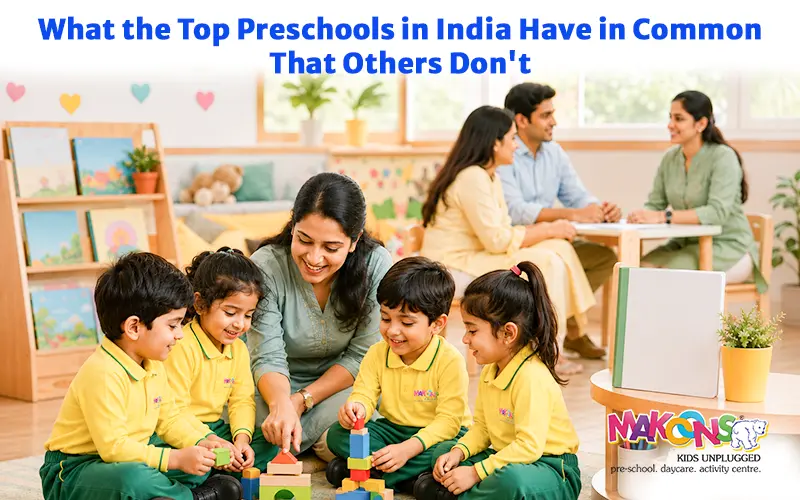
All the preschool brochures are great looking.
You'll witness brightly lit classrooms, happy kids, colorful walls and assurance of "world-class education”. However, as parents begin to visit schools they soon learn that selection of a preschool is not just a matter of appearance.
The reality is that there are certain attributes of the best preschools in India which are more than just their looks. These are the factors that really make a difference to a child's happiness, confidence and learning in the early years.
Here are the characteristics you should look out for when searching for the best preschool in India.
They Put Children Before Everything Else
In very good preschools, all decisions are made with the child in mind.
Rather than asking 'How can we impress parents?', they ask:
What helps children learn best?
What makes children feel safe?
How can we encourage curiosity?
Their Teachers Make The Difference
If you ask any parent whose kid enjoyed preschool, they will likely speak about a teacher prior to the building.
Great preschool teachers:
Hug and greet children daily with a warm welcome.
Listen patiently
Encourage questions
This is why it is important that all the best schools pay a lot of attention to teacher development and professional growth.
Their Preschool Curriculum Is Balanced
A frequent error made by parents is to estimate a school based on the speed at which children learn to read letters and numbers.
The strong preschool curriculum emphasizes more than just academics.
Time should be spent with children:
Listening to stories
Singing songs
Exploring art
Playing outdoors
Building with blocks
The aim is to educate the whole child and not just prepare for exams.
They Understand That Play Is Serious Learning
Playing to adults can seem to be easy.
Play constitutes the preschool child's education.
Children learn during play:
Communication
Teamwork
Creativity
Problem-solving
Decision-making
The most effective schools do not see play as an after-thought after learning has taken place. Play is a central component of their approach to early learning.
They Focus On Child Development, Not Comparison
Children are commonly made comparisons in average schools.
In good schools the teacher is aware that children learn at different rates.
Early speech is spoken by some children.
Some get social confidence before the other.
Others may have more trouble settling into routines.
Good schools embrace these differences and don't seek to make every child progress in the same manner.
The approach promotes children's healthy development and builds their confidence.
Their Classrooms Feel Warm And Welcoming
A good preschool is often apparent within 10 minutes of entering.
The classroom is quiet but busy.
Children appear:
Comfortable
Curious
Engaged
Happy to participate
Quiet does not always equal a positive preschool education environment.
They Build Strong Relationships With Parents
The best preschools understand the importance of the partnership between parents and teachers.
They regularly discuss:
A child's progress
Social development
Learning milestones
Points to assist in support
Parents know what is going on at school and don't have to guess.
Their Facilities Support Learning
While good preschool facilities are key, the best schools are not about looks, they are about usefulness.
Look for:
Safe play areas
Reading corners
Clean classrooms
Age-appropriate learning materials
Opportunities for creative experiences
The provision of excellent learning experiences does not require luxury facilities in a school.
They Teach Life Skills Every Day
The key to the best preschools is their emphasis on skills in everyday living.
Children develop the ability to:
Share
Wait for their turn
Express feelings
Solve simple problems
Work with others
Become more independent
Final Thoughts
However, the true indicators of quality are not always so easy to see.
Look for:
Caring teachers
Strong parent communication
Respond to every child's development
A warm learning atmosphere
But after all, kids don't need a flawless building.
They require a secure environment where they are valued, encouraged and excited by learning.
FAQs
1. Does play-based learning work?
Yes. Children naturally learn their social, emotional, language and thinking skills through play.
2. What role are preschool teachers important in?
Teachers have the greatest impact on a child's confidence, learning and preschool experience.
3. Do costly facilities have to be used to provide a quality preschool education?
No. It's not a matter of luxury facilities, it's all about good teaching and a kind environment.
4.Why is child development important in preschool?
The preschool years create the basis for learning, confidence, communication and social skills.
