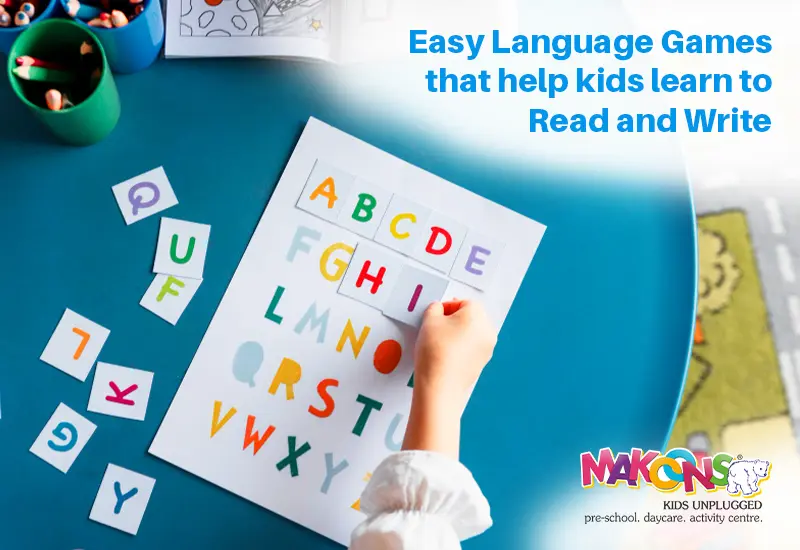
Engaging preschool children with enjoyable language games that facilitate skilled reading and writing will create strong foundations for literacy throughout their lives. Preschool aged children benefit greatly from activities that are playful, interactive, and enable children to learn in an enjoyable, natural way by not forced experience. This comprehensive guide will provide easy and proven language games for kids that will develop preschool English, phonics, reading, and writing skills, while also embedding your requested phrases such as preschool reading games, phonics games preschool, early literacy activities, preschool writing activities, and so on.
Why Language Games Work Wonders in Preschool?
Language development is more than memorization; it is about interaction, discovery, and building confidence.
Games:
- Encourage participation
- Facilitate oral language development (vocabulary, sentence building)
- Teach letter–sound knowledge (phonics)
- Support listening and memory
- Develop fine motor skills needed for writing
- Encourage an early love of books and stories
By creating a play-based environment, children will absorb more content manifested in the integration of learning and play.
Fun Preschool Reading Games
1. Alphabet Treasure Hunt
- Hide letter cards around the room.
- Call out a letter sound, and children will look for the card and hold it up.
- Alternative: Find something in the room that begins with that letter.
- This works on letter recognition and expands vocabulary.
2. Rainbow Letter Hop
- Place colored paper letters on the floor.
- Call out a letter or sound, and children will hop to that letter.
- Movement with letter recognition engages the whole child.
- Kinesthetic learners will thrive on this activity while developing motor skills.
3. Swap and Find Phonics
- Create sets of cards that contain letters and picture matches.
- Students will take turns flipping cards to find a picture of a matching letter and matching beginning sound.
- This activity creates a connection between phoneme and grapheme and supports memory development.
- The game can be adjusted to include Digraphs, Blends, or only pictures.
Fun Phonics Games Preschool Loves
4. Mystery Sound Box
- Collect objects and fill the box - the child chooses an object without being able to see it.
- Name the object and play-up the beginning sound.
- Next, the child will repeat it and then name other things that start with that sound.
- This activity creates support for listening and listening to discriminate sound.
5. Letter Fishing
- Make “fish” using paper and paper clips and label the letters on those fish.
- Children are given a pole with a magnet.
- Child “catches” the letter, sounds it out, then catches and names a word that starts with that letter.
- This is a great and fun way to work on fine motor skills and letter identification.
Related Topic: 20 Fun & Easy Craft Activities for Preschoolers
For Groups or Small Groups/One on One
6. Alphabet Cute Match Up (if used as game individually not requirement for small group)
- Use letter or letter cards or letter tiles (can use black/white for low prep printed from projector).
- Children will pair uppercase letters with lowercase letters or letters with images with initial match sound.
- Child must extend left to right while recognizing the letter sound.
This could work in groups or one on one significantly with ratio students to teacher; this game would work better with lower ratio small groups.
Creative Preschool Writing Activities
7. Sensory Letter Tracing
- Fill trays with sand, salt or rice
- Children trace letters and or words with their fingers.
- Adding the sensory activity works well for those tactile students, they are not only learning the letter formations, but they are practicing their motor control to develop their pre-writing skills.
8. Build Letters with Playdough
Children can roll out playdoughs into “snakes” to build letters. Have students say the sound of the letter as they are building the letter.
This may strengthen the fine motor control and incorporate phonics.
9. Story Starters
- Provide a picture or give the child an opening sentence to begin writing.
- Child will draw pictures and or dictate the writing to end the story.
This activity develops descriptive vocabulary, narrative, and early writing fluency against all odds.
Early Literacy Activities for Reading & Writing
10. Interactive Storytelling
- Use puppets or props to enhance storytelling.
- Ask questions in between, predict what may happen next, or pause on a page to work on vocabulary words etc.
- Children will cognitively and socially join-in once the story is presented or engage with the props/puppets.
- Historically this helps the book review process; bringing in vocabulary experiences with development of oral language comprehension fluency and sequencing ideas.
Again, observe and celebrate the comprehension and vocabulary development tools that are created in your active participation.
11. Rhyming and Clapping Games
- Make up clapping games to rhyme and make rhythm.
- Rhyming is fun and exciting to build phonological awareness, a strong predictor of children's reading ability.
12. Name Building
- Using wrapped letters (made into a puzzle game) teaches children their names. The letters can be in an envelope, bag, or in a bowl the students recreate their name with the letters.
- Children will practice letter formation and letter recognition and will recall executive function cognition studies too.
Also Read: Ocean Names: Teaching Kids About Earth's Biggest Water Bodies
Tips for Successful Language Game Implementation
- Continue to create and maintain game levels and activities on the level of the child and to progress during their existing skill levels.
- Use hands-on, color coded material (magnetic letters, small letter/word flashcards, puppets).
- Allow for more than the next lead experience for repeated.
- Bring in and give simple language games or books for the child's experiences to the home/family. Include families and simple family activities, games or by extension books.
Sample Weekly Language Game Plan
| Day | Game/Activity | Skill Focus |
| Monday | Alphabet Treasure Hunt | Letter recognition, vocabulary |
| Tuesday | Flip and Find Phonics | Phoneme-grapheme correspondence |
| Wednesday | Sensory Letter Tracing | Letter formation, sensory learning |
| Thursday | Interactive Storytelling | Comprehension, vocabulary |
| Friday | Letter Fishing | Sound discrimination, motor skills |
Conclusion
Through game-like play/learning that children see as not work - they will develop excitement, confidence and language to help scaffold for their reading and writing skills. All of these functions in games and games and other areas will, with these early phonics games preschool and preschool writing activities, fun preschool reading games, language development, and reading experience, all with and with their families. In a nutshell, you wrap it all for the FUN feeling through the movement, time/space manipulation, story-telling, explaining and sensory experiences in all of the entire functions and fun for the child, and their experience and literacy too.
Related Topic: Top 10 Activities Every Preschool Curriculum Should Have