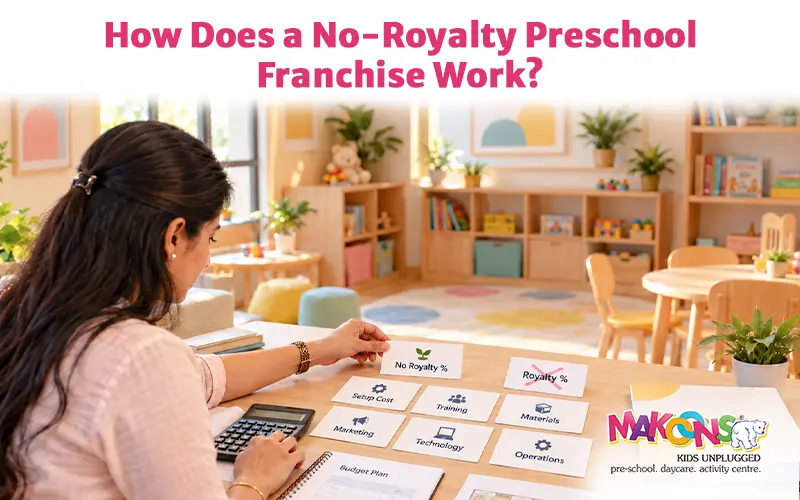
For entrepreneurs, starting a preschool with a franchise can provide access to a proven brand with a developed curriculum, training, and support. A no royalty preschool franchise may be appealing for a number of reasons, with one of them being that it doesn't require a recurring royalty payment on income. But how does this model work? Familiarizing yourself with its benefits, duties, and expenses can assist you in making an educated choice if you're considering opening a franchise.
What Exactly is a No-Royalty Preschool Franchise?
No royalty preschool franchise is a franchise in which the franchisor is not to receive a percentage of monthly income from the franchisee. Rather, the franchisor might be able to earn revenue from a one-time franchise fee, setup package, learning materials, training, technology or other agreed services.
What is a No-Royalty Preschool Franchise Model?
The no royalty preschool franchise model is typically a very simple one. The entrepreneur invests in setting up and operating the preschool under an established brand. The franchisor, in turn, will offer agreed support and will permit the franchisee to access the brand, curriculum, systems, and other resources.
This could involve:
Choosing the appropriate location and brand to launch the franchise
Reviewing the franchise proposal and agreement
Providing any applicable initial franchise fees.
Applying the correct brand standards for the set up of the preschool.
Completing required training
School readiness and orientation of staff members
Starting enrollments and marketing efforts
Staffing the preschool according to brand standards
What is Zero Royalty?
Sometimes a zero royalty preschool franchise is referred to as the model in which there is no ongoing percentage of revenue paid as a royalty. If the monthly revenue of a preschool is ₹4 lakh, the monthly royalty for a franchise with 5% royalty would be ₹20,000. In a zero royalty agreement, this type of payment would not be applicable.
Even so, the franchisee might have other costs. They can be marketing contributions, annual charges, technology fees, training fees, learning material purchase fees or renewals fees. Be sure to confirm the full fee details in writing.
Preschool Franchise Fees You Should Understand
There can be a number of kinds of payments involved even in a preschool franchise which isn't one with a royalty. It is important to know these costs in advance of the signature of the agreement, in order to ensure proper financial planning.
Typical costs could include:
The amount charged for the first franchise or brand
Assessment procedures of the children's performance
Educational equipment and furniture
The cost of training and onboarding fees
Marketing and promotional costs;
Resources for student learning, including curriculum resources
Software or technology charges
Annual or recurring charges.
Staff recruitment and salaries
These are the cost of rent, utilities, maintenance and other operating expenses.
How Does the Investment Work?
The cost of your preschool franchise includes more than what you pay to the franchisor. A realistic budget will include the total expense of running and starting the preschool.
Before investing, estimate:
Franchise and registration fees
Rental or Purchase of property
Interior development
Classroom furniture
Teacher's Support Material
Staff salaries
Marketing and admissions
Utilities and maintenance
Initial working capital requirements for the first few months.
Why Do Franchisors Provide No-Royalty Models?
Commercial strategies are distinct for different brands. A no-royalty option can be chosen by a franchisor for greater ease of understanding and acceptability to the entrepreneurs. The business can make money by charging a percentage of monthly revenues or by securing a lump-sum payment, a sale, a service, training or other means.
The benefits of a No-Royalty Franchise:
There are a number of potential benefits that a no-royalty model can offer to preschool owners:
No percentage of sales royalty
Improved cash management monthly
A possible luckier revenue retention.
This is due to the fact that more people used to be enrolled in the scheme, thus benefiting more.
More streamlined operating margin calculation and reporting
Reduced on-going franchise costs
Is There a No-Royalty Model Which is Always Cheaper?
Not necessarily. A franchise can promote no royalties and charge a bigger start-up fee or other ongoing fees. Another franchise might have a lower upfront fee and have a lot of support, but at the same time charge royalties.
Thus, compare the overall monetary commitment and not just “no royalty.”
Make a comparison of this and other years for several years:
- Initial franchise investment
- Recurring franchise-related fees
- Marketing expenses
- Mandatory purchases
- Renewal costs
- Setup and operating costs
- Student enrollment and student income
What Kind of Support is Available For the Franchisee?
A robust preschool business model can offer regular and formal support for franchisees to set up and run their centres. Support may consist of:
Planning how to teach kids in the Preschool classes
Teacher training
Centre setup guidance
Branding and Marketing assistance
Willingness to accept new ideas and suggestions from parents
Educational materials
Technology and management systems
Operational guidance
Questions to Ask Before Choosing a Franchise
When looking at a no royalty preschool franchise, inquire from the franchisor in detail about the commercial and operational conditions.
Important questions include:
Are all the royalties paid over the life of the agreement zero?
Do you have annual fees or marketing?
Do certain products or materials have to be used?
Is there a possibility for fees to be raised during the term of the agreement?
Is it included in the initial package?
What training and operational support is given?
What are the conditions for renewing and terminating?
Does the school have a minimum requirement for enrolment?
Selecting the Appropriate Preschool Business Model
The business model you choose for your preschool should align with your budget, location, experience and long term goals. While a no-royalty agreement may be appealing, it isn't all about the dollar.
Assess brand reputation, curriculum quality, training, marketing support, operational support, location potential and parent demand. By carefully considering finances, owners can keep an eye on monthly requirements, safeguard cash flow, and plan decisions for the fluctuating enrollment and operating costs through time.
Final Thoughts
A no royalty preschool franchise allows an entrepreneur to start one without having to pay a percentage of income on a recurring basis to the company that owns the preschool brand. The franchisor can, instead, receive the money as initial fees, products, services, training or other agreed fees.
The most significant benefit for prospective franchise owners is the ability to retain more revenue and to make easier financial plans. But, if there is no royalty, there are still expenses! Be sure to review carefully the fees associated with the preschool franchise, and determine the total cost of your preschool franchise investment and understand all the terms before you sign on to any preschool franchise.