
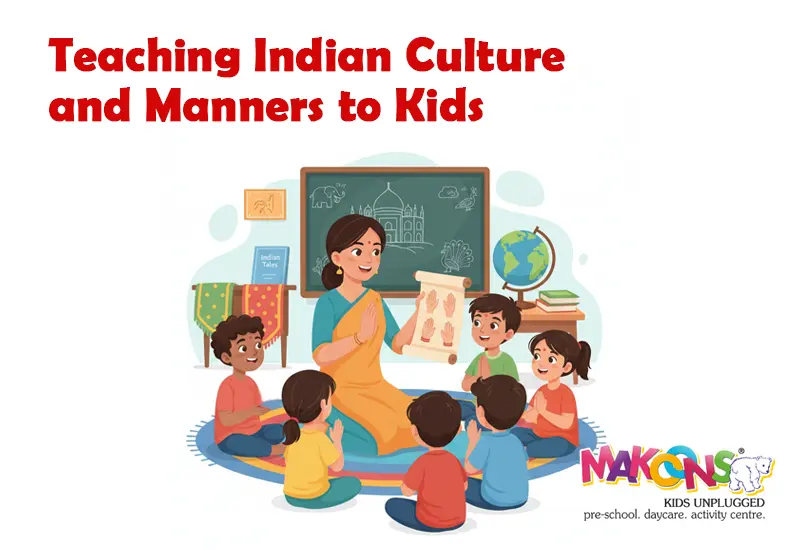
India is a country of colorful culture, values, festivals and traditions. Children who are exposed to these cultural foundations at an early stage develop to be self-confident, respectful and socially conscious. Learning the stories of the past is not the sole focus in teaching Indian culture to kids as it assists in constructing identity, strong family relationships, compassion, and respect towards others. Personality development is anchored on early years; hence the Indian values during early years have to be reinforced at home and in the preschool.
This instructional guide details ways on how parents and teachers can instill respect and etiquette in children and enable them to realise their rich heritage by means of learning traditions in preschool, cultural education and family participation.
The Importance of Cultural Education at the Early Childhood
The young children do learn through observations and imitations of the world around them. Their faith, way of communicating, relationship with family, and identity are developed in the preschool years. Education of children on culture assists in:
1. Personality Development
Kindness, respect and sharing are values that become more solid as the children are exposed to cultural teachings.
2. Healthier Family Relationships
Traditions in the family provide children with continuity and allow them to remain in touch with their grandparents and seniors.
3. Identity and Pride
Children who grow up knowing about the Indian heritage during preschool exhibit pride in representing their country in the world.
4. Social Manners
Cultural learning involves teaching the preschoolers good etiquette like how to greet people, assistance of people and how to treat everyone equally.
Essential Indian Principles Every Child should Learn
The following are some of the crucial family values that kids can be taught:
| Values | How Children Learn It |
| Respect for elders | Saying Namaste, listening attentively |
| Sharing kindness | Distributing sweets on festivals |
| Truthfulness | Reading stories of honesty (e.g. Harishchandra |
| Gratitude | Thanking helpers like guards, cleaners |
| Unity in diversity | Exposure to different religions & cultures |
| Environmental care | Practices like planting trees |
These are not only cultural values but are life skills.
The Manners to Teach to Preschoolers with Indian Culture
1. Daily Greeting Rituals
Make children learn to say Namaste, meet teachers, thank people, and ask with the words please. Such little things help to establish politeness.
2. Respecting Elders
Humility and respect are constructed through simple ways such as putting your feet at the feet of grandparents or use of the term aap as opposed to the term tu.
3. Sharing Food and Toys
The Indian meals are typically community-based. Sharing food with kids encourages the spirit of generosity and empathy.
4. Indian Mythological Storytelling.
Ramayana, Mahabharata, Tenali Rama, and Akbar-Birbal stories make children acquire knowledge on smartness, truth, courage, and devotion.
5. Festivals with Meaning:
This practice emphasizes the significance of conducting festivals through the social activities of a town or
Make children know the reasons for our celebrations of Diwali, Holi, Eid, Pongal, Christmas, Gurpurab, etc. It develops inclusiveness and diverse affection.
Related Topic: 20 Healthy and Easy Breakfast Recipes for 1-Year-Old Toddlers
Teaching Indian Culture to Kids Fun at Home
Parents contribute the most in the teaching of Indian culture to kids. You can try:
- Singing folk songs at home
- Preparation of local cuisine and their history.
- Visiting heritage places
- Wearing cultural clothes in parties.
- Education on proverbs in native language.
- Promoting classical dancing or music in children.
- Engaging them during family ceremonies such as pooja or lighting diya.
These events preserve the traditions in an up-to-date, entertaining manner.
Preschool in the cultural learning process
It is not that schools are purely academic areas, but they characterize. Preschool activities that are Indian heritage may involve:
1. Art & Craft
- Assembling diyas, rakhi, rangoli and puppets.
- Drawing national symbols
2. Dance & Music
- Dancing folk: Bhangra, Garba.
- Singing Vande Mataram or local songs.
3. Story Circles
Freedom fighters, grandparents, folk heroes and short stories.
4. Celebration Days
Ethnic Day, Grandparents Day, State-wise food & culture day.
5. Family Participation
Getting parents to tell you about traditions and customs.
The programs assist in instilling good attitudes and strong cultural identity in children at the tender age.
Parenting in the Modern world: Finding a balance between culture and independence
Indian culture is very disciplining and respectful, yet children are required to be free to show their personalities. A positive balance includes:
- Promoting enquiry as opposed to imposing practices.
- Logically explain traditions as opposed to because I said so.
- and also letting kids celebrate world holidays.
- Allowing them to speak in a respectful manner, inquire and experience.
This is supposed to make culture interesting--not limiting.
Basic Everyday Etiquette and Respect and Manners Kids
Social behaviour is based on manners. Here are basics:
- Keep surroundings clean
- Say sorry, please, thank you
- Get the conversation of a person.
- Avoid interrupting elders
- Offer help when needed
- Stand up when guests arrive
- Treat all people well- irrespective of social ranking.
The habits are to be taught daily at home and encouraged in preschool.
Learning and Emotional Intelligence about Culture
When children learn the values, they feel safe, cherished, and assured. They develop good emotional abilities including:
- Empathy: caring for others
- Duty: getting things done and getting it right.
- Cooperation: collaboration in school and play.
Therefore, instilling good behaviour in preschoolers through teaching manners does not only result in good behaviour but it also brings emotional strength.
How Digital Resources Help
The use of technology can aid cultural learning in the following ways:
- Animated moral stories
- Videos on heritage sites
- Traditional games applications of India.
- Music and rhyme playlists in different regions.
Nevertheless, there must always be a limit and regulation of screen time.
Also Read: 10 Superfoods to Boost Your Toddler’s Immunity Naturally
India has always been characterized by a great set of values, tradition, discipline and spirituality. Through learning using fun activities, story telling and exposure to the culture in preschool traditions, we can be able to produce well behaved children who have respect for their origin. With the collaboration of both home and school in cultural education of children, young minds grow up proud of their identity, as well as be confident of accepting the global world.
Educating the children on the India culture today would make sure that the future generation will not end up losing touch with the traditions, lose their richness, and lose their humane aspects.
