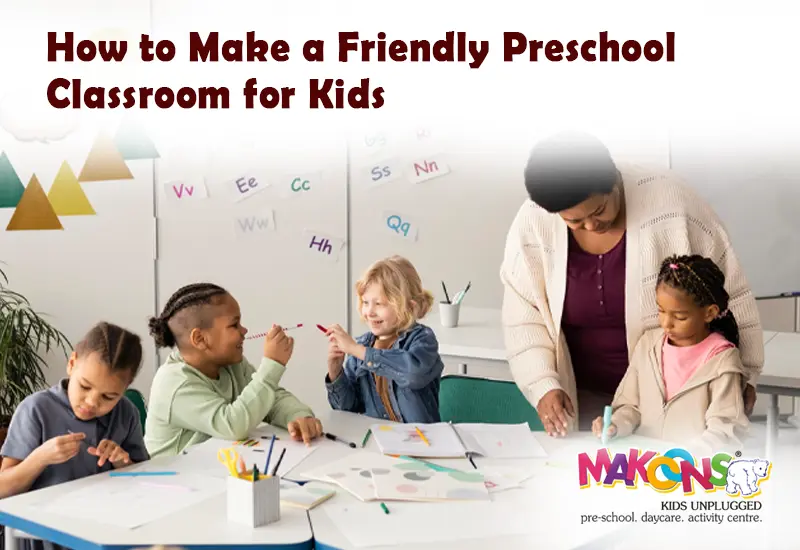
One of the largest tasks of early childhood educators is to create a preschool classroom where it is warm and safe, and employees feel welcome. Friendliness will facilitate the learning process besides instilling confidence and fostering creativity as well as making young children feel secure emotionally. The correct setup of a preschool classroom to interactive board predetermines the whole itinerary of the child.
The guide has useful child friendly classroom tips, clever preschool environment tips, and quality design tips to assist educators and school proprietors to create a bright, happy, and pleasant preschool atmosphere in which children get cozy each day.
The Importance of a Friendly Preschool Classroom
The preschoolers are sensitive to the areas that surround them. Classroom tasks that are:
- Better concentration
- Enhanced emotional status.
- Strong social interaction
- Independent learning
- Reduced anxiety
- Boosted creativity
A well-constructed classroom makes the children relaxed and assured. The idea behind the establishment of the welcoming preschool is to ensure that every child feels that it is his or her place, and he or she belongs.
Begin With a Good Preschool Classroom Organization
An efficient preschool classroom arrangement will make sure that all is in place, on hand and age friendly. A defined plan can make children easily move about and know what to expect.
1. Suggestions on a perfect classroom environment
- Separate the classroom into the learning areas reading, art, pretend play, sensory area, and quiet corner.
- Shelves should be kept low with the shelves open to allow children to see and pick materials.
- Make sure that the paths are not narrow.
- Provide smaller tables, chairs and storage bins to encourage autonomy.
- Put the common materials at eye level of the children.
The behaviour and learning are influenced by the physical set-up of the room. Laid down arrangement fosters accountability, collaboration, and discovery.
2. Help Comfort and Independence with Child Friendly Classroom Ideas
Children are more confident when they are able to control things. Add child friendly classroom concepts, which develop independence and responsibility.
Practical ideas:
- Label storage bins with pictures to assist children in cleaning the storage bins easily.
- Each child has a separate cubbie to store their items and this makes the room their own.
- Comfy seating either in beanbags or floor cushions to read and have a quiet time.
- Stools that come close to sinks to enable children to wash their hands without the aid of the guard.
- Child-height mirrors which are used to ensure that kids are okay after playing or doing activities.
These aspects teach decision making and increase the self esteem of the children.
3. Add Warmth and Joy Preschool classroom theme Decoration
A room with bright and cheerful decor can be turned into a living room. The correct decoration of classrooms is planned so that learning becomes enjoyable and picturesque.
Effective decoration ideas:
- One can use thematic or seasonal walls: Under the Sea, My Community, Space Adventure.
- Put up the curiosity of the kids on the walls as a way of cultivating pride and a feeling of belonging.
- Add coloured bunting, posters as well as charts, shape, alphabets, and emotions.
- To make it calmer, use nature (such as plants, wooden objects and natural light).
- Have decorations at the eye level of children in order to enjoy them.
Avoid clutter. Harmonious decoration style uplifts concentration and generates a nice atmosphere.
4. Best learning tips in a Smart Preschool Environment
A friendly classroom does not only exist in appearance but also in functionality and ease. The following tips on the preschool environment confirm that the room can help to provide emotional security as well as active learning.
Practical environment tips:
- Have adequate lighting- natural light is preferable.
- Being soft in colour such as pastels to make the atmosphere calm.
- Good ventilation and the room should smell good.
- Reduce the level of noise with the help of a rug, curtains, or acoustic panels.
- Add a corner that is quiet so that the children can rest in times of need.
A balance between stimulation and stillness of the environment leads to an actual positive preschool environment.
5. Pay attention to the Development of a Favourable Preschooling Environment
The atmosphere of the classroom is as important as the furniture. To establish a friendly preschool, one should create an atmosphere of acceptance, safety, and warmth.
Learning how to make the classroom friendly:
- Wear a smile on your face every morning.
- Show family pictures to make nervous children calm down.
- Utilize All About me boards upon which children should express their favourite things.
- Put on soft music as one arrives or as one takes a nap.
- Have a kind board to stimulate good behaviour.
A friendly classroom assists the children to develop emotional attachment and feel comfortable during the day.
6. Apply Preschool interior design to improve learning
Considering the preschool's interior design enhances child learning and interaction in the facility. The aim is to integrate beauty, safety and functionality.
Design elements to include:
- Colour psychology:
- Yellow for energy
- Blue for calmness
- Green for balance
- Furniture structure: Locate the activity tables where there is natural light.
- Flooring: Have rugs to provide divisions such as reading or blocks.
- Safety-first design: Rounded edges, shelves which are secure and mats which do not slip.
- Available materials: Art materials, books, sensorial materials, and puzzles are available.
Decent interior design can bring a great deal of enhancement to mood, behaviour and academic preparedness.
7. Design an Interactive Preschool Learning Environment
An entertaining preschool learning environment arouses curiosity and imagination. Children are most effective when they are engaged in activities and therefore the space should be suited to encourage such engagement.
Suggestions on a fun learning environment:
- Fancy play corner: kitchen set and costumes, mini props and dolls.
- Art and craft zone: crayons, scissors, paints, clay and used craft material.
- Snack area: plush cushions, fluffy toys and various picture books.
- Science shelf: magnifying glasses, leaves, pebbles, sensory jars.
- Building area: play blocks, Lego kits and stacking toys.
- Music corner: xylophones, shakers, music cards and tambourines.
These areas transform the process of learning to be fun, interactive, and meaningful.
8. Promote Interpersonal Relationship and Generosity
Emotional and social development is also facilitated through a friendly classroom. Respect, teamwork, and empathy are some of the ways that teachers can create a positive preschool environment.
Social development activities:
- Group storytelling
- Group discussion of emotions.
- Cooperative games
- Role-play activities
- Helping in such activities as watering plants or playthings.
The positive behaviour must never go unrecognized and must be praised and encouraged.
9. Make Safety and Hygiene a Vision
A real friendly classroom should even be sanitary.
Safety essentials:
- Sanitization of high-touch surfaces on a regular basis.
- Rounded furniture edges which are soft.
- Age-appropriate materials
- First-aid kits should be in close proximity.
- Cleaning supplies should be stored safely.
Health and trust is created through a clean and safe environment.
10. Collaborate with Parents to Enhance In-Class Environment
Parents, together with teachers, make an environment in the preschool welcoming. Communication is effective in building the understanding and supporting the needs of children.
Ways to engage parents:
- Post monthly classroom reports.
- Promotion of parent volunteers.
- Hang up the work of children during parent visits.
- Give home activities that are simple.
- Always have an open door policy.
An effective preschool society enhances the growth and emotional safety of children.
Conclusion
Creating a welcoming preschool classroom involves more than good decor, but rather creating an environment that makes every child feel secure, appreciated and eager to study. Consideration in the preschool classroom design to imaginative child friendly classroom design Each decision is a step towards creating a caring and healthy preschool atmosphere.
The combination of warmth, structure, and creativity can allow teachers to build an environment in which children cannot wait to go there every morning. It is either clever preschool interior design, colourful classroom decoration preschool themes, or a happy, fun preschool learning environment, but the purpose is the same, to make young learners develop, explore and be happy in a positive, helpful classroom.