
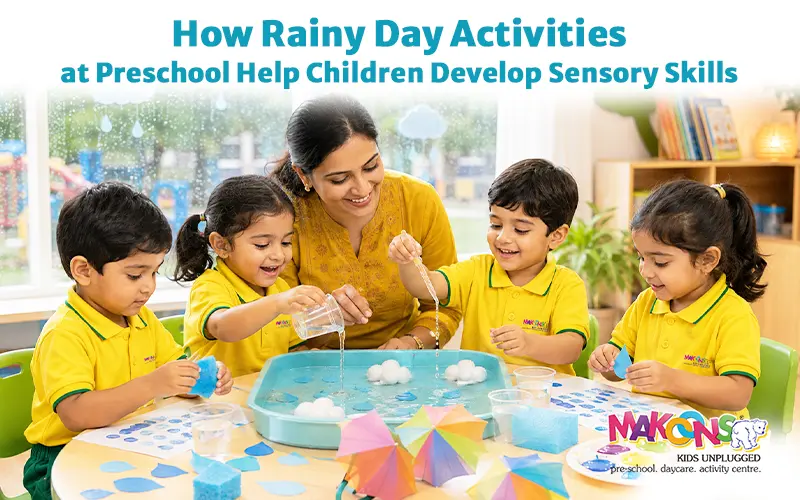
However, rainy days do not
have to mean that learning comes to a halt, as children may be stuck indoors
for longer periods. Indeed, wet weather can be a great opportunity for
exploring, creating, and hands-on learning. Well-planned rainy day
activities for preschool can be valuable for children's development,
particularly when they include sensory experiences.
Sensory
learning allows children to explore the world around them through their senses
of touch, sight, sound, smell, and movement. Preschools can turn a rainy day
into a fun learning experience with engaging sensory activities for
preschoolers. These activities support important developmental skills while
making preschool learning enjoyable and meaningful.
Understanding Sensory Development in Early Childhood
Sensory development is a child's ability to receive,
process, and respond to information through their senses. During the preschool
years, children's brains develop rapidly, making sensory experiences
particularly important.
Multi-sensory activities help develop neural pathways that
support learning and growth. Touching different textures, listening to sounds,
observing colours, and handling materials can all contribute to a child's
development. This is why sensory
play in preschool is an important part of quality early
childhood education.
Sensory-rich experiences can support children's cognitive,
language, motor, social, and emotional development.
Benefits of Rainy Day Activities for Preschoolers
Rainy days can naturally spark children's curiosity. The
sound of raindrops, the smell of wet earth, and changes in the environment
provide unique sensory learning opportunities.
Rather than seeing rainy weather as a limitation, teachers
can use it to plan creative rainy
day activities for kids. These activities encourage children to
discover, experiment, and learn through first-hand experiences.
Fun indoor activities can keep children engaged while
supporting several important areas of child development.
Sensory Bins for Hands-On Exploration
One of the best sensory
activity ideas for preschoolers on rainy days is a sensory bin.
Sensory bins can be filled with safe, age-appropriate
materials such as:
·
Rice
·
Sand
·
Water beads
·
Cotton balls
·
Leaves
·
Pebbles
Children can use their hands and simple tools to explore
different textures. They can scoop, pour, sort, and compare materials while
developing their understanding of different objects.
Sensory bin activities can support fine motor skills,
hand-eye coordination, concentration, and early problem-solving skills while
creating engaging preschool learning experiences.
Water Play Activities for Sensory Awareness
Rainy days are a great opportunity for safe indoor water
play.
Preschool teachers can set up simple water stations where
children can:
·
Fill different containers with water
·
Explore floating and sinking objects
·
Compare water levels
·
Observe movement and splashing
These preschool
water activities introduce children to basic scientific
concepts while engaging their senses of touch and sight.
Water play can also support language development as
children describe what they can see, feel, and discover.
Listening Activities to Develop Auditory Skills
Rain provides unique opportunities for auditory learning.
Teachers can encourage children to:
·
Listen to different sounds made by rain
·
Identify sounds in their surroundings
·
Compare loud and soft sounds
·
Participate in rhythm and music activities
Thehildren develop listening
skills, concentration, and auditory awareness.
Strong auditory awareness is an important part of
communication and early learning.
Arts and Crafts to Stimulate Multiple Senses
Creative projects can provide rich sensory experiences
because they engage several senses at the same time.
Preschoolers can try simple rainy-day crafts such as:
·
Finger painting raindrops
·
Creating cloud collages
·
Using textured materials
·
Mixing colours
·
Making paper umbrellas
Art activities encourage creativity, fine motor
development, and self-expression. They also allow children to explore textures,
colours, shapes, and patterns through enjoyable preschool learning activities.
Storytelling Through Sensory Learning
Rainy weather can create a cozy atmosphere for interactive
storytelling sessions.
Teachers can make stories more engaging by incorporating:
·
Sound effects
·
Textured props
·
Movement activities
·
Visual aids
Combining stories with sensory experiences can make
learning more interesting and memorable.
Interactive story reading supports imagination,
vocabulary, listening, comprehension, and early literacy skills.
Movement Activities for Physical Development
When outdoor play is restricted, children can still stay
active with indoor movement games.
Some fun indoor
activities for preschoolers include:
·
Rain-themed dance activities
·
Simple obstacle courses
·
Animal movement games
·
Action songs
·
Follow-the-leader games
These activities can support balance, coordination, body
awareness, and gross motor development.
Physical activity is an important part of child
development and helps children stay active and healthy during the preschool
years.
Nature-Based Sensory Exploration
Rainy days can also be a great opportunity to bring
elements of nature indoors.
Teachers can safely collect and display items such as:
·
Wet leaves
·
Flowers
·
Pinecones
·
Small branches
Children can explore their textures, colours, and smells
while talking about how the environment changes during and after rain.
Nature-based sensory play encourages observation,
curiosity, and early scientific thinking.
Supporting Social and Emotional Development
Many sensory activities involve group participation,
giving children opportunities to interact with their classmates.
Through group sensory play, children can learn to:
·
Take turns
·
Share materials
·
Communicate with peers
·
Work together
·
Follow simple instructions
These social interactions can build confidence and
cooperation.
Sensory play can also provide a calming experience for
some children, helping them feel more comfortable and settled in the classroom.
Enhancing Language and Communication Skills
Sensory-rich experiences encourage children to describe
what they see, hear, feel, and smell.
Teachers can introduce new vocabulary related to:
·
Weather
·
Textures
·
Colours
·
Shapes
·
Sounds
·
Nature
When children discuss what they observe, they have
opportunities to build vocabulary and strengthen their communication skills.
Language development is a central part of early childhood
education and plays an important role in future learning.
Learning Through Play That Engages the Senses
Sensory activities can also support children's early
cognitive development.
During sensory play, children can learn to:
·
Compare and classify objects
·
Solve simple problems
·
Make predictions
·
Recognise patterns
·
Understand cause-and-effect relationships
These foundational thinking skills can support future
learning across different subjects and improve overall preschool learning
outcomes.
Creating Positive Learning Experiences on Rainy Days
Children learn best when they are active, interested, and
enjoying themselves. Well-planned rainy
day activities for kids can turn indoor time into an
opportunity for exploration and discovery.
By including sensory experiences in everyday preschool
activities, teachers can encourage children to participate actively and learn
through play.
These positive learning experiences can help children
develop curiosity, confidence, creativity, and a lifelong interest in learning.
Conclusion
Rainy days do not have to limit learning and play. With
carefully planned activities, preschools can turn wet-weather days into
opportunities for sensory exploration, creativity, movement, and discovery.
Water play, sensory bins, arts and crafts, storytelling,
movement games, and nature-based activities can support important areas of
children's development.
By incorporating sensory
activities for children into everyday preschool learning,
educators can create meaningful experiences that support cognitive, social,
emotional, physical, language, and communication skills while making rainy days
fun and memorable.
Frequently Asked Questions
1. Why are rainy day activities important in preschool?
Rainy day activities keep children engaged indoors while
giving them opportunities to learn, explore, create, and develop important
developmental skills.
2. How do sensory activities help children develop?
Sensory activities can support cognitive development,
language skills, motor coordination, problem-solving, concentration, and
social-emotional development.
3. What is sensory play in preschool education?
Sensory play involves activities that stimulate children's
senses, including touch, sight, hearing, smell, taste, and movement. Examples
include sensory bins, water play, textured materials, and sound-based games.
4. How can sensory play enhance preschool learning?
Sensory play can improve children's concentration,
observation, communication, problem-solving, and exploration skills, making
learning more interactive and enjoyable.
5. What are some preschool activities to do when the weather is rainy?
Some popular rainy day activities include sensory bins, indoor water play, storytelling, arts and crafts, music and movement games, nature exploration, and simple indoor obstacle courses.
