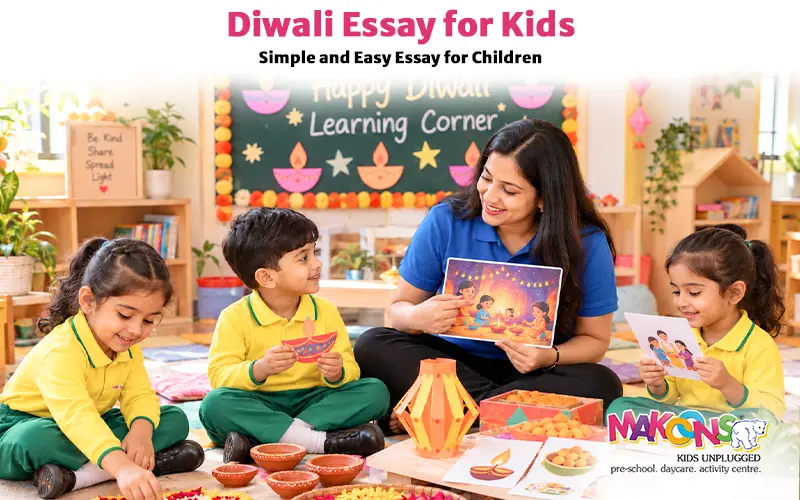
Diwali is one of the most celebrated and happy festivals in India. The Festival of Lights is known as this and is a source of happiness, love and positivity. Children look forward to Diwali as they have holidays, new clothes, yummy sweets to eat, decorate their home and spend time as a family.
A Diwali essay for children is a great idea to teach children about this wonderful festival, customs and its significance. Diwali's message is that good overcomes evil and light overcomes darkness. It also reminds us of kindness, sharing of happiness and helping others.
Why Celebrate Diwali?
Diwali is very important to religion and culture. The Hindu epic Ramayana says that after eighteen years of exile, Lord Rama and Goddess Sita finally came home to Ayodhya where they overcame Ravana. The people of the town of Ayodhya welcomed them with earthen lamps called diyas in a row.
Ever since, Diwali has been celebrated as marking the triumph of good over evil and Lord Rama returning to his kingdom.
Diwali is also to honor the Goddess of wealth, prosperity and good luck, Goddess Lakshmi. On this auspicious day, the devotion of the families is poured on Goddess Lakshmi and Lord Ganesha.
Diwali is celebrated differently in each community, creating an even more meaningful and special festival.
Also Read: My Favourite Festival: A Simple Essay For Preschool Kids
What Ways Can We Celebrate Diwali?
The first step of celebrating diwali is cleaning and decorating the homes. People believe that the lovely and stunning home will bring in happiness and positivity.
Some of the exciting ways people celebrate Diwali:
Cleaning and decorating: Families decorate and colour their homes with colourful lights, flowers and beautiful decorations.
Lighting of the diyas: Small earthen lamps are lit around the door, windows and balcony, creating a glow in homes.
Children and adults create coloured designs (rangoli) using coloured powders, flowers and colored powders of rice
Everyone wears their favourite traditional clothes and has friends and family meet them.
Treats galore: Indulgence in sweets means that delicious sweets like laddoos, barfis, gulab jamuns and kaju katli are also a part of the festival.
Families pray for happiness, blessings and success: -
Gifting: Giving sweets, chocolates and gifts to loved ones.
Sharing happiness: Families visit relatives, help those who are in need and they share the happiness of the festival.
Thanks to all the activities, Diwali is always a joyous occasion with smiles and togetherness.
Why are Diyas and Rangoli So Important?
Diyas are an important symbol of Diwali. The tender light is a symbol of hope, knowledge and goodness. A diya is lit to remind us to get rid of the bad things in our lives and walk the path of truth and goodness.
Colour and beauty is added to the festival with rangoli. The children love creating flowers, stars, peacocks and other patterns out of their homes. Others also adorn their doorways with colourful flowers and torans for decoration.
The following simple traditions foster creativity, teamwork and family bonding. They also impart the Indian culture and traditions to the children.
Delicious Food and Sweets During Diwali
How could Diwali be without delicious sweets? One of the most great things about this festival is the food!
Indian families cook or purchase a number of scrumptious snacks such as laddoos, kaju katli, gulab jamun, samosa, namak pare and many other items which are prepared during festivals. Sometimes families cook special dishes and serve them to visitors.A family will sometimes cook special meals themselves and serve them to visitors.
Children enjoy gifts of sweet boxes and chocolate from family and friends. But Diwali is not just about indulgence in delicious food. It's also a question of giving away what we've got to somebody else.
Treats to neighbours, feeding the hungry, and sharing with friends adds to the meaning of the festival.
Help Celebrate an "Eco-Friendly Diwali"!
Diwali is a festival of happiness, we should celebrate it in a safe, happy manner. Too many firecrackers may result in air and noise pollution, as well as disturbing babies and elderly people, and causing harm to animals.
Here are a few simple tips to enjoy a green festive Diwali:
Light up the traditional diyas or use energy efficient decorative lights.
Create beautiful rangoli designs with flowers and natural colours.
Don't use explosives like firecrackers and opt for peaceful events.
Avoid exposing pets and birds to high levels of noise.
Do not waste food, electricity and water.
Instead of plastic decorations, use reusable ones.
Give out sweets, clothes and helpful gifts to those who need it.
Tidy up after parties and dispose of waste properly.
A green Diwali can be as colourful and exciting! Nothing is better than a celebration in which no one, no animal or no environment is harmed.
Also Read: Dussehra Speech for Kids: A Simple and Easy Speech
What Do Children Learn from Diwali?
Children learn a lot of good lessons during Diwali. Honest, courageous, loving and kind are stronger than hatred and dishonesty.
Children develop a sense of respecting older people, caring for their families, helping others and sharing items with their peers. They also know the value of being thankful and bonding.
For instance, decorating the home, sharing some sweet treats with neighbours or giving toys to children in need are small gestures which bring huge happiness.
Diwali also has a message to teach us that happiness is multiplied when shared with others.
Here are 10 lines on Diwali for Kids
These 10 Diwali Lines for Kids are easy to learn and remember:
Diwali is a festival that is celebrated in India.
It is also termed as the Festival of Lights.
Diwali is a celebration of good over evil.
After a fourteen year exile, Lord Rama went back to Ayodhya.
During Diwali people decorate and clean their homes.
Diyas are lit and rangolis are made and put in our homes.
Families worship Goddess Lakshmi and Lord Ganesha.
Children like sweets, gifts and beautiful decorations.
Celebrate in a safe manner – don't use harmful firecrackers for Diwali!
We learn to share love, kindness and happiness at Diwali.
These siple sentences can be used to assist children in creating a short essay, speech or classroom activity.
Conclusion
Diwali is a lovely festival, which gives us our homes brightened and our hearts filled with light, love and happiness. It connects families and it reminds us of how good, it reminds us of how kind, it reminds us of how hope-filled.
Each and every tradition has some special significance from making rangoli, lighting diyas, sharing sweets, helping others, etc. Kids can help make this festival even better by having a safe and green celebration.
The essence of Diwali is not just about decorating our homes, it's about making the world around us brighter through what we do.
May this Diwali be a happy one with bright lights, delicious sweets, kind hearts and happy smiles. May the Festival of Lights serve to bring happiness, peace and prosperity to all!