
For parents beginning their search for a preschool, a vibrant classroom, air-conditioned learning environment, smart clothing, and shiny brochures can be a sell.
However, the truth is that a beautiful building does not equal a great preschool!
There are some very good preschools that have simple facilities and there are some very impressive looking facilities that may not be very nurturing for preschoolers.
When you're applying to preschool, it's important to know what's really important when it comes beyond the facade.
Watch The Children, Not The Walls
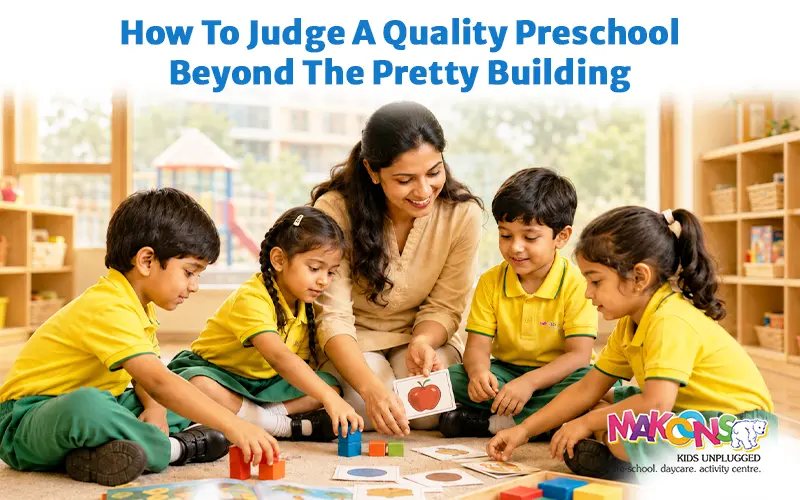
The best way to assess the quality of the preschool is to watch the children.
When visiting school ask yourself:
Do the children look happy and comfortable?
Are they actively participating in activities?
Do they seem confident enough to speak to teachers?
Pay Close Attention To The Teachers
Look at how the teachers relate with the children.
Seek teachers with the following characteristics:
Ask kids to pose questions
Support children to feel embarrassed if they are distressed
Guide and don't constantly scold
Terrible teachers of preschoolers do not know that every child learns differently. Their emphasis is on confidence, rather than activities.
An average classroom can become extraordinary with a warm teacher.
Ask About The Preschool Curriculum
There are a lot of parents who ask the schools about how fast their child learns the letters, numbers, or writing.
Characteristics of a good preschool curriculum should include:
Storytelling
Music and movement
Art and craft
Outdoor play
Free play
Early literacy activities
Problem-solving games
Social and emotional learning.
Preschool isn't meant to be like Primary School.
Children should have the opportunities to explore, imagine, create and interact.
Related Topic: Top 10 Preschools In India Offering The Best Early Learning Programs
Look At The Learning Environment
A quality preschool learning environment doesn't require a lot of expensive equipment.
Rather, it ought to provide:
Child-friendly furniture
Accessible learning materials
Reading corners
Creative play spaces
Safe outdoor areas
Most importantly, children should have opportunities to learn through hands-on experiences and not filling worksheets all day long.
Play is not a distraction from learning at this age, it is learning!
Notice How Discipline Is Handled
All preschoolers have challenging times.
May cry a lot, not share, or have occasional tantrums.
These situations do happen. The question is what does the school do about it?
Ask:
How do teachers handle conflicts?
What happens when a child misbehaves?
How are emotional outbursts managed?
In good schools emphasis is placed on guidance, patience and teaching the proper behavior not punishment.
Check Teacher-To-Child Ratios
This is one of the most significant and neglected ones.
One teacher to a large number of children is not an effective ratio because attention to each child is hard to provide.
The smaller groups enable teachers to:
Observe children closely
Provide alternate formats for the information
Address emotional needs
Build stronger relationships
Children flourish when they are viewed and understood.
Find Out How The School Communicates With Parents
Parents should be considered partners and not just paying customers in a preschool.
Ask:
How often are progress updates shared?
Are parent-teacher meetings conducted regularly?
How are concerns communicated?
Can parents discuss developmental issues openly?
Good communication often is the sign of a school with a real interest in the development of children.
Safety And Hygiene Matter More Than Fancy Facilities
Good looks can go a long way in the classroom, but basic safety is more important.
Look for:
Washrooms and classrooms are cleaned regularly.
Safe play equipment
First-aid availability
Effective oversight of activities.
Trust Your Instincts
Sometimes, it's your instincts that are important too, after all the questions and observations have been made.
Ask yourself:
Were the school's premises welcoming?
Were teachers interested in the children?
Would your child be at ease there?
Sometimes parents will see and report things that brochures won't.
Final Thoughts
The search for the best preschool in India cannot be based on the size of the premises or the looks of the brochure.
It's about finding a place where your child will feel:
Safe
Respected
Encouraged
Supported
Don't buy into the marketing hype and pay attention to the circumstances which actually form a child's early years:
Caring teachers
A balanced curriculum
Meaningful play
Emotional development
Strong parent-school communication
Preschool is not school preparation, per se, at the end of the day.
FAQs
1. What is important about the teacher/child ratio?
Smaller groups allow teachers to be able to give more attention and support to each child.
2. What are some ways for parents to assess a preschool curriculum?
For a blend of play and stories, art, outdoor play, and early learning experiences.
3. What to look at when visiting a school?
See how teachers interact with children and if children are happy, interactive and comfortable.
4. Is there a relationship between size of the preschool and quality?
Not necessarily. There are many smaller preschools that offer a high quality of care, good teaching and a caring setting.
