
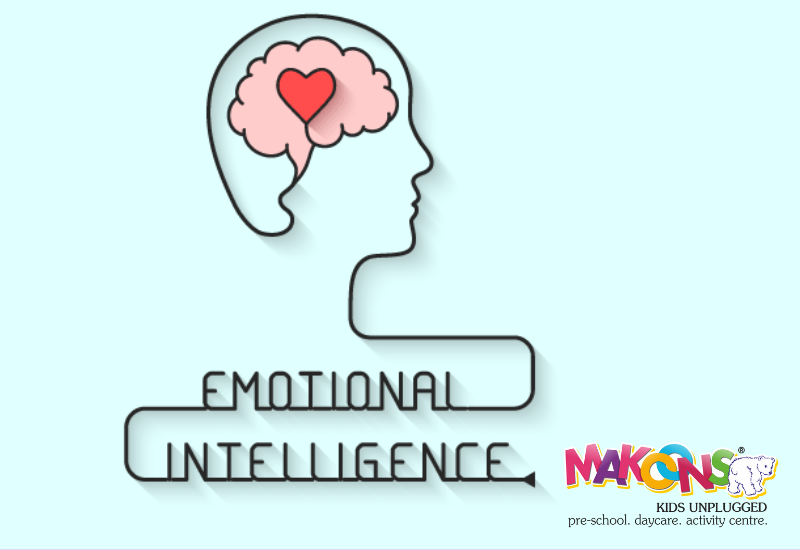
In the modern world report cards, examination results, and ranks in classes are the ways to gauge education. Good performances are rejoiced by parents and teachers, but bad results may cause disappointment and self-doubt. However, as life progresses, one thing is evident, success does not just come in grades, but in knowing yourself and others. Emotional intelligence comes in at that point.
Emotional intelligence (EI) is the capacity to recognize, detect and manage our emotions (and other people) in such a manner that we can manage our experiences. It will turn you into a better communicator, eliminate challenges and build meaningful relationships. Knowing how to overcome the feelings and find oneself is far more productive in most ways than looking up the solutions in the textbooks.
What is meant by Emotional Intelligence?
Emotional intelligence otherwise known as EQ (Emotional Quotient) is made up of 5 components:
- Self-awareness- being aware of how you feel and what you can accomplish.
- Self-control - being relaxed in stress and controlling impulses.
- Motivation - setting the goals and not abering the path despite the fact that the situation is not nice.
- Empathy - the capacity to consider other individuals and their opinions.
- Social skills - the aptitude of communicating, collaborating and resolving differences productively.
These are the characteristics that ensure people are successful in their personal and professional life.. As opposed to grades (which just test knowledge), EQ tests how well you know yourself - your reaction, your adaptation and your growth.
Read more : 15 Skills Children Should Really Learn Before Starting School
Your Score Does Not Make You
Grades are useful in determining performance in particular subjects, however, they fail to measure creativity, kindness, resilience, and emotional strength. Just because students are poor students does not mean that they are bad leaders, communicators, or empathizers, which are the attributes that enable them to be successful in life.
Having a high score may get you into a college with a good reputation, yet it is the emotional intelligence which can get you to find yourself, remain confident and confront the uncertainties of life fearlessly. Grades are short-lived, emotional awareness is life long.
1. Emotional Intelligence Develops Self-understanding
To be truly successful, you need to know yourself. Self-awareness refers to the realization of feelings, values and motivations. It is asking the question, "Why do I feel this way? " or "What truly makes me happy?"
Giving students time to reflect will make them more aware of their actions and objectives. Grades can make you know how well you have learned something, but emotional intelligence makes you discover yourself, what you are good at, what you are bad at, and what is your sole purpose in life.
2. EQ Helps to cope with stress and failure
All of the students have difficulties: pressure, competition and the fear of failure in exams. The highly emotionally intelligent people deal with stress calmly and in a controlled manner. They see failures as lessons to learn, which are not the reasons to give up.
As an illustration, a student who fails an examination can recover better when he or she contemplates on feelings and approaches. Conversely, a person that is result oriented might experience failure. Emotional intelligence transforms frustration into strength which helps you to grow beyond numbers.
3. Empathy Empowers Relationships
Emotional intelligence is based on empathy. It enables you to reach out to people, know what they feel and treat them kindly. Empathy can aid students to make friends and become team players in classrooms.
Whereas grades are concerned with competition, empathy is concerned with relationships. When you are concerned about the feelings of others you develop trust and cooperation, which no examination can test. Such knowledge does not only enhance your social life, but your discovery of yourself through sympathy and mutual experience.
4. Emotional Intelligence Increases Motivation
Grade motivation usually disappears after exams. But purpose-based motivation, which is based on curiosity, growth, and passion, is more enduring. Emotionally intelligent students do not study to get marks, they do it because it is fun to find out.
They have self goals, remain steady and they are proud of improvement, not perfection. When you are concerned with knowing your feelings and what motivates you, you will become self-driving, which is one of the keys to success and happiness.
5. The EQ Shapes Improved Decision-Making
The processes of making decisions demand emotional intelligence rather than rationality. Highly EQ students will respond first before they will act, they will also be able to control their impulsions, and will contemplate the consequences of their actions.
Using the example, emotionally intelligent individuals, instead of being angry with criticism, will take time before thinking about it and use the criticism to improve themselves. In such a way, EQ will help you choose what is congruent to your values - the decisions that will enable you to learn who you are and get more informed with each experience.
6. Emotional Intelligence enhances the ability to communicate
Communication is not just about talking like someone sounds good; it has to do with listening and interpretation of emotions. Emotionally intelligent students talk freely, manage confrontations and they speak effectively.
Emotional communication is among skills that are most appreciated in work places. Employers are not interested in individuals with high grades only but in individuals who can work in groups, change their ways and understand others. EQ makes you approach people in a genuine way and this makes relationships stronger and successful in the long run.
7. EQ, rather than IQ, is more important in life.
Studies have always indicated that emotional intelligence is a better predictor of success as compared to IQ or grades. People with high EQ have more stable and fulfilling lives whether it is in the field of leadership, teamwork, or personal happiness.
Grades can get you opportunities, but EQ will keep you and make you grow with opportunities. Life is in a continuous state of flux, and the individuals that are able to evolve down to emotions are the ones who succeed. When you get to know your feelings, you not only do a good job, you actually discover yourself.
8. Emotional Intelligence Promotes Goodness and sympathy
The world is full of competition and, in most cases, forgets about the strength of kindness. EI persons will be respectful and empathetic to others. They know that success does not involve being better than the other one, but being better than the day before.
Children will be raised in a tender and obedient way when they are taught how to appreciate feelings. When a child learns how to console a friend, he/she is as successful as a child who gets an A. Compassion helps you identify with your humanity and keep experiencing yourself in all good things that you do.
9. EQ Results in Elongated-run Sorrow
Good grades offer one a momentary joy, whilst emotional intelligence offers happiness throughout life. A balanced life is led when you know how to deal with stress, show love, forgive and remain positive.
There is no need to have trophies or certificates to be happy, it is the inner peace that matters. And calm is a state of being where you actually feel yourself - when you know what you feel, when you tolerate flaws and imperfections, when you opt to be grateful instead of being envious.
10. The Development of EI in Everyday Life
The good news? Emotional intelligence is a developed trait. The following are some of the easy methods of developing EQ:
- Take a minute to reflect each day: Although it might sound contradictory, you need to take five minutes to think about what you felt and why.
- Be a good listener: Every time a person speaks, pay all your attention to him or her.
- Write something you are grateful about: This is a thankfulness journal; write down three things you are grateful about each day.
- Wait before you react: One should also take deep breaths when angry rather than react at once.
- Be kind: Little things of it such as helping, smiling, encouraging, build empathy.
All these little practices are what will grow your emotional resilience and bring you to your senses gradually and with peace.
Grades vs. Emotional Intelligence: The Real Difference
| Aspects | IQ | EQ |
| Focus | Academic knowledge | Self and social understanding |
| Measurement | Exams and marks | Emotions, relationships, behaviour |
| Duration | Temporary | Lifelong skill |
| Impact | Academic success | Life sucess and happiness |
This analogy demonstrates that grades are significant but EQ determines how we use our knowledge in actual life conditions which involves empathy, confidence and grace.
Conclusion
The grades can be an open door however it is your emotional intelligence that can walk you in those grades. It teaches you to be calm when you are stressed, appreciate loveliness and relate with oneself and others meaningfully.
Just because you have marks on your forehead doesn't mean you will become who you are tomorrow, remember that it is your attitude that makes you what you are. Get used to reflecting, putting yourself in every victory, defeat and the process in between. Emotional intelligence is not merely an ability, it is the basis of a satisfying, well-balanced and indeed successful life.
Read Also : What The Top Preschools In India Have In Common That Others Don't
