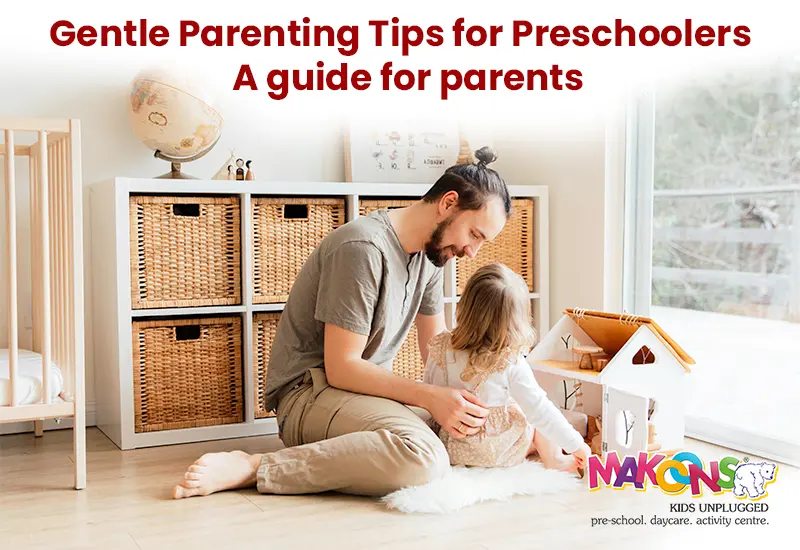
Raising a preschool child can be like the metaphor of a rollercoaster in which the fun, positive days filled with milestone making emails are equally matched with days that challenge your patience levels. On the good days the remixed version of temper tantrums, a hundred questions and so much independence, it can be difficult to know how to parent! In those times, understanding gentle parenting for preschoolers can help.
Gentle parenting for preschoolers does not mean you are permissive or necessarily overly strict but rather provides love and empathy with a direction that helps kids succeed. This blog will be your preschool parenting guide to show you how to create relationships, encourage discipline with love and build emotionally secure children.
What is gentle parenting?
Gentle parenting is a respect based, connection based, and understanding way of parenting. Essentially it is a way of helping parents to interact with children, while engaging healthy boundaries and limits.
Defining gentle parenting involves a combination of:
- Respect for a child's needs and feelings.
- A consistent set of rules and routines.
- Using empathy and compassion to provide guidance and discipline.
- Encouragement of good behaviour rather than change through punishment.
Why Gentle Parenting Works Best for Preschoolers Preschoolers: The Most Basic and Important Stage!
Preschoolers are struggling with independence but also seeking reassurance and safety. The rate of their language development, motor skills, and social interactions are developing so quickly that gentle parenting preschool strategies can help you give adequate structure while they develop the appropriate feelings of love and security.
Emotional Development
Using emotional parenting techniques allows parents to help children name their feelings and manage them, rather than allowing behaviours and outbursts to become overwhelming patterns.
Building Trust
When children experience positive parenting for kids, they start to trust their parents. The core principles of gentle preschool parenting
1. Connect Before Correcting
Parents, before reprimanding or disciplining when children are not behaving in a way that you expect them to, as parents we should say, 'I want to connect, but I want to connect with my child first.' For example, if the thoughtful parent does not say, “Stop crying! “It’s nothing!” they might say. “I see that you are upset. Can you tell me why?” This makes a huge difference.
2. Loving Discipline
Discipline is to teach, not to intimidate. Gentle parenting goes out of its way to plan frankness for love. If a child is throwing a toy, parents can try to view it kindly and then say, "Toys are not for throwing and are for play. They will pick them up together."
3. Routine & Consistency
Preschoolers have a sense of expectations, and they like it as a routine. When preschoolers know a consistent bedtime, mealtime or playtime, they feel good about it and have fewer tantrums.
Mindful Parenting Tips for preschoolers
Stay Calm During Tantrums
- Preschoolers are developmentally challenged by too much information and/or too little information, which is normal, and sometimes they will act out in the form of tantrums or melt down. Rather than feeling anxious or panicked, Parents should:
- Take several deep breaths.
- Talk in a slow, deliberate tone.
- Let the child cry and recognize that their crying is a normal part of their learning process, comfort them when they start to settle down.
Be Present
Parents should put down their mobile phones while playing. Even a 15-minute play session a day, being fully present to the preschooler, will give them time to practise nurturing us gently.
Validate Feelings
Validate feelings by saying, "I know it is hard to wait; I promise we can play when we are done with dinner." This is both empathy and a parental boundary.
Practical Parenting Tips for Parenting Preschool Children
Foster Independence
Allow preschool children to do little things such as choosing clothes, setting the table and cleaning up toys. This fosters independence and reduces power struggles.
Choices Matter
Instead of saying, "Make sure you eat your food now," say, "Do you want to eat the rice first or the vegetables first?" When children have the opportunity to make controlled choices, they feel powerful.
Model
Children model what they see. If parents are patient, kind and respectful, it is likely that their preschoolers will model these traits too.
Emotional Parenting Strategies :-
Teaching Emotional Vocabulary
Help a child label their feelings: happy, sad, angry, excited. Even with fun books or picture cards!
Calm Down Corners
Instead of a punishment, designate a quiet space with cushions, books, or soft toys as a space for children to go in upset situations. This normalises self-regulation.
Storytelling/Teaching Values
Stories about sharing, waiting your turn or saying sorry slowly teach preschoolers the values we want them to have.
Common Challenges Related to Preschool Parenting: Gentle Solutions:
Tantrums & Meltdowns
Challenge: preschoolers have a hard time managing big feelings.
Gentle Solution: was to provide comfort, label the feeling and redirect.
Sibling Rivalry
Challenge: the task of competing for parent attention.
Gentle Solution: to acknowledge both your children's feelings and one-to-one time with both of them.
Opposing Routines
Challenge: bedtime battles, picky eating.
Gentle Solution: follow the routine that you had set for them, use visual schedules and bring in games.
The Role of Discipline in Love
Natural Consequences
If a child spills the juice running with a cup, let them help you clean it up. This guides accountability without a harsh reprimand.
Gentle Time-Ins
Instead of telling a child to go away ("time-out"), sit down with them, walk through what happened, and steer them toward making better choices.
Encouragement and Praise
Talk about the good things they do. For example: "I really liked how you used your crayons to share today." Small proclamations build self-esteem.
Preschool Parenting Guide: Everyday Practices
Morning Routines
- Use wake-up hugs and a positive beginning.
- Let the child choose between two clothing options.
- Use a routine chart to include pictures.
Mealtime Suggestions:
- Eat family style.
- Don't get distracted by the TV at mealtime.
- It helps to let the children do some simple meal preparation (like washing fruits and setting the table).
Bedtime Routine:
- Have bedtime the same every day.
- Use calming interactions (like bedtime stories).
- Be comforting and allow comfort toys or blankets.
The Parents' Role in Nurturing Preschoolers Gently
Patience is important.
Gentle parenting is inherently slower-paced. Parents need to remember preschoolers are still learning, and mistakes are part of that growth process.
Team with Teachers
The home-preschool partnership is important. Be sure to share each other's routines, triggers, and calming or coping strategies.
Take Care of Yourself.
Mindful parenting tips also include self-care. Parents must make time to rest, eat well, and manage their stress levels if they intend to parent successfully.
Comparing Gentle Parenting and Traditional Parenting
| Feature | Traditional Parenting | Gentle Parenting |
| Discipline | Punishment as a Goal | Discipline with Love |
| Focus | Obedience | Connection and understanding |
| Expressing emotions | Emotions are often ignored. | Emotions are encouraged and validated. |
| Parent's role | Authority figure | Guide and role model, inclusive |
| Long-term consequences | Fear or rebellion | Trust and healthy confidence |
Long-term benefits of gentle parenting
Preschool emotional intelligence
Children will develop an understanding and see success in regulating personal emotions.
Strong bonds with parents
Respectful communication builds trust and lifelong relationships.
Resilience
Children who have been nurtured are better tuned for challenges at school and socially.
Healthier relationships
Empathy nurtured children build healthy relationships and positive friendships.
Conclusion
Parenting preschool children can be joyous and equally challenging. As parents practising gentle parenting preschool strategies, the parent creates and maintains homes filled with empathy, love, and respect. They applied mindful parenting tips, emotional parenting techniques, and consistent routines that allowed them to discipline with love.
Good preschool parenting guides remind us that children don't need just rules—they also need nurturing! Children need parents who listen and connect, with patience, to guide them. When we choose positive parenting for kids and agree to nurture preschoolers gently, we parent not only happier preschoolers but also eventually become compassionate adults.
Gentle parenting is not about perfection; it is all about being present. A hug here, an explanation there, and loving corrections all add up to build confident, kind, and resilient children.