
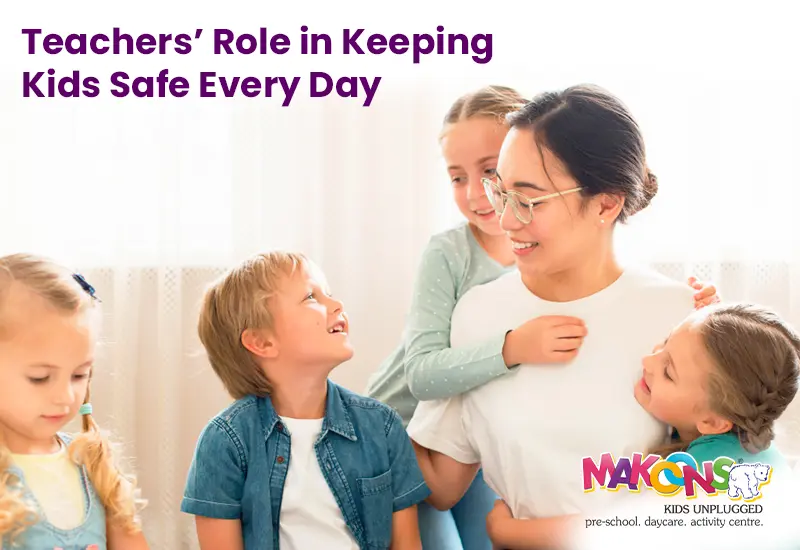
Every parent sends their child to preschool with the same expectation, that their child would be cared for and nurtured but, more importantly, kept safe. Safety in early childhood education refers to a lot more than avoiding physical harm. Safety includes emotional safety, hygiene, and creating space for exploration without fear.
This is where teachers come in. The teachers' role in safety for children is broad and important. A preschool teacher wears many hats: carer, educator, guide, and protector. Children's daily safety practices in preschool not only keep children safe but also guide them toward feeling safe, trusting staff, and developing confidence in their school as a "second home".
Why Teacher Responsibility in Preschools is Important?
Safety as the Foundation of Learning
Children need to feel safe in order to learn. A child in preschool who is worried about falling, hurting themselves, or being bullied is unlikely to be able to focus on the activity. A safe learning environment breeds a comfortable space in which curiosity and creativity can flourish.
Trust Between Families and Schools
Families trust teachers with their most precious responsibility: their child. When child protection is prioritised within the preschool, families build lifetime confidence in their preschool.
Preventing Incidents Before They Happen
Accidents can happen anywhere in an environment; however, intentional attention to safety duties by preschool teachers can reduce the risks. For example, teachers who can recognise the corner of a carpet that is sticking up on the floor, or who sense a child who is emotionally distressed, can act and learn how to avoid the small issue before it escalates into a major concern.
Key Areas of Responsibilities for a Teacher in a Preschool
Physical Safety in the Classroom:
- Take care when handling furniture and checking for sharp edges or wobbling.
- Developmentally appropriate toys/supplies are non-toxic.
- Ensuring there is proper supervision during active play, for example, to help prevent a fall, collision or possible accident.
Health and Hygiene:
- Teachers need to role model good hygiene and procedures;
- Washing hands before eating and after using the washroom.
- Cleaning toys and the surfaces routinely.
- Teaching children how to cough and sneeze.
Emotional Safety:
A safe educational space includes no fear-mongering, bullying or harassing, as teachers have responsibilities to help protect the emotional safety of children.
Some of the ways a teacher can help protect emotional safety are:
- Encouraging the learning of empathy, kindness and other human relations skills;
- When conflict does arise, intervening to help or mediate;
- Create a safe educational space, ensuring all children are included and exploring human relations so they feel like valued participants in the social space.
A daily sample checklist:
| Safety area | Daily Practices | Teacher's Role |
| Arrival And Dispersal | Check IDs | Make sure only authorised people are allowed to pick up the child |
| Classroom safety | Inspect toys, remove sharp objects andchild proof thefurniture | Maintaina risk free zone |
| Health | Observe if there areany signs of illness, teachhand washing | Protect childrenfrom common infections |
| Playground | Check all the swings and slides, Supervise at all times | Prevent accidents duringoutdoor play |
| Emotional Safety | Observe if the child is socially separated or anxious, support shy children | Create a caring environment |
| Emergency | Practice fire drills, explainsafety rules | Prepare childrenfor emergencies |
The Role of Teachers in Child Safety Beyond the Classroom
Responding to Emergencies
Preschool teachers need to ensure they are trained in first aid and CPR, emergency preparedness and evacuation procedures and emergency safety conventions or practices. When accidents occur, it certainly is better to have calm and quick responses in the moment, as it helps children stay focused on the aim of, or effectiveness of, the activity, not panic.
Child Protection in Educational Settings
Sadly, some threats are not a matter of accidents. Teachers need to be aware of possible abuse or neglect. By noticing something changing in terms of behaviour, physical appearance or mood, teachers can raise an early flag of concern and action to protect those children who are more vulnerable than others.
Keeping Parents Informed
Safety is a shared responsibility. By relating observations, no matter how many bumps, emotional struggles or social conflicts teachers see, parents and guardians are kept informed and active.
Designing Safe Learning Environments
Creating safe spaces
- Clear signage regarding exits
- Furniture built to child size, reducing possible falls
- Soft flooring in play areas
- Lockable storage space for cleaning supplies and mechanisms such as scissors
Routines that build certainty
Most importantly, having continuity in daily routines helps preschool children feel safe. For example, having circle/snack/playtime in the same sequence each day will lessen anxiety and create opportunities for children to learn about their world and what to expect.
Telling children safety guidelines:
Teaching children guidelines also develops their responsibilities:
To walk inside,
To play with toys as they were designed for,
To stay within the primary adult location,
To request help when needed,
This also develops children's understanding that safety is everyone's responsibility.
Ongoing Guidelines for Preschool Teachers in Terms of Safety
Professional Development
Preschool teachers will receive training in:
First Aid & CPR
Classroom Safety Procedures
Aspects of Child Development & Psychology
Record Keeping & Reporting
Keeping logs of accidents
Health & safety checks
Emergency drills
Accountability: Records for schools and parents.
Collaboration with Staff
Safety is not a one-person assignment. Teachers cooperate with aides, administrators, and maintenance staff to construct a safe, striving environment in preschool.
Emotional Safety: Discipline in the Spirit of Caring
Positive Guidance, Not Punishment
Teachers should protect children on an emotional level by not resorting to harsh punishment.
The teachers should:
Redirect unwanted behaviour to safer alternatives.
Communicate with calm voices and simple directions.
Acknowledge and praise positive behaviours.
Communicating Your Feelings
Children need a place to let out their anger and fears. Teachers who are patient and listen, and who respond gently, promote children's sense of security in their environment.
Challenges Faced by the Teachers:
Separate Care and Independence:
Children thrive on independence and the freedom to explore but also require some kind of oversight or supervision. Teachers need to allow independence but remain close enough to ensure the child's safety from accidental harm.
Managing Many
It can be overwhelming trying to ensure safety with 4 or 5 preschoolers. Clear routines and visual cues and a network of educators can all help implement safety effectively during routine course development and classroom activities.
The Limitless Environment
Not every preschool will have the best facilities (toilet, washbasin, etc.) to implement this guidance. It is only an educator's creativity that will make this work (turning mats or chairs into safe zones, etc.).
The Daily Safety Routine in a Preschool: Example of what this may look like
Eg. Cold Weather (Dress code – Comfortable & safe to play)
The Morning:
A mild, friendly greeting for each child.
Shoes are tied, and clothing is appropriate for outdoor play.
Observe to see signs of illness.
Morning Routine – Class Activities:
Supervise play centres as closely as possible.
Hand washing before eating their healthy snacks.
Prompt to report accidents and spills, and enforce cleaning of all spills – no matter how small.
Outdoor Play:
Checking the equipment and playground equipment is safe.
Supervision on the field (especially with young children).
Bathroom rest breaks (make a quieter area so the children are both safe and monitored).
Repeat messages about safety restrictions for the climbing structures, slides (one at a time), and swings (monitor the swings for accidents or stopping).
Rest time
Allergy notices for meals – allergies: child not next to allergic child.
Bedding is clean, and bedding is spaced apart.
Quiet time monitoring for safety and sleeping, and sleep monitoring for daily programming.
Facility layout and care team method (adult-student ratio).
End-of-day routine:
Check for any adjacent belongings, and remember to send everyone home with one shoe/little friend – in as memorable a way as possible.
Parents only pick them up.
To provide a short update for each child (with all relevant parties present).
This outline clearly shows how teachers' daily safety planning features naturally within the day.
Long-Term Effects of Responsibility for Teachers in Preschools
Raising Healthier Children
Continuous safe practices lead children to sustain few injuries and illnesses.
Confident Learners
Children who feel safe take more advantage of learning opportunities and age-appropriate challenges, ask more questions, and interact with more open-mindedness with activity.
Readiness of schools enhances the child's sense of safety and the sequence of steps taken before and after school.
Strengthening Parents' and Teachers' Partnerships
Parents admire, value and trust schools/services able to provide evidence of safety when the school education team members were acceptable instead of rules/guidelines/checklists.
Promoting Lifelong Safety Awareness
From watching adult behaviours, children learn safe practice, prioritisation, community responsibility, and care for each other.
Conclusion
Preschool safety is not about rules, required practices or checklists; it is “about people”. Teachers are at the "heart" of providing children with a sense of daily security, protection, and care. From the day-to-day safety in a preschool to the ongoing protection of children in schools, the responsibility of teachers can shape individual outcomes for child physical and mental health and the patterns of confidence they will build to support their lives.
The teachers' responsibility for child safety is both practical and emotional. In addition to the practical measures taken to prevent accidents, threats to child health, inclusion, and teaching children safety and safe practices, preschool teachers must balance caution with empathy and kindness to promote learning and play with an increased awareness and responsibility for knowing they are safe.
