
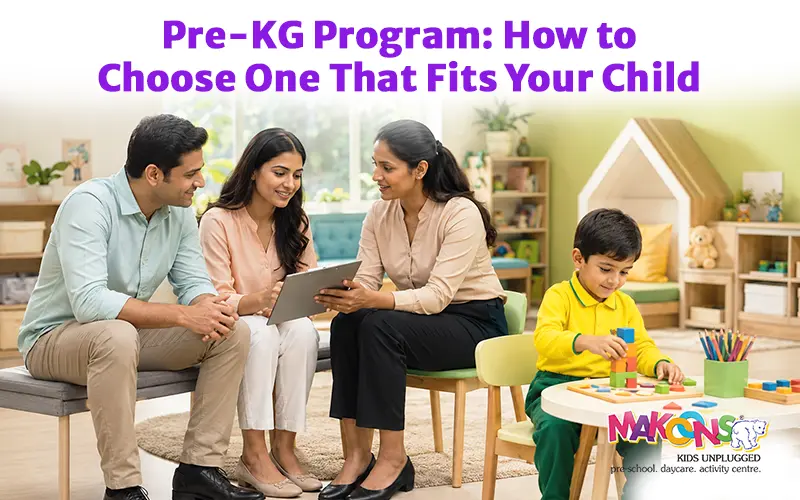
Making the right choice of a pre kg program is one of the most critical decisions made by parents in their child's early years. The early learning experience is the ground floor for a child's success in school, in confidence and in social growth. There are many schools with a variety of teaching techniques, facilities and activities, making it difficult to know which is the best fit.
A good pre kg school does much more than teach the alphabet and numbers. It offers children a safe environment, nurturing care and a stimulating environment for them to learn through play, exploration and everyday experiences. A good preschool programme does not only teach a child the four areas of learning, it also nurtures the child's physical, emotional, social and cognitive development.
This guide will help you identify the key elements of a quality pre kg programme, and identify the right one for your child's specific needs.
What is a Pre-KG Program?
Pre kg program aimed at children aged 2 to 4 years (as per the school's admission policy). It starts to explain to young learners a certain structure with age appropriate activities helping them to build important skills.
There is no memory or examination emphasis like in formal education. Children learn, however, through stories, music, art, their senses, games and practical exploration that stimulates curiosity and creativity.
The aim is to help children to be confident, independent and excited by learning.
Why Choosing the Right Pre-KG School Matters
The early childhood years are a time of rapid brain development and growth. Children's experiences in these years impact their learning, communication and relationships with others.
An early learning programme that has been well planned will enable children to:
To develop confidence and independence.
Enhance communication and language skills.
Develop social and emotional abilities.
Develop fine and gross motor skills.
Develop problem-solving & critical thinking skills.
Ensure preparation for future learning in school.
A good school will provide your child with a positive and supportive learning experience.
Know the Pre-KG Curriculum
Take some time to familiarize yourself with the pre kg curriculum that is available in the school before applying for pre kg admission.
It is desirable that a balanced curriculum include:
Language development using stories and rhymes.
Early maths ideas such as counting and sorting.
Creative art and craft activities (AI)
Music and movement times.
Sensory exploration.
Social interaction and group play.
Life skills and good habits.
Children should be encouraged to explore, question, and learn through play and not be under academic pressure with the curriculum.
Look for Qualified and Caring Teachers
Teachers are one of the most significant influences in a young child's early learning experiences. On your school visit, watch the way that teachers interact with children.
The good teacher is patient, friendly, encouraging and attentive. They are aware that each child learns in their own unique way and plan activities to meet various learning styles.
The experienced teachers also connect regularly with the parents and share news of children's progress.
Check Learning Environment
The atmosphere of the classroom can affect a child's learning process.
The good pre kg school should have:
Happy and inviting classrooms.
Child-friendly furniture.
Safe learning materials.
Clean and hygienic facilities.
Make sure there are secure means of entry and exit.
Toys and books appropriate to the child's age.
Outdoor play areas.
Within a safe, comfortable, and encouraging environment, children learn best.
Select a Play Based Preschool Program
Child learning through play is a natural process for young children. A good preschool program will teach new concepts through games, stories, role play, music, puzzles and creative activities.
Children benefit from play-based learning by:
Develop imagination.
Improve communication.
Build friendships.
Learn teamwork.
Solve problems.
Develop confidence.
A school that emphasizes worksheet work and memorization rather than development may not be able to address the developmental needs of young children.
Consider Class Size
Smaller pre kg groups allow the teacher to be able to provide greater individual attention to each child.
If classes aren't too large, teachers can learn more about their students' strengths, weaknesses, and learning styles.
This also eases children's apprehension of asking questions and joining in activities, as a result of a low ratio of teachers to children.
Evaluate Safety and Hygiene
Safety should be the first consideration in selecting a preschool.
Check schools for the following:
CCTV monitoring.
Trained staff.
Secure premises.
Child-safe furniture.
Clean washrooms.
First-aid facilities.
Emergency procedures.
Regular sanitisation.
Children learn and play with confidence in a safe environment.
Inquire About the Admissions Process
The pre kg admission process varies in every school. Some may need only simple documents, others may need to involve parents and children in some way.
When making the application ask:
- Age eligibility.
- Required documents.
- Admission timelines.
- Fee structure.
- School timings.
- Transportation facilities.
Observe Daily Activities
Where possible, observe children in school during the school day and ask them what they do and talk to them about these activities.Observe children in school during the school day, if possible, and ask them what they do and talk to them about these activities.
Take note if children:
- Happy and engaged.
- Participating in activities.
- Positive relationship with teachers.
- Learning through play.
- Reading other learning materials.
When students are happy, a well-designed early learning program is evident.
Communication with Parents
Children are best served by a good parent-teacher relationship.
Select a school which communicates with parents via:
- Regular progress updates.
- Parent-teacher meetings.
- Daily activity reports.
- Pictures of classroom activities.
- Open communication channels.
Consistent support at school and home for kids when parents are involved.
Think About Your Child's Personality
Every child is different. Some children adapt to the environment and some need support and time to adapt to the environment.
Choose the pre kg school that suits your child's personality, comfort and interest.
As every child is unique, if your child likes doing things with his/her hands then let them do , let them enjoy and learn. But for a shy child, look for support with teachers that encourage them gently.
The ideal preschool is the one that makes your child happy, safe and eager to come in every day!
Some Questions To Ask Before Selecting a Pre-Kindergarten School
When you are not sure, you might want to ask yourself these questions before deciding:
What is the teaching approach adopted in the school?
What is on the agenda for every day?
How is the pre kg curriculum planned?
What safety measures are in place?
How many children are in each classroom?
How do parents know how their child is doing?
What resources for learning are utilised?
How does the kids school support children who require additional help?
Conclusion
It is an important decision in your child's learning journey to make the right pre kg program. Find a pre kg school that provides a safe environment, caring teachers and a balanced pre kg curriculum. Before admission, go to the school, get to know the teacher and routine before you take the child for pre kg admission. The right preschool program and early learning program will help your child build confidence, develop new skills and enjoy learning from an early age.
Frequently Asked Questions:
1.What are the benefits to children of an early learning program?
A child's early learning program promotes his cognitive, emotional, social and physical development and sets the stage for future learning and growth.
2. What is offered in a pre-KG curriculum?
Typical pre-kindergarten activities typically involve language development, early maths, art and music, storytelling, sensory play, outdoor play, and development of social skills.
3. Explain why classes in pre-KG that are based on play are important?
Creativity, communication, confidence and problem solving skills are fostered in these pre-KG classes, which are play based, to make learning fun.
4.What is provided in Pre-KG curricula?
The common activities of the pre-kindergarten include language development, early maths, art and music, storytelling, sensory play, outdoor play and social skills development.
Explore Our Blogs:
Mid Term Admission in Preschool: Everything Parents Need to Know
How Preschools Plan Their Daily Curriculum (Explained Simply)
