
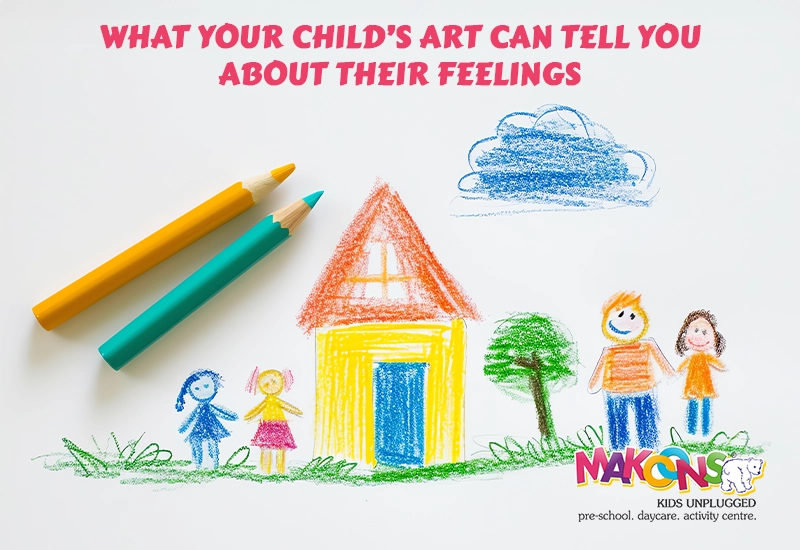
Youngsters sometimes lack the basic vocabulary to express their emotions. Their world is just a vibrant canvas of feelings, and they typically express their stories through art. Some Watercolours, crayons, and sketch pens may appear to be merely recreational tools. In actual life, though, they provide a little view into a child's heart. The intensity of their strokes, the colour selection in a drawing, and the swirls all convey some kind of message. Welcome to the alluring realm of children's emotions and their art, where each type of doodling tells a new story.
In this blog, we'll see how analysing children's drawings can reveal some important information about their psychological and emotional states, how art can be a potent emotional expression tool for them, and the beautiful and fascinating connections between child psychology and art.
The Children's Art Secret Language Youngsters communicate their emotions long before they can articulate them verbally. Instead of just saying, "I'm scared," a toddler might draw a stick figure hiding beneath a bed with a dark and stormy cloud. . This isn't just an accident; it's an artistic way of expressing emotion.
Children begin making intentional marks as early as age two. By the time a child is four or five years old, their drawings begin to tell a story. Bright suns and butterflies may symbolise joy and hope in them, a monster may symbolise some kind of fear, and a house may symbolise safety and assurance. Children naturally explore themes like friendship, family, conflict, insecurity, and happiness through their drawings and sketches.
Why Art Reflects Emotions?
Children live in a world where the story is mostly told by adults. Kids only receive instructions on what to do, how to act, and how to react in a certain way. However, art? They own that. They get emotional release, control, and a sense of agency from it. They express their inner selves on paper, whether it's through silent painting after a nap or frantic scrawling after a tantrum.
This relationship has long been researched by specialists in both art and child psychology. Creative expression is used as a diagnostic and therapeutic tool in art therapy, a recognised psychological technique. It basically aids therapists in comprehending their suppressed feelings, traumatic experiences of life , and even the earliest indications of serious behavioural problems.
However, when some parents and teachers start to understand children through their drawing, they can spot some kind of patterns and subtle clues even in the absence of formal training.
What to Look For in Your Child’s Artwork?
- Color Choices
Colours have a lot to say. A kid may be expressing some kind of joy or excitement if they use bright colors—yellow, orange, and pink—a lot. Darker colors, such as black, grey, or deep red, on the other hand, could express their fear, rage, or sadness. But we have to understand that context is important. Black is also a colour that some children simply adore!
The pattern is what matters. Has your child's world suddenly changed from vibrant rainbows to drab or grey scenes? I think that we should have a polite and brief discussion about that.
- Figures and Faces
Take note of how people are portrayed in children's drawings when analysing them. Do the figures frown or smile? Are the hands clenched and concealed, or are they large and open? An anxious child might omit themselves from family portraits or draw tiny, unfinished figures.
Placement can also allude to feelings. A child who just draws themselves far from their parents or friends in a scene on a paper may be experiencing feelings of loneliness.
- Themes and Storylines
Many children use art to tell stories. Maybe a superhero is rescuing a friend, or a dragon may be destroying a village. These types of themes frequently reflect their inner conflicts, such as a fear of going to school, a need for some strength, or a sense of powerlessness. Recurring themes of great danger or flight may allude to a need for some acceptance.
- Detail and Size
Some exaggerated body parts or excessively large figures can convey and pose strong emotions. A child may, just as an example, draw huge eyes on themselves or other people, possibly to allow a sense of being observed in front of all. Some small numbers or empty spaces could be a sign of low self-esteem or withdrawal.
Encouraging Emotional Expression Through Art
Creating a type of environment where your child feels comfortable expressing themselves is more essential than just closely examining each crayon mark on the paper.
Here’s how you can encourage and allow emotional expression through art:
Offer freedom: Allow them to draw whatever they like. Don't request particular items. Ask open-ended questions instead, such as "What's happening here?" or "Explain this image to me.”
Avoid judgment: Don't react with worry or disapproval on your face right away if your child draws something odd. They are imagining, processing, or exploring.
Be present: Join them at a seat. Work with them to create. Children can occasionally open up while quietly painting next to a parent. It is comforting to have you here.
Use art as a daily activity, don't make it a big task: Whether your kid is colouring, drawing, or modelling with clay or playdough, regular creative time implements a habit of introspection.
When to Seek Guidance
Not every threatening cloud or horrible monster in a drawing portends some trouble. However, some persistent symptoms, such as some current themes of violence or loneliness, may act as clues to more serious and scary emotional problems.
If you're worried before, think about speaking with a therapist, of art therapist or a child psychologist. These experts can tell about drawings in a very gentle way from the child's broader emotional context because they have done their training in both child psychology and art. If you're worried and concerned, consider consulting a child psychologist or an art therapist. These professionals are trained in child psychology and art and can gently interpret drawings within the child’s larger emotional context.
Small kids with anxiety, minor behavioural issues, learning disabilities, and trauma have all benefited the most from art therapy. Sometimes a kid will draw their whole story rather than speaking.
Understanding Kids Through Drawing: A Gift for Parents
Youngsters don't always express their emotions. Their art, however, can. It could be a joyful picnic under a rainbow one day. On a different day, it might be a lone boat on a huge sea. Each image is an opportunity to listen. to observe.
Emotions and art in children are closely related. Parents should always support their children's emotional development by paying attention to what they produce in drawings. Not with duty, but with interest and empathy.
Always keep in mind that you're looking at more than just a drawing on paper when your child paints, draws, or doodles something. Their heart is reflected in what you are seeing.
Thus, always keep your ears open, lots of paper, and crayons close at hand. When your child hands you a messy, colourful scribble with their thoughts on it, take a moment to think or maybe rethink. Examine more closely and briefly. Most likely, a story is just waiting to be told.
Final Thoughts
Using different art to help kids understand their emotions is somewhat similar to learning a new language on your own —the language of shapes, colours, and symbols. To find trends or some new changes, you don't have to be an expert. All you have to do is be perceptive,
Consider what this basically means to your kid the next time they draw a flying elephant, a dragon, a house, a boy, or whatever. Because these are more than just regular drawings; they are small emotional traces that can ultimately lead you into your child's inner world and peace.
Continue to increase creativity. Continue your soft and polite enquiries. Above all, continue to listen with your heart ( important)and eyes as well as your ears( very much important)
Read More - Fun Summer Activities
