Promoting nutrition and healthy meals in early childhood presents a unique opportunity for children to establish healthy habits and healthy food preferences as an adult.
Healthy meals and meal planning
A nutrition plan for children in early childhood addresses children's nutrition needs by supplying reasonable energy with carbohydrates, optimal growth with protein, and constructing the nutrition plan with micronutrients from fruits, and vegetables. It accomplishes this by developing healthy menu items for each meal. An example of healthy meals for preschool aged children would include: vegetable paratha, fruit salad, mixed sprouts, or yogurt.
Why Creativity Matters to Early Childhood?
Most people envision creativity as being associated with painting or signing. However, to children, creativity extends much deeper. It can include problem solving, story-telling, role playing and figuring out different ways to do things. Creative learning preschool activities at preschool for example such as building blocks, pretend play, or inventing a story all, support holistic growth.
The Role of Parents in Encouraging Creativity
Gentle Guidance Vs Pressure
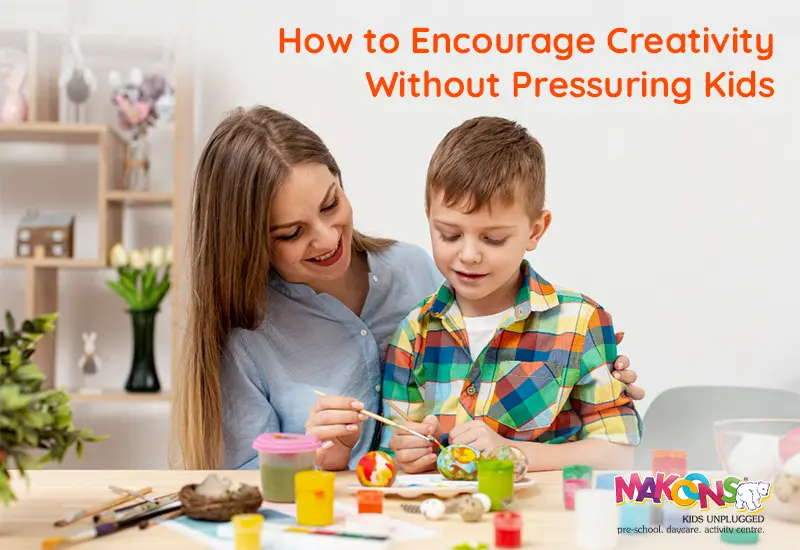
Although many parents sign their kids up for endless activities to stimulate abstract and imaginative thinking in their kids, (dance, music, drawing) which is a good first step, the key is pressure. Pressure, instead of being top of mind, leads to chronic pressure in their children's mind; pressure can take the joy out of discovery.The important thing is about pressure-free learning – that the child is supported in their way to explore and develop their own experience with creative expression.
Supporting Individuality
Every child will express creativity in a different way. Some children may want to color, some children may want role-play, some children may want to create something by building. These different ways of engaging in creative play honors the child’s individuality, which is what we intend to support in children - knowledge of oneself.
Some Ideas for Parents to Explore Creativity at Home with Children
Create a Creative Space
Kids require an area that stimulates creativity. A very small place such as a corner, or niche, filled with crayons, books, blocks, or clay, is a space to engage in creative work. This is only one possible example of how we might begin preschool activities and creativity with open-ended materials to foster exploration and creativity in the classroom.
Follow the Lead in Child’s Curiosity
When children ask, "why", "how", or "what if", parents should share or join the child's exploration. Anything from an answer, to a play act, to acting out the question, all encourage child curiosity and creativity.
Praise the Process of Creativity, Not the Product
Rather than saying, "that's a good drawing", the parent might say something like, "I really like the colors you used". This refers to child’s self-emergent self-expression to be appreciated rather than the product.
Creativity for Children in the Preschool Context
Role of Teachers
Preschools that utilize creativity support children to think, explore, and innovate in a pedagogical, child friendly way.Educators utilize narratives, puppets, story-telling, music, as well as natural excursions to inspire curiosity.
Group Experience
Playing with other children supports child learning with peers. For example, preschool activity creativity: children building a fort together or a group creating a story together. For the purpose of this text, when we think of children's creativity with others, not as an individual, we think of some form of collectivity, team work, combined imagination, or similar.
Tips for Encouraging Creativity
Limit Time in Front of A Screen So That There Is Time to Play
There is a time and place for technology, however, if children spend lots of time in front of a screen, they lose out on authentic exploratory experiences. Parents can engage pretend play, outdoor play, crafting instead of watching a screen or the phone.
Celebrating the Little Ideas
If your child has a silly idea that a cardboard box is a spaceship, then celebrate it. Celebrating their ideas (even if silly), builds confidence around their creative identity and can lead to more ideas.
Encourage Play not Perfection
Children abandon an idea because they think someone is judging them. Why would you correct a child? If your child draws a tree purple instead of green, that is a sign of creativity not a mistake.
How to Encourage Creativity Without Over-Scheduling them?
Don't Over-Schedule
Many youth today move from move to movement and don't have down time. Being over-scheduled can stifle creativity. Down time is valuable for pressure-free learning, which provides children with space to invent and imagine.When children exist in their imagined world without timeline constraints, they are free to create.
Give Open-Ended Materials:
Building blocks, clay, art supplies, or dress-up clothing are toys that don’t have to offer a real outcome. These open-ended materials give children space to further investigate their story and support children’s creativity to develop organically.
Encourage Explorations Outside:
Nature, a sometimes required and very powerful teacher, is a wonderful space for young children. A child can collect leaves, look at clouds, or pretend about animals while they walk in a park, which all produces relatively simple forms of imagined play.
Balance Between Hunter Caregiver Plays and Child Agency:
When to Offer Guidance:
A parent should offer just-in-time prompts to their young child as they are feeling frustrated or stuck. The parent might say, if for example a young child says they don't know what to draw, gently offer towards supporting that child with suggestions like, "What if you drew your best day at school?" This normally is accepted with the true thanks, regardless of feeling like you told them what to do, or didn't.
When Just to Step Back:
In a few situations, the best thing to do is just to take a step back. Allowing the child to try and try is a good thing and promotes their resilience development and their true creativity that has been alluded to in overall parenting tips creativity process.
Supporting Development of Imagination Skills for Children via Daily Routines
Bedtime Stories
Storytelling builds vocabulary skills, creative thinking skills, emotional connections, and a caregiving bond during the transition to sleep time. By providing an opportunity for children to create parts of the story, they will show ownership of their creative thinking.
Children Involved in Everyday Household Tasks
Cooking, gardening, moving furniture around (all have preschools that are creative) can stimulate the imagination of younger children. These tasks also teach children the skills of problem solving and creative thinking in their environment.
Children Engaged in Independent Play.
Not everything has to be planned, but independent-play allows the child to reflect and develop imagination with what they have acquired (but without adult involvement).
Misconceptions as a Parent
Comparing Children
No need to compare; there goes your child's confidence or because your child is not as creative as their sibling). All children develop at their own milestones as an individual. Comparing them to another sibling or as a friend playing outside of your home just adds undue pressure.
Quick Fix Results
Creativity takes time. With parent spectacle to engagement for children and in today's world, parents are ultimately going to expect their children to become proficient in the art form too quick and moreover too quickly show evidence of this.
Too Much Praise
Praise is awesome, but be selective with praise on all that little Tommy does. It can leave too much praise to mean nothing.
Instead use a specific event when you give praise like, "I really liked how you used so many shapes."
Long-Term Benefits of Creativity Empowerment
Confidence & Learning to Solve Problems
Children who have had the freedom to explore more of their environment education learning process will develop into confident thinkers and creative problem solvers, allowing them to view problems as opportunities rather than obstacles.
Using Emotions to Express
To be creative takes baggage and when a child can express the emotions of what they do not yet have the skills to verbalize, (for instance through art, storytelling and through play) help them be creative and let go of the baggage in their minds
Student Independence
When we are encouraging a child to be creative, we must emphasize that it's a slow and thoughtful process that impacts their learning later in life. The idea is not whether a child develops perfect art skills or art medium; it becomes about raising an engaged student independently, out of curiosity, meaning and growth.
Conclusion
Every child is born with the spark of creativity; it just needs an environment to thrive. Through home preschool creativity tips, offering preschool creative activity, and encouraging exploration through advancing their learning creatively at school and home will help children develop. The purpose is to be creative for joy and not perfection.
With the right balance of gentle guidance, trust, and no pressure to learn and develop in their natural disposition, parents will find, will encourage their child's creativity development but will also foster their children's real purpose of why they learn and develop; our sense of wonder in the world of creativity as a child, becomes who they are as confident, resilient, and creative individuals through their imaginations and will carry forth into their future.