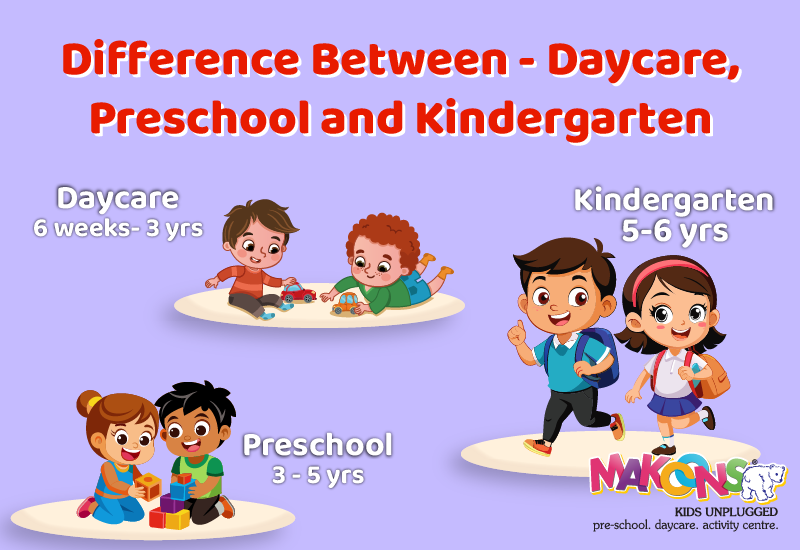
Nowadays early childhood education is one of the significant aspects of parenting. It is not possible to have a good start when parents are not sure how to select the right early learning set up. You might have heard a lot of words such as daycare, preschool, playschool, kindergarten, etc. They are close to each other, and each of them has different purposes.
This guide will clearly show the difference between preschool-daycare vs. kindergarten so that you can make the right decision when it comes to your child and his or her educational choice.
The Importance of Selecting the Right Early Learning Set-Up
The five-year old age of the child is the most critical in the development of the brain. Social skills, language, feelings, communication, cognitive learning- all develop at a high rate of increase at this age. The environment that you choose will affect a number of developmental areas including:
- Routine and discipline
- Early academic exposure
- Social interaction
- It is confidence and communication skills.
- Motor skills and creativity
This parent guide in preschool will make you know what is best with your little one.
Opposition of the Options: Major Differences
1. Daycare (Childcare Center)
Daycare is primarily care and supervision oriented as opposed to academic structure. It best suits working parents who require a safe environment for their children during the day time.
- Age Group: 6 months to 6 years
- Time: Half-day (or full-day) schedule.
- Safety, hygiene, feeding, and rudimentary play activities: Purpose.
- Learning Style: Unstructured play, care giving assistance.
Parents opt to use daycare whenever they need secure childcare services on a daily basis. The daycare centers in India are also starting to include some basic learning activities.
2. Play-Based Early Learning (Preschool)
Preschool is a preparation for formal school since it gives children a taste of formal learning but in a fun way. It pays attention to early childhood development by means of social interaction and exploration.
- Age Group: 3 to 5 years
- Time: 2-4 hours (programs of the morning)
- Goal: Cognitive, social, emotional and language development.
- Learning Style: Play based, themed activities, story telling, music.
Preschool also imparts values such as sharing, communication, and problem-solving which are vital in life. It also assists the children to have an easy time in kindergarten.
3. Kindergarten (School Readiness Program)
The last stage is kindergarten, which comes before primary school. It presents early scholars in a more formal way.
- Age Group: 4 to 6 years
- Schedule: 3-5 hours per day
- Purpose: Well developed language and numeracy.
- Learning Style: In-Depth teachings covering worksheets and exams.
In India, KG-I and KG-II are mandatory early school levels in most of the schools. This renders kindergarten to be critical in such concepts as reading readiness, logical thinking, and writing skills.
Preschool vs Daycare vs Kindergarten: Quick Comparison
| Features | Daycare | Preschool | Kindergarten |
| Main focus | Care & safety | Early learning | Academic foundation |
| Learning type | Unstructured | Play based | Structured & syllabus based |
| Age group | 6 months - 6 years | 3-5 years | 4-6 years |
| Duration | Flexible hours | Short sessions | Fixed school hours |
| Parent need | Working parent | School readiness | Formal school preparation |
This table displays the ways in which these setups sustain early childhood forms of learning in a dissimilar manner.
Which of the Two Does Your Child Require?
The selection of the appropriate environment will depend on the stage the child is at.
- In case your child requires attention and security as you go to work - Daycare.
- In case your child is socially prepared and early child learning - Preschool.
- When your child is about to join primary school - Kindergarten.
The most important thing to do is to know whether your child is ready or not.
Indian Preschool vs Day care vs Kindergarten
Although the global terms are comparable, Indian parents can also hear such extra labels as:
- Playschool - Identical to preschool, is play-oriented learning.
- Nursery School - This is the most common form of preschool.
- KG Kindergarten before Class 1.
In India therefore, daycare vs nursery school and daycare vs playschool are popular comparisons. Parents are to ensure that the school adheres to:
- Montessori
- Reggio Emilia
- Play-way Method
- Waldorf
- Integrated Curriculum
Every learning approach determines the way children learn and develop.
Advantages of Every Early Education
Daycare Benefits
- Long hour safe environment.
- Social attachment and emotional support.
- Flexible working times among the working parents.
Preschool Benefits
- Enhances speech and self-esteem.
- Get ready for formal education.
- Promotes innovation and inquisitiveness.
Kindergarten Benefits
- Impresses on academic fundamentals.
- Develops discipline and learning.
- Able to prepare for Class 1.
Once the better perspective is obtained, parents would be at ease when making the most suitable preschool selection in India.
How to Choose What is Right with Your Child?
The following are some of the significant questions to ask yourself:
- Age and developmental stage?
- What is the number of hours that the child would be able to stay out of home?
- Convenience of budget and location?
- Would you like to be cared for or academically prepared?
- Does the school have trained personnel and child friendly areas?
An intelligent, moderate choice will guarantee that your child has fun during the learning process at the very beginning.
Expert Tips for Parents
- Pay visit to school prior to admission.
- Communicate with the teachers and learn about classroom behavior.
- Sanitation and check security.
- Make child-teacher ratio manageable.
- Check parent Feedback and School accreditation.
Blissful child = A wonderful studying process!
Final Thoughts
Early education is not an intermediary but it is the cornerstone to the future of a child. Whereas preschool vs daycare vs kindergarten are different in terms of purpose, they combine to create a whole learning experience at earlier stages.
Select a setting in which your child is loved, motivated and eager to learn on a daily basis. Today depends on what you choose to do because it will impact their learning behavior tomorrow!
[sp_easyaccordion id="4798"]