
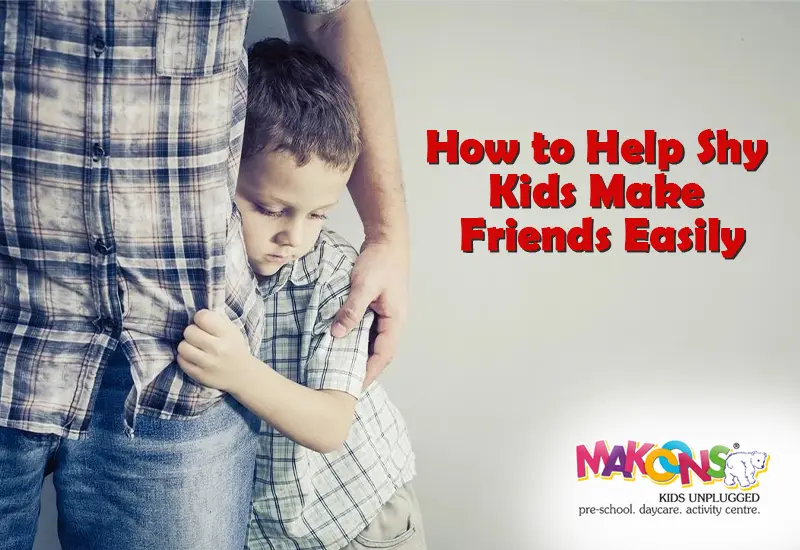
Any child should have a feeling of belonging, worthy, and confident when communicating with other people. However, in the case of some small ones, particularly those that are shy and introverted, socialization is usually frightening. When your child takes time to open up or wants to play alone, then there is nothing to worry about, this is a normal and normal behavior of children. Parents and educators can significantly contribute to making it easier to socialize and making shy children have long-lasting friendships.
This manual is aimed at shyness in children-making friends, enhancing social skills in pre-schoolers, and assisting introverted children in developing meaningful relationships by use of practical tips, mild encouragement and enjoyable friendship building exercises.
Why Some Children Are Shy?
Shyness is not an imperfection, it is just a personality. Some children:
- Take time to trust new people
- Feel anxious in large groups
- I like watching better than participating.
- Sensitive to noisy, noisy surroundings.
- Be more expressive individually.
To enhance child confidence in preschool years and make sure that they feel emotionally safe, you need to understand the needs of your child.
Social Development: Significance in Preschool
One of the most important times of learning to communicate with other people is preschool. The results of positive social development include:
- Improved communication techniques.
- Emotional resilience
- Teamwork and cooperation
- Ability to solve conflicts
- Some feeling of belonging and self-importance.
In the case of shy or introverted children, additional support and directions make them succeed in this phase.
Also Read: What is a Preschool Franchise Business in India? A Complete Beginner’s Guide
How to make shy kids get more friends
The following are quick and easy tips of friendship in preschool, especially to little shy learners:
1. Start with Playdates at Home
Children are most comfortable in the natural environment. Ask one of your friend classmates for a brief playdate. This provides:
- An environment where it is easy to communicate.
- An opportunity to let your child lead.
- Opportunities to have more intimate bonding.
- Have activities that are organized, such as puzzles, coloring or pretend play.
2. Drill Social Skills by Role-Play.
Role-playing helps build confidence and teaches timid children to communicate. Try practicing:
- Introducing themselves
- Asking to join a game
- Taking turns
- Saying "thank you" and "please"
Such fundamental social skills of preschoolers facilitate the group play.
3. Enhance Nano-relationships
Set gentle social goals like:
- Smiling at a new classmate
- Sharing a toy
- Saying hello in the morning
- Rewarding every success-positivity is a motivator.
4. Model Friendly Behavior
Young children are taught by adults. Show them:
- Being polite towards individuals.
- Making eye contact
- Listening and asking questions.
- Dealing with conflict amicably.
Kids follow when parents lead by example, i.e. when parents express friendliness on a daily basis.
5. Give Them Time to Warm Up
Never push or rush! Shy children often:
- Observe first
- Join once they feel safe
- Engage more deeply over time
Relying on patience and acceptance encourages trust as well as suppressing pressure.
6. Encourage Their Interests
Such activities like dance, art or sport open new avenues of friendship. Kids connect better when they have shared interests, and therefore bonding becomes easier.
The interest-based environments are quite an excellent means of making introverted children feel secure and connected.
7. Positive Reinforcement Miraculous
Even the slightest social effort should be praised to your child:
"I am so proud of you because you gave out your crayons today.
The recognition of their progress creates self-confidence and encourages them not to give up.
8. Create a Routine in Social Life
Monotony assures timid children. Try:
- Regular playgroup visits
- Weekly playground time
- Family reunions with acquaintances.
The more exposure they are exposed to the more it is easy to socialize.
9. Work Closely with Teachers
In your child, preschool years are the social development years that teachers are co-workers in. Share concerns and plan:
- Buddy systems
- Inclusive play activities
- Confidence-building tasks
Instructors can learn to encourage timid children to participate in the lesson more.
Related Topic: Top 10 Activities to Encourage Social Skills in Shy Children
Preschool Friendship Building Activities
The following are some of the fun, low-pressure games that would be ideal to play with shy children that are trying to make friends:
| Activities | Benefits |
| Circle time sharing | Builds communication and confidence |
| Pair craft projects | Encourages teamwork |
| Group puzzle solving | Teaches cooperation and turn-taking |
| Role play stations | Promotes creativity and emotional expression |
| Musical games | Reduces social fear through fun movement |
Select some activities that will enable the quiet but promote interaction.
Enhancing Preschool Child Confidence
In order to make children actually confident:
- In their strong points: "You are so considerate and kind.
- Do not use labels such as shy- it is likely to keep them back.
- Listens to their emotions and affirms emotions.
- Train relaxation strategies against stressful situations.
When children are listened to, loved and respected, confidence is boosted.
How to Make Introverted Kids Succeed
Introversion does not make one less of a friend--it is a different kind of type. Support them by:
- Allowing them to select peers that are at their speed.
- Providing post-social event downtime.
- At some points, making room to play alone.
Compromised communication ensures that they are socialized without being tired.
What Not to Do
Avoid:
- Making them do team activities.
- Putting them in opposition to more aggressive children.
- They represent them in every word.
- Teasing or condescending in regard to their social phobia.
- Shaming may cause more anxiety, and challenging social situations.
Celebrate Individuality
Squeaky kids do not always make friends easily and that is not bad! Other children would choose single or few close friends over groups. It is about quality rather than quantity.
Cherish the individual social style of your child as well as slowly encouraging them to open up.
Related Topic: Nursery School Admission 2025-26: A Complete Guide for Parents
Parent Guide Shy Children: Rapid Checklist
- Praise little social progress.
- Create conducive and friendly conditions.
- Learn the valuable art of friendship.
- Encourage anticipated development.
- Endless communication with teachers.
- Cultivate self-esteem by loving and being patient.
- These plans render the process of assisting timid children to find friends happier and less stressful.
Final Thoughts
The personality of your child is something to be thankful for. Through careful guidance, affection and the appropriate tips on preschool friendship, shy and introverted children may grow up to be confident, kind and socially related individuals.
Friendship is an art--and as all arts, friendship develops.
