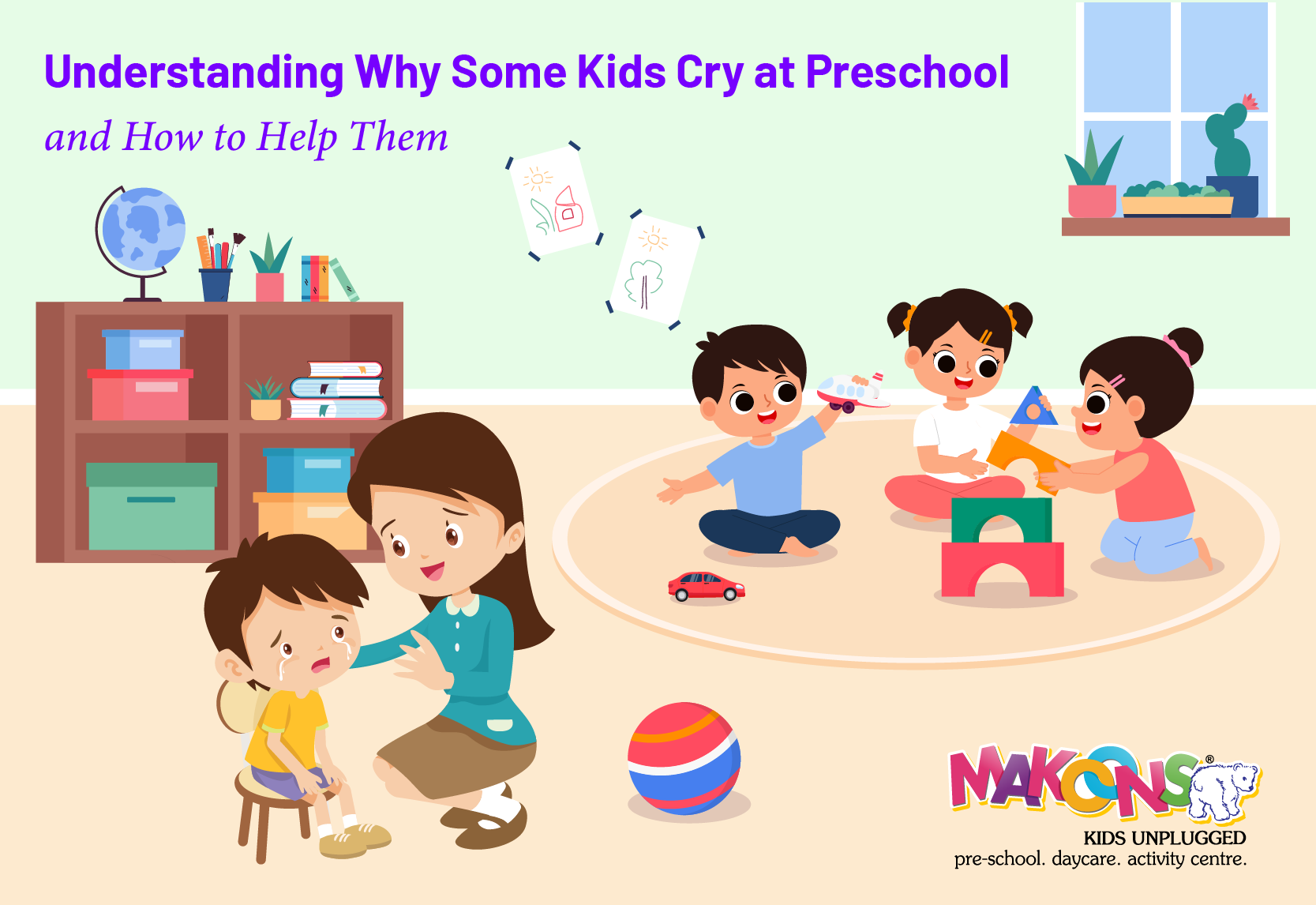
This is one of the greatest accomplishments of a child during his formative years when he/ she enters preschool. It is the first occasion when most of the kids spend a significant part of their time without their parents and they need to adjust to their new world and new people, activities and habits. However, it is also very natural that a child also experiences preschool anxiety, which is revealed in tears, clinginess, and the reluctance to attend school.
You are not the only one when your little one cries when they are falling asleep, or when he/she seems to be scared when going to school. This is the phase that most parents pass when they take their children to preschool in Delhi or in preschool in Mumbai. Happiness and easiness in it can be achieved when one comprehends the cause of the feelings of his child and how to help him through the process.
The Reason Some Kids Cry at Preschool
1. Separation Anxiety
The most common reason contributing to the tears at the drop-off is preschool separation anxiety. At this age, children are well attached to their caregivers and separation might appear too large. They also expect fear of the absence of their parents or abandoning them in a new place. This is a natural process of development and it fades away in a normal manner as the children get accustomed to the new environment.
2. Fear of the Unknown
In preschool, one is introduced to a new world of experiences: teachers, peers, habits and rules. Sensitive and wary children might take longer to get used to it. The transition to a new environment in a structured classroom setting to an abrupt new home can be the cause of the anxiety.
3. Change in Routine
Routine is the major success factor among several children. School time, waking up early in the morning and eating breaks at a particular time may be difficult to adapt to. Adaptation to these changes may result in short-term distress and crying.
4. Social Adjustment
Social skills also start with Preschool. Other children might not learn, at first, to play in a group, share toys, or to take their turn. To some extent, these emerging social challenges may cause frustrations or even tears.
5. Overstimulation
A preschool classroom may be stimulating as well as daunting. Sensitive children may be overstimulated by bright colors, noise, and numerous activities, and start crying in expressing their feeling of discomfort or tiredness.
Related Topic: Different Types of Preschool Programs -Montessori, Reggio, and Beyond
The Way to Help Children Overcome Preschool Anxiety
1. Begin with Light Introductions
On the eve of the first day, take your child to preschool. Providing that they can, allow them to have an encounter with the teachers, get to know the classroom and play with some toys. In bigger cities such as Delhi, or Mumbai, most schools have an oriental day or a stay-and-play (snack) session. These will enable the children to know the environment and the first day as an official will not be a big burden.
2. Create a Goodbye Routine
Goodbyes can be so predictable and comforting with a regular and speedy goodbye ritual such as a hug, a kiss and a jovial See you soon! The child should not sneak out because it will make people more mistrusted and aggravate preschool separation anxiety.
3. Stay Calm and Positive
Children emulate the feelings of their parents. When you appear anxious or sad when leaving them, chances are that they will reflect the emotion. Be happy, smile and tell them that you think that they will have fun and be safe.
4. Practice Separation at Home
You can have a gradual process of training your child to be separated with. Send them to their grandparents, kinsmen, or reputable babysitters in short durations. This assists in creating the confidence that you will never leave.
5. Speak about Preschool In a Good Way
Talk about fun things your child might be excited about- painting, story time, new friends or outside games. The experience can also be normalized and decrease preschool anxiety through the process of reading books about visiting school.
6. Promote the expression of emotion.
Rather than ignoring the fears of your child, accept it. You may say, I know you feel sad when I leave you. You will be taken well by your teacher and I will see you after school. Their feelings should be justified because this will teach them empathy and trust.
7. Connect with Teachers
Your best allies in getting your child to get adjusted are teachers. Disclose any issues or information regarding the preferences of your child, comfort objects and habits. Educators in good preschools in Delhi or preschools in Mumbai usually have a way of settling the nervous children.
8. Offer a Comfort Object
Assuming that the preschool permits it, have your child bring something that will comfort him or her, such as a soft child toy, family picture or handkerchief. Such trifles can be used to get emotional support during challenging times.
9. Stick to Routines at Home
The kids experience security because of a predictable home routine. Make sure that they receive a good sleep, healthy food, and relaxing evenings. In the long run, this equilibrium assists them to adapt to school life more.
10. Celebrate Small Progress
Congratulate and applaud each little progress made by your child such as getting through the classroom without crying or describing their day. Positive reinforcement increases confidence and the decrease in anxiety with time.
Long-Term Benefits of Overcoming Preschool Anxiety
Hard as it may seem, children who are helped to deal with preschool anxiety are ready throughout life to face challenges. When they get used to it, you will see that they will feel more confident, independent, and social. Preschool is a place of interest, imagination, and friendship, which are key pillars of further education.
In such cities as Delhi and Mumbai, modern preschools are emphasising on emotional growth besides academics. To make them adjust successfully, they combine child-friendly transition programs, play-based learning, and involvement activities of parents.
The Real-Life Parenting Tips of Preschoolers
The speed of adjustment of each child is different. Patience and empathy are very important as parents. The following are some other child behavior tricks and parenting tips that one should remember regarding preschoolers:
- Don't compare your child to other kids--some kids adapt in days, others take weeks.
- Make school conversations pleasant and bantering.
- Enhance the notion that preschool is an enjoyable and safe area.
- Keep in touch with teachers to know the progress of your child.
- Provide support home-based, that is, demonstrate that school is not the only component in their day, that family time follows.
The tears that emerge during the preschool age can be transformed by the parents into smiling and learning excitement by giving love, consistency and encouragement.
Related Topic: LKG Craft Ideas That Promote Cognitive and Motor Development
Conclusion
Preschool crying does not mean that your child dislikes school, he/she is only expressing himself/herself that he/she is not certain in a new setting. With the help of proper parenting advice about preschoolers, empathy, and being patient, one can help children to overcome preschool anxiety and acquire emotional power in the future.
Remember with every tear on the entry door of the preschool you are one step closer to confidence, independence and life long love of learning.