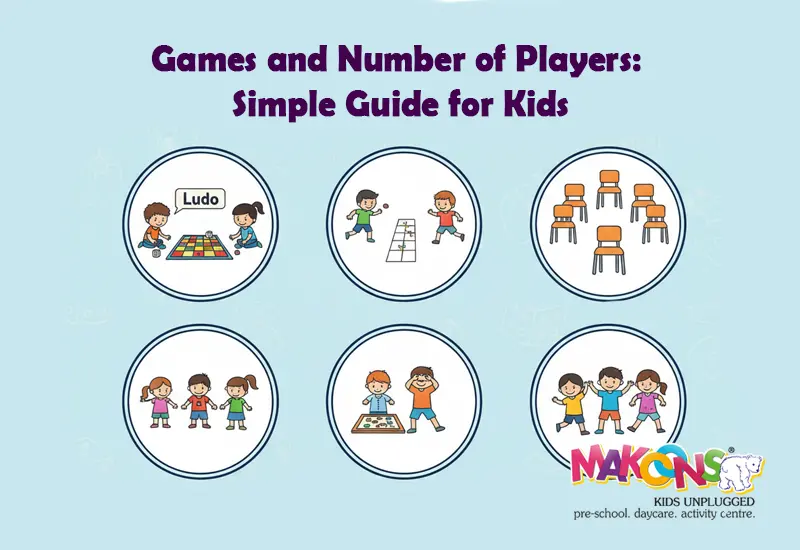
Children learn, grow and the best way to do this is through games. Games are played at home, at school, or at the playground, and they show how to work as a team, be patient and solve a problem. This knowledge of games and players would enable children to be aware of the number of friends required to initiate a certain activity.
In this basic guide to kids sports, we will see the various types of games available in the indoor and outdoor sport, the number of players playing in a game, and some exciting traditional games for kids and children learning games.
Reason As To Why It Matters To Count The Number Of Players
It is also good to know the number of players needed before a game begins. This helps:
- Organize teams properly
- Avoid confusion
- Make the game fair and fun
- Get everyone an opportunity to play.
- Enhance coordination and teamwork.
When the children know the number of players of games, they will be able to plan better and involve everyone.
Indoor Games And Players
Playing indoor games is ideal during rainy seasons or classrooms or in small areas. In this paper, we will discuss some of the common outdoor and indoor games beginning with indoor games.
1. Ludo
- Number of Players: 2 to 4
- Type: Board game
- Developed Skills Counting, strategy, patience.
One of the traditional board games is Ludo. It is an excellent learning game among children as children learn to count the number of dice and at the same time enjoy it.
2. Chess
- Number of Players: 2
- Type: Strategy game
- Competencies Gained: Critical thinking, planning, focus.
Chess also helps children to think in advance. It has made it into most sports guide books of kids, as it enhances the ability to concentrate and make decisions.
3. Carrom
- Number of Players: 2 or 4
- Type: Table game
- Skills Achieved: hand-eye, aim.
Carrom is an entertaining indoor game and is fun and concentration focused. It imparts tolerance and precision.
4. Musical Chairs
- Number of Players: 4 or more
- Type: Group game
- Skills Acquired: Listening skills, fast reaction.
The game of musical chairs is active. It is best played in groups hence being ideal when there are many children who wish to play.
5. Uno Or Card Games
- Number of Players: 2 to 10
- Type: Card game
- Competencies Achieved: Color recognition, matching of number.
Card games are also excellent learning games as they sharpen the child’s memory as well as thinking.
Related Topic: Screen-Free Fun: Traditional Indian Games for Kids
Outdoor Games And Players
Outdoor games also enable the children to run, jump and remain active. These are fundamental in good development.
6. Football (Soccer)
- Teammates: 11 (May also be 5-7 in school play)
- Type: Team sport
- Competencies: Teamwork, endurance, coordination.
One of the most popular players and games examples throughout the world is football. It imparts teamwork and strategy.
7. Cricket
- Number of Players: 11 per team
- Type: Team sport
- Skills Acquired: Concentration, collaboration, time.
Many kids are fond of cricket. Portable versions could be played with less people in communities.
8. Badminton
- Players: 2 (singles) or 4 (doubles)
- Type: Racket sport
- Skills Acquired: Reflexes, balance.
Badminton is versatile and it can be played either indoors or outdoor and thus it is considered both an indoor and outdoor game.
9. Relay Race
- Numbers of Players : 4 or more per team.
- Type: Team race
- Skills Acquired: Speed, working together.
Relay races are also popular in school sports day, and they are ideal in groups.
10. Tug Of War
- Roster Size: 5 or Over per team
- Type: Team strength game
- Skills Gained: Team coordination, strength.
This is the conventional game that demonstrates the importance of working as a team.
Related Topic: Fun Brain Games and Puzzles for Kids
Traditional Games For Kids
The numerous children’s games are often simple games that do not need many tools.
11. Kho-Kho
- Number of Players: 12 per team
- Type: Tag-based team game
- Skills Acquired: Quickness, tactics.
Kho-Kho is an outdoor game which enhances agility.
12. Kabaddi
- Number of Players: 7 per team
- Type: Contact team sport
- Skills Acquired: Strength, breath control.
Kabaddi is not only entertaining, but it is demanding.
13. Hopscotch
- Players: 1 (can play in groups)
- Type: Jumping game
- Skills Acquired: Balance, coordination.
One of the simplest traditional games that kids can organize is Hopscotch.
Learning Games For Children
There are games which are more oriented to learning and psychological development.
14. Math Bingo
- Number of Players: 2 or more
- Type: Educational game
- Skills to be developed: Math skills, listening.
15. Memory Matching Game
- Number of Players: 1 or more
- Genre: Learning games based on cards.
- Skills Acquired: Memory, concentration.
These are children learning games which are fun and bring enjoyment in learning.
How To Choose The Right Game
In choosing among various games and players, put into consideration:
- Quantity of children on sale.
- Indoor or outdoor space
- Age group
- Safety requirements
- Time available
The best kids sports guide would always suggest that one should select games that suit children’s interests and abilities.
Related Topic: 10 Super Fun Educational Games for 5 Year Olds
The Pros Of Playing Various Kinds Of Games
Knowing how many players there are in games and playing on a regular basis have numerous benefits:
Physical Benefits
- Strengthens and increases endurance.
- Enhances coordination
- Supports healthy growth
Mental Benefits
- Trains problem solving abilities.
- Builds concentration
- Promotes strategic thinking.
Social Benefits
- Teaches teamwork
- Promotes communication
- Builds friendships
Outdoor and indoor games are necessary to develop in a balanced way.
Quick Reference Table
Here’s a simple summary:
- Chess – 2 players
- Ludo – 2-4 players
- Football – 11 per team
- Cricket – 11 per team
- Badminton – 2 or 4 players
- Kho-Kho – 12 per team
- Kabaddi – 7 per team
- Relay Race – 4+ per team
This enables children to grasp games and players faster.
Final Thoughts
Games are not only entertainment. They are potent learning, team building and physical conditioning devices. Knowing how many players there are in games, children are able to plan the activities better, whether it comes to having everybody involved, or not.
Exciting indoor and outdoor games, meaningful traditional games to kids and interesting learning games to children, all of this helps in the construction of confidence and skills.
The best kids sports guide stimulates diversity – combination of physical games and intellectual tasks. Get your friends together, select the appropriate number of players and begin playing!







 Twitter