Preschool is where the learning journey begins. The little people are not yet expected to write the curriculum from there. They are expected to understand basic ideas. This is where conceptual learning becomes important.
The method of conceptual learning enables children to learn the reasons and methods of operation for various things. The program establishes fundamental understanding through its system of foundational knowledge. The preschool teaching method uses this educational approach to develop fundamental skills that enable children to understand their material better.
What is Conceptual Learning?
Conceptual learning means learning with understanding. It is not about remembering answers. It is about knowing how things work.
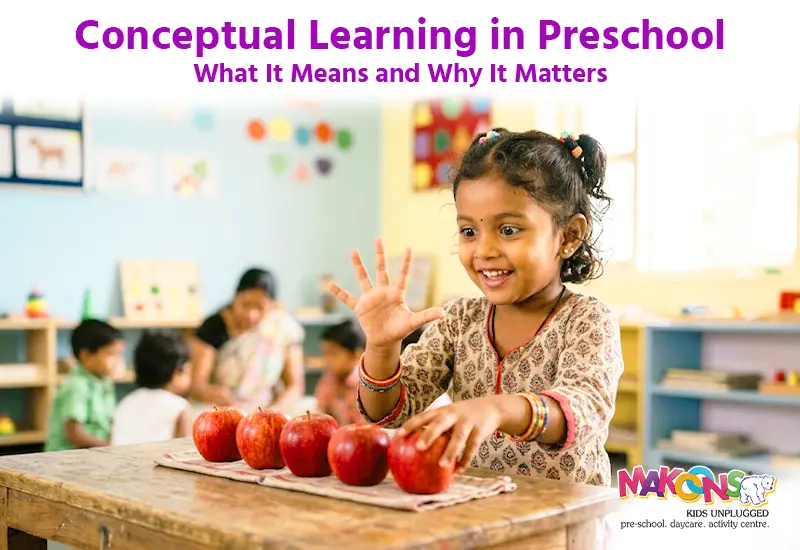
For example, instead of just teaching a child to count numbers, conceptual learning helps them understand what numbers mean. The child learns that “5” is not just a number but represents five objects.
This type of learning focuses on:
- Understanding ideas
- Making connections
- Applying knowledge in real life
It builds strong foundational learning skills that children use later in school.
Conceptual Learning in Preschool Education
Children in preschool learn through their play activities while they interact with others. The teachers base their instruction on activities other than textbook materials and memorization practices.
Instead, they focus on:
- Hands-on activities
- Real-life examples
- Group learning
- Simple problem-solving
For example:
- Sorting objects by color or size
- Playing with blocks to understand shapes
- Listening to stories to build language skills
These activities help children develop early learning skills in a natural way.
Why Conceptual Learning is Important?
1. Builds Strong Basics
Conceptual learning helps children understand basic ideas clearly. These basics are used in all future learning.
If a child understands numbers, shapes, and language concepts early, learning becomes easier later.
2. Improves Child Understanding
When children understand concepts, they do not forget easily. They can explain things in their own words.
This improves overall child understanding and confidence.
3. Supports Cognitive Development
Conceptual learning helps in brain development. It improves:
- Thinking skills
- Memory
- Problem-solving ability
This supports strong cognitive development in early years.
4. Encourages Active Learning
Engagement always leads to learners learning more. Education with an interdependent theory paves the way for active learning.
Instead of sitting and listening, children:
- Ask questions
- Explore ideas
- Try things on their own
This makes learning more interesting.
5. Helps in Real-Life Application
Conceptual learning connects learning to real life.
For example:
Understanding money while playing shop
Learning measurements while cooking activities
Children learn how to use knowledge in daily life.
6. Reduces Fear of Learning
Memorization can make learning stressful. Conceptual learning makes it simple and fun.
Children feel comfortable and enjoy learning. This creates a positive attitude towards education.
Examples of Conceptual Learning in Preschool
Here are some simple examples:
Numbers and Counting
Instead of just counting numbers, children count real objects like toys or fruits. This helps them understand quantity.
Shapes
Children learn about shapes through their identification of shapes in their everyday surroundings. The clock displays a circular shape while the book has a rectangular shape.
Language Skills
Children learn new words through stories, conversations, and songs. This improves communication skills.
Science Concepts
Kids learn about growth and nature through basic activities that involve planting seeds.
The process of conceptual learning demonstrates its ability to establish essential building blocks for educational development.
Role of Teachers in Conceptual Learning
Teachers play a key role in preschool education.
They:
- Ask open-ended questions
- Encourage curiosity
- Provide hands-on activities
- Observe each child’s learning style
A good teacher focuses on understanding, not just correct answers.
Role of Parents in Supporting Conceptual Learning
Parents can also support conceptual learning at home.
Here are some simple ways:
- Talk to your child regularly
- Ask “why” and “how” questions
- Let them explore and play
- Read stories together
- Involve them in daily tasks
For example:
- Ask your child to count fruits while shopping
- Let them help in simple cooking tasks
These activities improve early learning skills and understanding.
Conceptual Learning vs Rote Learning
It is important to understand the difference.
| Conceptual Learning | Rote Learning |
| Focus on understanding | Focus on memorization |
| Encourages thinking | No deep thinking |
| Long-term learning | Short-term memory |
| Real-life application | Limited use |
Conceptual learning is better for long-term growth. It helps children become independent learners.
Challenges in Conceptual Learning
Even though it is important, there are some challenges:
- Some schools still focus on memorization
- Large class sizes reduce attention
- Lack of trained teachers
- Pressure for early results
Parents should choose preschools that focus on understanding, not just results.
How to Identify a Preschool That Uses Conceptual Learning?
Look for these signs:
- Activity-based learning
- Play-based teaching methods
- Focus on questions and discussions
- Less focus on worksheets
- Teachers who interact with children
Such schools focus on active learning and cognitive development.
Long-Term Benefits of Conceptual Learning
Conceptual learning helps children beyond preschool.
It:
- Builds strong academic skills
- Improves confidence
- Encourages creativity
- Develops problem-solving ability
- Supports lifelong learning
Children who learn concepts early can handle complex subjects easily later.
Conclusion
Preschool education requires students to learn fundamental concepts through their studies. The method enables children to understand concepts because it teaches them to understand ideas instead of memorizing facts.
The program supports young children’s fundamental skills development while helping them better understand concepts and establishing their basic educational foundation. The program promotes active learning while it helps students develop their cognitive abilities.
The educational process requires parents and teachers to create learning experiences that students can understand through their direct use in their studies. The approach will develop children’s abilities to learn while they develop their self-confidence.
FAQs:
1. What is conceptual learning in preschool?
Ans: Conceptual learning means teaching children to understand ideas instead of teaching them to memorize facts. The system evaluates the meaning of words through their actual application in various situations.
2. Why is conceptual learning important for young children?
Ans: It is key in the building of strong basics, improvement in understanding, and the supporting of cognitive development. It also makes learning easier during later years.
3. How is conceptual learning different from rote learning?
Ans: The main aim of conceptual learning is understanding while rote learning is related to memory retention rather than understanding.
4. What are examples of conceptual learning activities?
Ans: People usually use counting skills and shape recognition abilities to identify objects they find in their environment. People use storytelling as a way to share their personal experiences. People conduct basic scientific tests because they want to learn about the world.
5. How can parents support conceptual learning at home?
Ans: Parents can query, engage these individuals in sorting through a daily routine, read them stories, and provoke creativity.
6. How do I choose a preschool that focuses on conceptual learning?
Ans: You should search for educational institutions which implement play-based learning methods while they provide students with responsible learning facilities and they teach through hands-on activities instead of teaching methods.







 Twitter