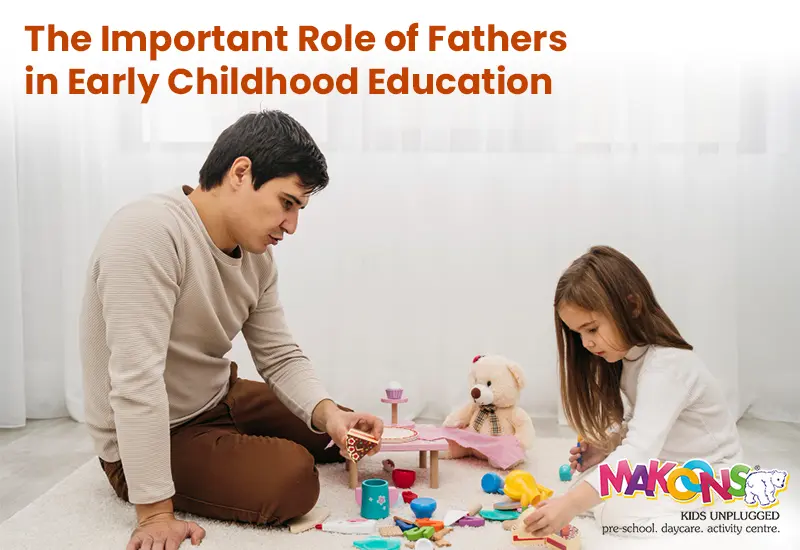
Fathers hold a distinct and irreplaceable place in a child’s life, especially in the early stages. While people often think of mothers as primary caregivers, research indicates fathers’ involvement in the education of a child can have a genuine impact on educational outcomes in early childhood education. A preschool-age child can gain cognitive, emotional, and social benefits from fathers’ involvement. In this blog, we will explore the importance of the father role in preschool, what fathers do to enhance child growth and fathers, and some practical ways fathers can engage at home and school.
Why Fathers Matter in Early Childhood Education?
Emotional and Social Benefits
Parents who are involved, particularly fathers yield a positive effect on children’s emotional development, socialization skills, and self-esteem. The father’s involvement provides comfort and emotional security and confidence, all of which lend support to learning that takes place in early childhood education.
Cognitive and Academic benefits
Research shows children whose fathers actively engage in children’s learning experiences have enhanced language skills, reasoning skills, and problem solving. This is a reflection of why fathers’ involvement in child education is important in being ready for educational engagement.
Role Models for Positive Behavior
The father’s role is to model behaviors, attitudes, and interaction with others. Active engagement as a father promotes respect, responsibility, and emotional intelligence. The father’s role in preschool is more than providing care; fathers model values in a child’s life through engagement.
The Different Roles Fathers Play
Home Co-Educator
Fathers can reinforce what the preschool educators taught with Literacy, storytelling, reading, counting games, and hands-on activities through engagement at home. These activities reinforce child growth and fathers, opportunities for learning and development in the home setting.
Emotional Supporter
Fathers reassure, comfort, and encourage children while they deal with tough situations, such as separation anxiety or when they participate in an early childhood education experience for the first time.
Play Partner
Physical play, creative games, and outdoor activity foster bonding and teach important skills for life. Playtime is informal, yet an effective way to learn.
Discipline with Love
Fathers reinforce positive behavior and push boundaries. They help balance parenting roles to lead to self-discipline and responsibility in preschool children.
Ways Father’s Involvement Promotes Learning in Preschool
Collaboration with Teachers
When fathers show up for parent-teacher conferences or events to support our schools, they show kids that education is important. Families who participate in preschool parental involvement activities are supporting learning in preschool, so the child sees what happens at school.
Supporting Homework and Assignments
Even in preschool there can be roles fathers can support craft projects, counting activities, and reading, all contribute to children seeing the value of reading, learning, and working together for education.
Promoting Whole Child Development
Father’s contributions are not just to education, father’s value academic, emotional, physical, and social development as equally important. Their future knowledge will continue to support the development of young children and complement early childhood education.
How Fathers Can Practically Support their Children?
Reading and Storytime
Reading with your children is a simple way to support your children and grow in their exposure to vocabulary and comprehension over the next few days.
Talking about the stories promotes imagination, critical thinking, and conversation and thinking skills.
Hands-On Activities
Simple science experiments or projects have a great role in engaging children and their earlier childhood education at home.
Whatever types of policy children have in the kindergarten classroom- cooking, gardening, or building children engage deeper in their practical skill development and learning.
Outdoor Play and Physical Activity
Sports, cycling, or just playing in the backyard develop motor skills, and outdoor experiences promote teamwork, cooperation, and patience as well!
Emotional Bonding
Encouraging open communication about feelings. Acknowledge children’s feelings and provide reassurance; particularly during transition events, such as starting preschool.
Table: Father Involvement & Child Development Outcomes
| Father’s Role | Child Development Effects | Example Activities |
| Emotional Support | Greater self-esteem & coping skill | Comforting after school and discussing feelings |
| Co-Educator | Enhanced language & cognitive abilities | Reading stories together or games with counting activities |
| Play Partner | Social connections & physical maturity | Playing sports, imaginative play, and role-playing games, i.e., fire, cops and robbers, etc. |
| Active Discipline | Self-regulation & responsibility | Establish school- and home-based routines and behavior guidance |
| Parental Involvement at School | Academic engagement and positive attitudes toward learning | Attend school family events and parent-teacher conferences |
The example table shows the different avenues through which father involvement impacts child development positively.
Barriers to Father Involvement:
Work Obligations
Many fathers deal with the workflow money trap. A more manageable solution can be committed to smaller, shorter actions where fathers read together (10-15 minutes daily) or attend school events monthly.
Societal Expectations
Societal norms and expectations might make it difficult for fathers to step fully into their role as caregiver and equitable, active teacher. Your school can begin to lay a foundation around father involvement to encourage putting those in effect as early as possible before preschool begins.
Lack of Knowledge
Some fathers will not feel asked or welcome to participate. Preschools can promote workshops and demonstrations to provide fathers with ideas to get them involved.
Tips for Educators to Encourage Father Participation:
Specialized Days for Fathers and their Children
The school may decide together to host father-child activity days, or focused workshops with potential engagements, to promote parental interest in preschool involvement with their children.
Regular Communication and Updates
Communication of regular updates and school activities is a lived experience, and also an active means for fathers to stay informed about their child’s work, permission for fathers to participate. Utilizing newsletters, messaging platforms, or parent communication tools creates opportunities for parents.
Promoting Family Involvement
Another way to support family involvement and engagement is to encourage fathers to support with classroom activities, storytime, or outdoor play to help build relationships and strengthen the school-family connection.
Long-Term Effects of Father Engagement
Academic Readiness
Children whose fathers are more engaged tend to transition smoothly into the school routine and be more curious.
Emotional Continuity
Regular father engagement promotes resilience, empathy, and positive prosocial behavior in children.
Family Connection
Child engagement increases fathers’ emotional connections to their child and they report feeling more valued for their contributions to their schooling (i.e., home reading and school functions which are more typically seen as mothers’ role).
Father Involvement in Education beyond Early Early Childhood
Being involved in early childhood education leads to a new engagement habit which continues through the primary and secondary years. Once fathers are involved early, they are more likely to continue to be involved in academics, extracurricular activities, and emotional development, when they are supported as a learning partner.
Conclusion
Father’s role in early learning is multi-faceted and critical. Father involvement in education provides emotional safety, social, and educational strategies for a child’s experiences in childcare and schooling.
By actively embracing their parenting roles in preschool, creating educational experiences within the home, participating in preschools, and role-playing models for non-mothers parenting, fathers secure their children an experience of whole-child development.
Preschool family engagement initiatives inform father involvement, as access builds trust simultaneously between home and school, working towards supporting another generation of healthy, happy and resilient learners.
Children thrive academically, socially, and emotionally through active father engagement as it affirms that fathers are a part of co-parenting, and confirms that an active father is another component of whole child development.
Read Also : Why Beej Sanskar Matters: Ancient Wisdom for Modern Parents?







 Twitter