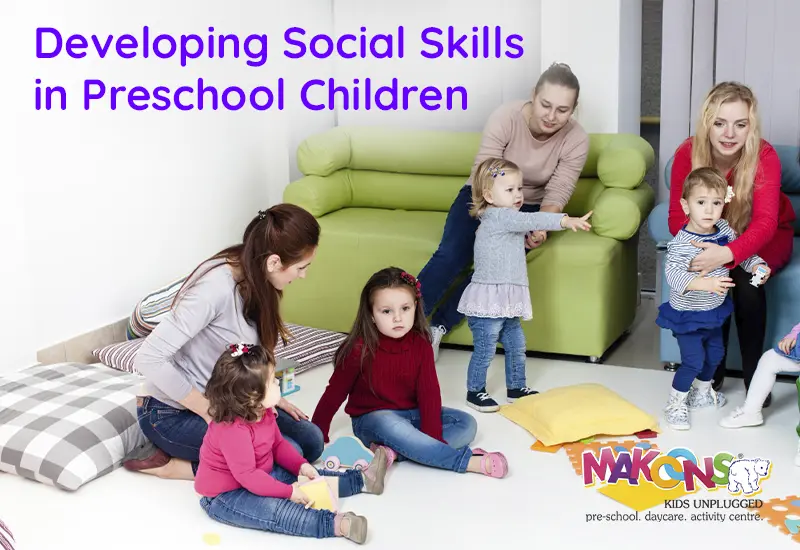
Preschool is an important stage for a child. It is often his or her first time away from family. It is also his or her first time to be with so many children of his or her own age for hours. In preschool, they learn the art of talking, playing, and sharing. These lessons are not just about games or toys-they are about social skills.
Social skills provide children with opportunities to come in contact with one another. Such skills enable children to make friends, solve problems, and think of themselves as members of a group; they are also useful in building the confidence of children. Absence of such skills could make children be shy, lonely, or at times upset. Hence, social development must be of serious concern for parents and teachers in regard to preschoolers.
This blog will explain how social skills grow in preschool. It will cover preschool social skills activities, teaching sharing and kindness, friendship skills for kids, and emotional learning activities. Each part will show simple ways to help children learn these skills every day.
Why Social Skills Matter?
Social skills in a child’s life can be viewed like a key: children socialize by talking with others. Communication, in the most basic sense of listening and talking, or imparting pleasure, such as playing, harmony in sharing, or taking turns, constitutes sharing opportunities. Sharing is necessary because if they can share, children get to join in the play and attend school. If they know how to ask for help, they feel secure.
Social development also grounds learning in preschoolers. Preschoolers who are willing to collect information, listen intently, and respect each other’s opinions may find that the lessons flow comfortably. It helps them keep their concentration on the lesson and not upset themselves or others through distraction.
Some other kids feel that they are set apart and get angry or maybe even get into a fight; such emotions are probably beyond their articulation. These problems make preschool a tough place for them, so it is crucial to help them through every step.
Preschool Social Skills Activities
Children learn best through play. Activities that are fun and engaging are the best tools for teaching social skills. Here are some simple ideas:
Circle Sharing
Children sit in a circle. Each child shares one thing, like their favorite color. This helps them listen and wait for their turn.
Role Play
Children pretend to be teachers, doctors, or shopkeepers. They practice talking politely and solving problems.
Group Drawing
Give a large sheet of paper. Ask children to draw together. They learn to share space and cooperate.
Building Together
Children use blocks to build a tower. They see how teamwork makes something bigger and stronger.
Story Time Talks
After a story, ask, “How did the character feel?” or “What would you do?” This builds empathy and thinking.
Quite simple are those preschool social-skill activities but very effective. They instill such qualities as patience, kindness, or good listening into a child, all camouflaged from any direct lessons.
Sharing and Kindness
Sharing is tough for preschoolers because they are in the process of coming to terms with the fact that the world does not revolve around them. A gentle reminder today, and perhaps again tomorrow, would make a difference to the children as they gradually learn.
Social Development in Preschoolers
Children develop in stages. At first, children try to play independently, even if others sit nearby. They are then led to parallel play side-by-side, but they do not interact. Eventually, they may share gameplay and start to accept rules.
By the age of three to five, many preschoolers learn:
- How to wait for their turn
- How to play small group games
- How to talk about feelings
- How to start a simple friendship
But each child is different. Some learn quickly. Some need more time. That is fine. What matters is that parents and teachers create safe and supportive spaces. Social development in preschoolers is not a race. It is a steady journey.
Friendship Skills for Kids
Friendship in preschool is such a very important thing in those preschool days. For a child, a friend will share a toy, play on the swings, or sit down and chat. Friendships for kids mean skills like greeting, invitation, or resolution of minor conflicts.
Here are some ideas:
Teach Hello and Goodbye
Show children how to greet others with a smile.
Encourage Invitations
Suggest phrases like, “Do you want to play with me?”
Guide Conflicts
When two children argue, show them how to use words. For example, “Can we take turns?” instead of grabbing.
Celebrate Friendship
Have special days where children draw cards for friends or play in pairs.
Friendship gives children joy and confidence. It also teaches them that others can be supportive and fun.
Emotional Learning Activities
Children have big feelings. Sometimes they feel happy, sometimes angry, sometimes sad. But preschoolers may not have the words to explain. Emotional learning activities help them name and manage emotions.
Read more : Building Kindness: Raising Emotionally Smart Kids
Simple Tips for Everyday Practice
Here are a few easy ways to help social growth daily:
- Use kind words often. Encourage children to copy.
- Arrange time for children to play with others.
- Talk about feelings in simple words.
- In most situations, let the children share toys or snacks.
- Be patient and give them time to learn.
Common challenges
The preschooler faces challenges as normal. One day, maybe in the morning, they will argue about something relating to toys. They may shout or cry when upset. This does not mean they are “bad.” It only means they are learning.
Instead of punishing, guide them gently:
- Stay calm and show the right way.
- Offer choices. For example, “Do you want to wait or choose another toy?”
- Use stories or puppets to explain.
Children respond better to gentle teaching than to strict rules. With practice, they improve.
Long-Term Benefits
Children who build strong social skills in preschool carry them into later years. They are more likely to enjoy school. They find it easier to make friends. They can express emotions without fear.
These skills also help later in life. Adults who learned kindness and cooperation early are often better at teamwork. They are more confident in social situations. They are also more caring toward others.
Conclusion
Developing social skills in preschoolers is among the front-line issues of early childhood care. Social skills teach children to share, be kind, and classmates to work out issues working through their feelings as they help in feeling part of a group.
Social skills are basically ways in which children interact with others. These help children make friends, solve problems, and feel accepted by a group. They also help children to develop confidence. Without these skills, children may feel shy, lonely, or simply upset. Hence, parents and teachers should deal with social development for preschoolers.
Whenever children acquire such skills, they feel happier and more secure. They enjoy preschool. They make strong friendships by growing into caring, gifted persons. A lot starts with those smaller steps: sharing a toy, saying “thank you,” or smiling at a friend.
Read Also : Fun Summer Activities That Boost Child Oveall Development







 Twitter