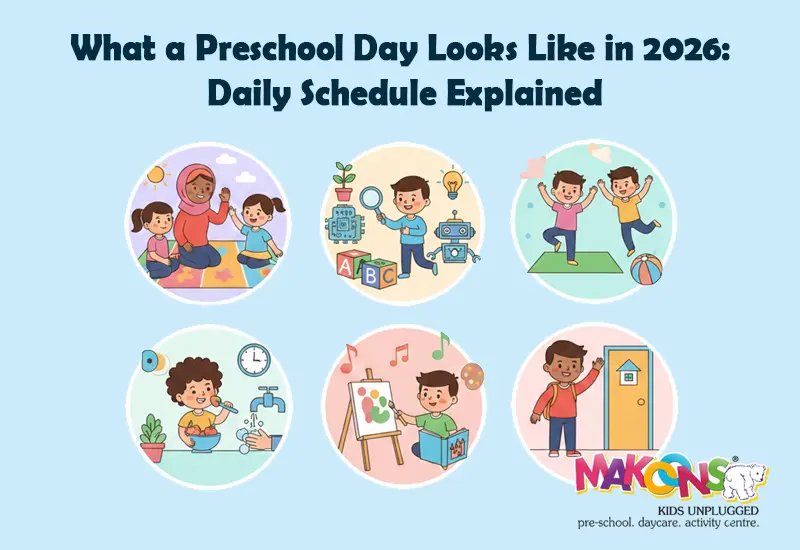
The last few years have seen the development of preschool education at a high pace, and by the year 2026, it will be an intelligent combination of learning, playing, emotional growth, and well-being. Parents are demanding transparency- they want to know what their child is actually doing at school at the specific time, and is it really contributing to his or her development. Knowing the day to day schedule of a contemporary preschool makes the parent confident that his/her child is in a safe, interesting and developmentally sound environment of learning.
This paper describes what a typical preschool day will be like in 2026 dissecting the nursery class routine, the preschool schedule, and activities in preschool as well as how structured routines benefit young children.
The Importance of a Structured Preschool Daily Schedule
Children that are young survive on predictability. A regular day schedule in preschools makes the children feel safe, less anxious and develops self-discipline. When children are made aware of what is to follow, they will have an easier time moving between activities as well as being involved in the learning process.
In 2026, preschools focus on:
- Moderated schedule and not strict schooling.
- Discovery of the child leader in an organized system.
- Affective and interpersonal learning and cognitive development.
A structured preschool classroom routine facilitates attention span, regulation of the behavior and independence.
Time of Arrival and Welcome (8:30 AM – 9:00 AM)
The day starts with a relaxed and tranquil arrival time in the preschool. This is a major aspect of the nursery class routine since it determines the mood of the whole day.
During this time:
Children are received one after another.
- They store their possessions separately.
- There is a free play activity.
- Mood and behavior is monitored by teachers.
This easy initiation will allow children to part ways with parents without any discomfort and move to the school environment.
Related Topic: LKG Syllabus 2025: What Every Parent Should Know
Morning Circle Time (9:00 AM – 9:30 AM)
Guided by a circle, time is a major part of preschool classroom life. It promotes communication, listening and group involvement.
Activities often include:
- Greeting songs
- Discussion of Calendar and weather.
- Finding expression on thoughts or feelings.
- Introducing the day’s theme
This activity of the preschool schedule provides language development, self-esteem, and a feeling of belongingness.
Play Gallery (9:30 AM – 10:30 AM) Learning
Even in 2026, the play is still central to the everyday activities of a preschool. Play based learning enables the child to engage with concepts naturally and in an enjoyable way.
These sessions may include:
- Building blocks and puzzles
- Role-play and dramatic play
- Art and craft activities
- Sensory play stations
These are daily activities in a nursery, which build creativity, problem-solving, fine motor, and collaboration.
Snack and Nutrition Break (10.30 AM -10.50 AM)
Healthy habits start early. Snack time is a highly significant social and learning process in the nursery class routine.
Children learn to:
- Wash hands independently
- Sit together and share
- Practice table manners
- Be aware of nutritious food.
This break contributes to physical health and learning skills in life that are basic to self-sufficiency.
Related Topic: What’s Inside a Preschool Syllabus?
Outdoor Play and Physical Activities (10:50 AM -11:30 AM)
The modern preschool daily routine is inseparable because outdoor time is a compulsory aspect of the new preschooler child. Exercise helps in physical and mental growth.
Activities might be done on a daily basis outdoors at preschool and include:
- Dashing, jumping and balancing.
- Group games
- Nature exploration
- Free play with peers
These exercises enhance coordination, strength and socialization and decrease stress and increase concentration.
Concept Learning Time (11:30 AM – 12:00 PM)
Learning concepts is introduced in a gentle manner to the preschool schedule without being academic. Lessons are brief, interactive and age-related.
Focus areas include:
- Such pre-math concepts as numbers and shapes.
- The storytelling method of language development.
- Music and movement
- Early science exploration
This organized and yet loose aspect of the preschool classroom routine assists children in developing the basic skills in a stress free way.
Rest Preparation and Lunch Time (12:00 PM – 12:30 PM)
Lunch is not just a dinner, a learning experience. Children learn to be independent and responsible as a part of the nursery daily activities.
During lunch:
- The children take their time to eat.
- Teachers promote self feeding.
- Conversations in any social context are encouraged.
- Routines of clean-up are observed.
This practice helps in self-care practices and emotional management.
Nap or Quiet Time (12:30 PM – 1:30 PM)
Young children need to have rest. Individual sleep requirements are honored in 2026 in the preschool daily schedule in the preschools.
Children may:
- Nap on individual mats
- Read stories or listen to soft music.
- Perform silent activities as long as awake.
Time to rest is rejuvenating and enhances the remaining day in terms of attention and mood.
Afternoon Creative (1:30 PM -2:15 PM)
In preschool, children engage in daily activities that are peaceful and creative after taking a rest.
These may include:
- Drawing and coloring
- Music and dance
- Storytelling sessions
- Simple group projects
This part of the nursery classroom practice stimulates self-expression and fantasy.
Related Topic: Preschool Curriculum In 2026: What Schools Should Teach—And What They Shouldn’t
Thinking and Leave Circle (2:30 PM -3:00 PM)
The reflection time is the last part of the day, and the role of this activity continues to grow in the preschool classroom in 2026.
Children:
- Share what they enjoyed
- Talk about what they learned
- Practice gratitude
- Be emotionally ready to be picked up.
This is an emotional closure ritual and strengthens learning.
How the Preschool Timetable Supports Holistic Development?
A designed preschool schedule will guarantee a balanced development in all spheres:
- Play and exploration in cognitive development.
- Group interaction Social skills.
- Routine and reflection Emotional growth.
- Movement and rest Physical health.
Nursery daily activities are now structured in such a way that they facilitate the development of the entire child and not only academic preparation.
The Importance of Preschool Routines in 2026 (more than ever before)
As the exposure to screens and active lifestyles increase, children are highly benefiting structures. A regular day in the preschool time schedule develops:
- Emotional security
- Better behavior regulation
- Stronger learning habits
- Self-belief and self-reliance.
A familiar nursery class programme makes kids easily adjusted to the school setup in the future.
Conclusion
The day of a preschool in 2026 is specially planned to have a balanced approach of the structure and flexibility, learning and play and activity and rest. Knowledge of the preschool day-to-day schedule would provide parents with an understanding of the way children develop, learn and succeed in young learning institutions.
Since admission to discharge, each of the preschool schedule and nursery daily activities contributes to the development in a significant manner. Having a caring preschool classroom atmosphere, the children are not only ready to go to school, but they are ready to live.







 Twitter