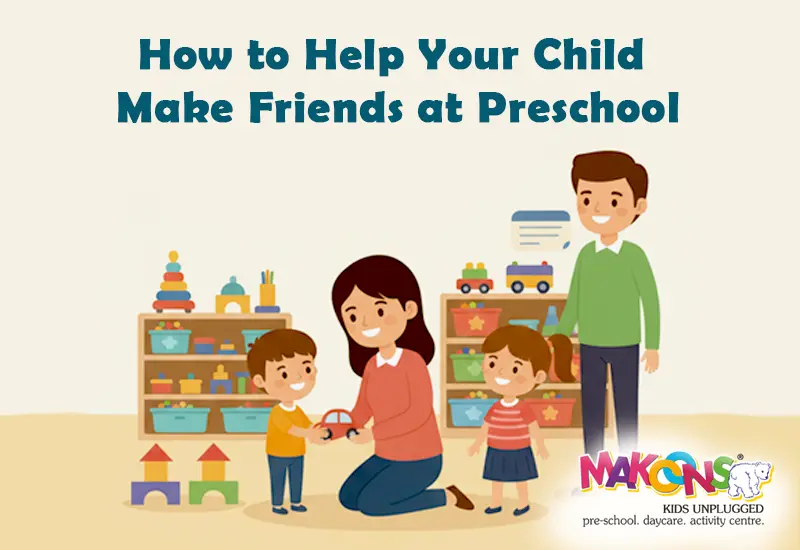
During preschool time, making friends is very important. Friends help children feel happy. They build confidence. But not every child finds it easy. Some children join in quickly. Others take more time. That is normal.
Parents and teachers can assist. The instruction provided by parents and teachers can really help a lot. Below are simple methods to support your child in building friendships in preschool.
1. Start at Home
Social skills start at home. Let your child play with you and other family members. Teach them to take turns. Teach them to share.
Play small games like passing the ball. Build blocks together. Let your child wait for their turn. This helps them learn patience.
Pretend play is also good. You can play school, kitchen, or shop. This helps children talk politely and listen. When they practice at home, they become ready to do it at preschool.
2. Talk About Friendship
Define friendship to your child in simple terms. Inform them that friends are those people we play with and share our things with. It is said that it takes a long time to have friends, but do not worry, as it is part of the whole thing.
Move on to read kids’ literature having friendship as the main topic, along with your child.
3. Be a Good Example
Children learn by watching adults. Be friendly in front of them. Say hello to neighbors. Be polite, and show your teeth.
Your child gets the same instinct through your kindness to other people. Instruct them to introduce people and say thank you and please.
Your deeds are more instructive than your words.
4. Plan Small Playdates
In case your little one is not a very communicative person, small playdates could be a good option for you. From time to time, invite one or two of your child’s friends to your place.
Kids sometimes find it difficult to pour their feelings out. They might cry or lose their temper in the midst of a fun activity.
5. Teach Kindness and Sharing
Friendship grows through kindness. Teach your child to share toys. Help them take turns. Remind them to use gentle words.
Praise them when they do it right. Say nice things when they share or help someone. This makes them feel proud.
When children feel appreciated, they repeat good behavior. That helps them become kind friends.
6. Let Them Express
It may be difficult for children to convey their feelings sometimes. They could cry or throw a tantrum while playing.
Assist them in pinpointing their emotions. Say you’re sad or mad. Demonstrate to them ways of calming down. Then, show them how to either play or converse differently.
Understanding emotions will help children cope with situations. This is a significant aspect of social development for toddlers.
Related Topic: 5 Must-know Tips To Make Your Child School-ready
7. Teach Small Conversations
Many kids do not know how to start talking to others. You can teach this at home.
Practice short lines. Let your child say things like:
- Can I play with you
- Do you want to build together
- I like your toy
These small sentences help them start a talk. Also, teach them to listen when others speak. Listening is an important friendship skill.
8. Celebrate Small Wins
Every small step counts. Maybe your child shared today. Or maybe they waved at a friend. Praise that effort.
Say you are proud of them. When children hear kind words, they feel happy and confident.
Confidence helps them keep trying, even when they feel shy.
9. Join Group Activities
Group play helps children learn teamwork. Encourage your child to join group games at school.
Activities like singing, dancing, or circle time teach cooperation. At home, you can play games like Simon Says or musical chairs.
These games teach patience and cheering for others. This helps your child handle group play better.
10. Communicate with the Teacher
Keep the lines of communication open with your child’s teacher. They witness how your little one acts during lessons.
Inquire if your kiddo does interact with other kids. Ask if they require any assistance in becoming part of the group. Teachers can thoughtfully group your child with nice and sociable students.
The partnership of parents and teachers will make the child feel double supported.
11. Handle Fights Calmly
Small fights are normal. Children may argue about toys or turns. Do not worry.
When your child tells you about a problem, stay calm. Ask what happened. Ask what they can do next time.
Help them think of solutions. Maybe they can ask again nicely. Or find a new game. This helps them learn how to solve small problems on their own.
12. Do Not Push Too Hard
Some children are quiet. Some take time to make friends. That is okay.
Do not force your child to play if they are not ready. Give them space. Encourage them gently.
Say that playing alone is fine sometimes. Say that playing with others is fun too. This balance helps them feel safe and open.
Related Topic: Fun Parent Activities That Help More Kids Join Preschool
13. Build Confidence Daily
Confident children make friends easily. Help your child feel good about themselves. Praise their efforts, not just results.
Let them choose small things. Let them pick their clothes or snacks. Small choices build self-belief.
When they feel capable, they are more ready to talk and play with others.
14. Discuss Issues Between Friends
There are always ups and downs in friendships. Friends sometimes quarrel. One may even say something unkind.
Let your child know it happens to everyone. Say that true friends are those who are nice and make us feel good.
If someone is not nice, teach them to either leave the situation or report it to the teacher. This enables children to establish friendships that are both secure and healthy.
15. Be patient and continue to encourage
Making friends is a gradual process. At times, your child may be very excited about the whole thing. At other times, he or she may feel left out.
Be always there to listen. Stay patient. Tell them that everyone, occasionally, has to deal with feelings of shyness. Give them the backing to surrender the next day.
In the end, they will have friends who are in sync with their personality.
Conclusion
Making friends is one of the most important things that a child learns during growing-up period. It also helps them to acquire the qualities of goodness, sharing, and empathy which are the skills that are going to be needed throughout life.
Your assistance can contribute greatly to your child’s feeling of security and confidence. Try to be slow to anger. Support softly. Let your child know that every little progress is worth celebrating.
It will not be long before your child, with love and guidance, will be playing the friendship game at school. They will be taught the ways of sharing, caring, and playing, and that is the main happiness of being in preschool.







 Twitter