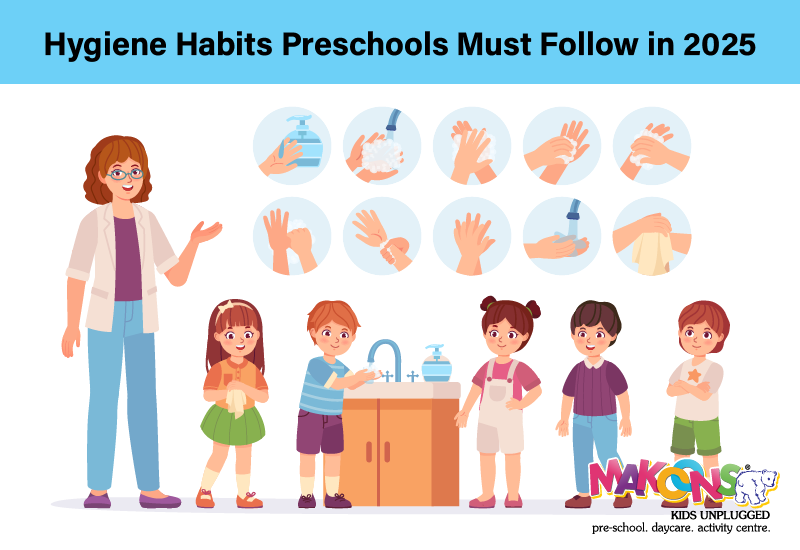
In this post-pandemic era, hygiene is more important than ever in preschools. Educators, parents, and policymakers are aware that high safety standards and hygiene are needed to ensure the health of children and create a safe learning environment. By 2025, preschools will be expected to provide not just bare minimum cleanliness protocols but considerable hygiene practices based on revised regulation and international standards.
Young children are particularly susceptible to infection due to their immune system development and redundancy associated with social peer contact.
Therefore, it is specifically important for preschools to adhere to hygiene practice, education of children’s health, and continual assessment.
This blog tackles the best hygiene practices for preschools, expected in 2025. Classroom hygiene, sanitation, food safety, and children’s hygiene education are covered in this initial post.
Why Hygiene in Preschools Matters More in 2025?
Preschool children usually spend several hours each day in shared spaces. In 2025 there is a heightened awareness of influenza illnesses, viral transmissions, and lifestyle-related health issues. Preschools are expected to raise awareness to higher standards of hygiene than have ever been expected.
Important hygiene practices that are needed in preschool as of 2025:
- Preventing high frequency of illness, such as influenza, gastrointestinal infections, and skin infections.
- Creation of individual health from children to practice health habits at early development.
- Development of a secure and friendly environment for staff and parental participation.
- Conform and compliance with international and current local government health module programs.
- Improvement of preschool reputation at parent level.
Essential Hygiene Practices Preschools Must Follow
Regular Cleaning and Sanitization of Preschools
- Daily cleaning of the classroom, play areas, restrooms and furniture.
- Use of child safe disinfectant practices to decrease exposure to harsh chemicals.
- Sanitation of frequently touched surfaces, including door handles, toys, and surface tables.
Safe Food Handling and Drinking Water
- Regular testing should be in place for drinking water quality.
- RO filters or UV purifiers should be installed in schools.
- Kitchen staff should practice strict food handling and hand washing protocols.
- Meal planning should be aimed towards healthy foods, and limited in junk food and processed snacks.
- Food should not be served family style to limit the potential cross-contamination of children.
Teaching Children About Personal Hygiene
Preschool age children should be taught simple hygiene and self-hygiene habits, including:
- Wash hands before and after eating, after playing and after using the bathroom.
- Children should learn to cover their mouths when they sneeze or cough.
- Using tissues and handkerchiefs.
- Having short nails, and clean hair.
- Teeth are brushed regularly.
Hygiene education in young children starts with teaching simple habits and routines.
Washroom and Toilet Hygiene
- Child-safe toilets should provide ventilation and water.
- Toilets should be cleaned during the school day regularly.
- Liquid hand wash, tissues and sanitizers should be available.
- Posters should be easy-to-read, and encourage hygiene, handwashing, or appropriate bathroom etiquette.
Proper Waste Disposal
- Wet waste and dry waste should be separated in classrooms and dining areas, and changed out frequently to avoid odors and encourage bacterial growth.
- Teach recycling as proper waste disposal hygiene as well as hygiene awareness for children.
Proper Ventilation and Air Quality
- Classrooms that are using good ventilation for air circulation can deliver a risk of airborne illness.
- Air purifiers and plants can be used to improve air quality in classrooms and common areas.
- Fans, AC filters and air ducting should be cleaned regularly.
Hygiene Practices and Health Monitoring for Preschool Staff
Preschool staff play an important role in safety:
- Compulsory health checks for teachers and caregivers
- Training on first aid and child safety practices
- Hand washing, personal grooming, and wearing clean uniforms are the mandates
Technology for Hygiene Monitoring
By 2025, many preschools are starting to replace manual hygiene practices with technology:
- A type of attendance that also tracks health symptoms
- Touchless hand sanitization from smart dispensers
- CCTV to observe cleaning practices
- Digital records of cleaning practices and staff adherence
Table: Hygiene Habits Checklist for Preschools in 2025
| Hygiene Area | Practices to Follow |
| Classrooms & Play Areas | Daily cleaning and sanitization of toys and safe disinfectants |
| Water & Food Safety | Purification of water, safe handling of food, No sharing of food and water |
| Child Hygiene Education | Handwashing, dental care, sneezing practice, and nails trimmed |
| Washrooms | Toilet for children, liquid hand wash, posters that encourage hygiene |
| Waste Disposal | Separate bins, emptied often, and recycling |
| Air Quality | Ventilation, air purifiers, and clean fans/AC ducts |
| Staff Hygiene | Health checks, uniforms, and personal hygiene training for staff |
| Technology Integration | Touchless hand sanitizer and/or cleaning equipment, CCTV hygiene checks, and digital logs of cleaning |
Parental Involvement in Hygiene in Preschools
Parental involvement reinforces a hygiene culture:
- Regular workshops on hygiene habits at home
- Monthly health (symptoms) reports for children
- Parent-teacher time to discuss improvements to child nutrition and socialization for cleanliness
- Encourage the repetition of practices learned at preschool paying attention
Trends Expanding Hygiene in Preschools in 2025 and Beyond
- Eco-friendly products replacing harsh chemicals
- AI will replace some measures of monitoring practices to see how air circulation and surfaces will improve cleanliness
- Gamified applications for facilitating hygienic practice learning for children
- Wider adoption of more global preschool hygiene standards
Conclusion
The teachers and educators at preschool hygiene practices have a depth of practice in 2025 that is much more than learning to clean. There is a level of hygiene education, water and food safety, monitoring of hygiene cleanliness levels, and staff training. Preschools are meant to ensure a higher hygiene standard to care for children and build trust with parents.
Outcomes must be assuring a safe, clean and nurturing space where children have an opportunity to learn and grow with little health risks. As awareness and technology change preschools must stay current in the market place as to best hygiene practice to help support a brighter, cleaner future for children.
Read Also : Essential Hygiene Tips for Kids | School Hygiene Habits
FAQs about hygiene in preschools for 2025
What hygiene habits should we expect preschoolers to learn?
Children should learn about regular handwashing, etiquette for sneezing or hygiene and personal cleanliness, and basic food safety.
How often should classrooms be cleaned in preschools?
Cleaning is according to policy, but daily surfaces should be cleaned with a deep cleaning weekly
How do parents contribute to hygiene in preschool?
Parents should reinforce hygiene practices at home as well as work with preschools to reinforce consistency of habits.
How have hygienic practices changed to date in preschools by 2025?
Hygiene practice has become more resourceful at many preschool readiness programs and with technology, increased oversight and awareness from parent support.





 Twitter