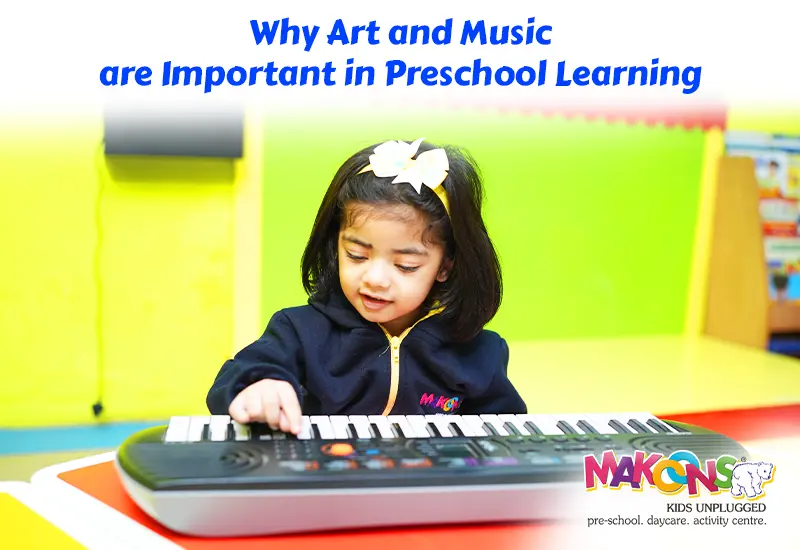
Art and music are essential elements of quality preschool education, and much of their inherent value lies in the process of recognizing, understanding, and developing the whole child. Music and art are critical to each child’s social skills, cognitive development, emotional regulation, and physical development, as these areas promote development that will enhance lifelong learning and well-being.
The NEP 2020 Framework and the 5+3+3+4 Framework in Early Learning
India’s New Education Policy (NEP) 2020 has ushered in a new time of education and an educational level that is the “Foundational Stage.” The “Foundational Stage” encompasses the ages of 3-8 years and unites preschool education (3-6 years) with grades 1 and 2 is part of the 5+3+3+4 framework – 5 years of foundational learning, 3 years of preparatory learning, 3 years of middle learning, and 4 years of secondary education. NEP explicitly explains how important music and art are in the foundational stage framework to develop creativity and holistic development.
Why Art is so Important in Preschool Learning?
Cognitive Development
Art is a great way to stimulate many regions of the brain, especially the part involved with problem
Emotional Expression
Children can use art as a way to express emotion that they may not have words for yet, fulfilling their emotional development and promoting mental wellness.
Language and Communication
When children describe their art they experience both language and vocabulary development through a bridge between visual and verbal language.
Cultural Awareness and Identity
By engaging children with various types of art we promote understanding, respect of others cultural backgrounds, and support pride in their identity.
How Music Enhances Preschool Learning?
Neurological Benefits
Music engages a wide variety of brain areas and promotes memory, attention and executive function. Early engagement with music enhances auditory processes and brain connectivity. These neurological processes support reading development, language, and even math skills that utilize skills gained from musical experiences and exploration.
Motor Skills and Coordination
Moving with music also develops gross motor skills and timing that are fundamental in getting children physically ready for school.
Social and Emotional Growth
Group music and group musical movement also fosters taking turns, cooperation, and emotional self-control in a setting that is both playful and fun.
Inclusivity and Fun
Music can be a way to break down language and cultural differences and unite children in process through both shared experience and celebration.
Play Based Art Activities to Encourage Creativity
Free Drawing and Painting: Children are freely engaging with color and brush strokes to enhance decision making and invite their practice of experimenting with different textures.
Collage and Craft:Children use paper, fabric and natural objects to make multi-sensory art that enhances fine motor precision and visual construction creativity.
Sculpture and Clay: Three-dimensional art will not only invite children to create spatial reasoning, but will also enhance their multi-sensory exploration with art.
Thematic or Seasonal Art Projects: ArtEducational Activities with Music for Preschoolers
- Sing-alongs and action songs are songs with movements, such as “Head, Shoulders, Knees and Toes”, which will engage children with learning that promotes multi-sensory practice as children engage with language and movement.
- Instrument exploration, in this case instruction of simple rhythm instruments, is a means for children to develop timing, coordination, and an understanding of cause and effect.
- Musical games such as freeze dance, echo clapping, and copying patterns dried such as in clapping are supportive skills of self-regulation and sustaining attention.
- Creative composition through making a simple rhythm or melody allows children the opportunity to unleash their imagination and cognitive flexibility.
Incorporating Arts and Music into Daily Preschool Routines
The intent of NEP 2020 and popular frameworks state that if you want arts and music to be incorporated into preschool daily routines, they should be threaded and woven throughout the course of the day.
For example, opening the day with a song or moving to music. To grab children’s attention and make transitions easier.
If you are reading a theme, or one of the stories you’ve read during circle time, prompt the children to use art to indicate that strong framework for learning using multiple modalities.
Implement short and repeatable rituals (song, dance, drawing) that you children can use as an anchor experience and build confidence.
Introduce more freedom of unstructured creativity and exploratory musical play along with experience based and guided instruction.
Benefits of Arts and Music Together for Preschool Creativity Development
- Sparks imagination and divergent thinking.
- Improves memory, attention, and listening skills.
- Develops more positive social behavior and social connections with peers.
- Encourages emotional resiliency and self reflective practices.
- Supports cognitive and emotional readiness for academic success in the future.
Global and Indian Research Studies on The Value of Supporting Arts and Music in ECE
Research studies have shown that children who received regular quality music instruction performed better on vocabulary assessments, and were higher on the literacy requirements generally on the same assessments.
Art-integrated curriculum is associated with child engagement, motivation, and reducing behavioral issues.
NEP 2020 and National Curriculum Framework for Foundational Stage in India emphasizes arts and music as important in ECE curriculum, especially as there are quiet learners, multilingualism and honoring cultural background.
Suggestion for Educators and Families
- Provide a supportive environment: Provide as many rich materials as possible for children to use freely: instrument manipulatives, paints and costumes.
- Support experimentation: Provide children opportunities to take creative risks in safe boundaries.
- Share enthusiasm: Adults offer children either confidence to express themselves, or curiosity to explore when involved in educational can arts and music.
- Include cultural and traditional reflection of art/music: Develop identity as a global citizen.
- Assess development in holistic ways: observe creativity or expression of themselves, or their socialization with each other and not just quality of the final product.
Conclusion
Arts and music cannot design and percussion anything as alternatives or just extras; issues are both fundamental and are core to the preschool experience of education. As part of NEP 2020, it is also part of the attempted government phase of 5+3+3+4 structure, interwoven uniquely through preschool. Imagine the preschool experience with consistent and engaging, along with culturally rich, artistic and/or musical experience. A preschool will build thinkers and doers who are shakers, creative and resilient.






 Twitter