Writing is a skill every child needs. It helps in school and in daily life. But many children find writing hard. Some struggle to hold a pencil. Some write slowly. Others find it difficult to keep letters neat. Parents often worry when they see this. The good news is that practice helps. Small daily steps can bring big changes. Parents can guide children with simple daily handwriting exercises. These exercises do not take lonEasy Daily Exercises Parents Can Do to Improve Kids’ Writingg. They can be fun and easy.
This blog will share easy writing exercises for kids. It will also cover preschool writing activities for younger children. You will learn parent-led writing activities that build skills. These activities can improve writing skills without stress. The goal is to make writing enjoyable. With simple and short daily tasks, children can improve quickly.
Read more : Top 10 Activities to Develop Better Handwriting in Kids
Why Daily Handwriting Exercises Help?
Children learn best with small daily practice. Just like reading, writing improves with repetition. Daily handwriting exercises build hand strength. They also create muscle memory. Over time, writing becomes smoother. Waiting for schoolwork is not enough. Parent-led writing activities at home give extra practice. When children see progress, they feel proud. This boosts confidence. Handwriting practice for kids should be regular and fun.
Preschool Writing Activities
For preschoolers, writing begins with hand movement. Before letters, children need finger strength. Preschool writing activities focus on fine motor skills. These activities prepare kids for pencil control.
Some simple preschool activities are:
- Playing with playdough.
- Stringing beads on a thread.
- Coloring with crayons.
- Tracing circles and lines.
- Using clothespins to pick up objects.
These look like play but they build skills. They improve grip, coordination, and control. Parents should not rush letter writing. These steps are important first.
Easy Writing Exercises for Kids
Once children learn letters, parents can add daily writing exercises. These do not need to be long. Ten minutes daily is enough. Simple, easy writing exercises work best.
Here are examples:
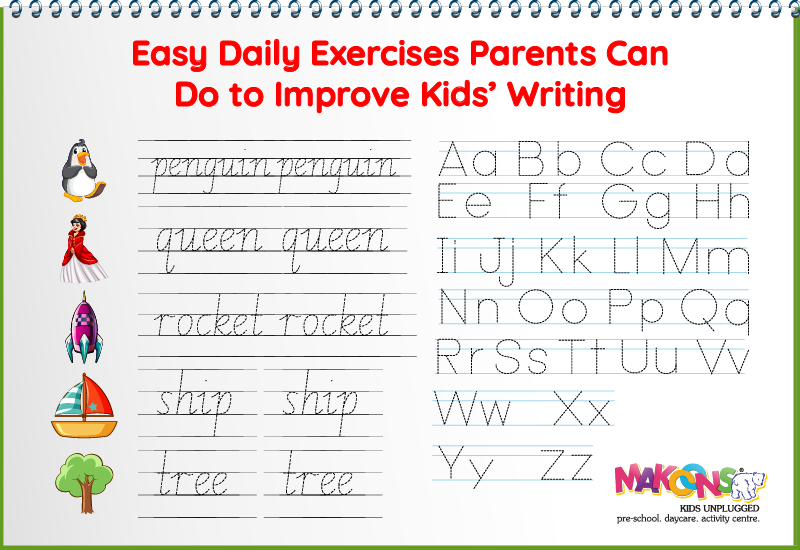
- Tracing Letters: Children trace letters on worksheets. Start with big letters, then smaller ones.
- Copying Words: Ask them to copy 5–10 words daily. Keep the words simple.
- Writing Their Name: Children enjoy writing their name. Let them add it to drawings and notes.
- Short Sentences: Ask them to write one or two sentences about their day.
- Drawing with Labels: Children draw a picture and label it. For example, write “tree,” “car,” or “house.”
These easy writing exercises keep learning light. They also make practice enjoyable.
Parent-Led Writing Activities
Parents play a big role in building writing skills. Parent-led writing activities make writing useful. They also bring writing into daily life.
Here are some ideas:
- Let your child write items on a shopping list.
- Ask them to write simple recipe steps while cooking.
- Encourage letter writing to friends or family.
- Keep a daily diary for one-line entries.
- Use chalk to practice on a board or floor.
These small tasks show children that writing has purpose. They see writing as part of everyday life.
Keeping Kids Interested
Some children resist writing. They may find it boring. Parents can keep them motivated with simple steps.
- Keep sessions short.
- Use colorful pens and paper.
- Add rewards like stickers for neat work.
- Be patient and avoid pressure.
- Make it part of a daily routine.
When children enjoy the process, they practice more. Motivation is key to steady progress.
Steps to Improve Writing Skills
Improving writing is a journey. Parents should guide step by step.
- Build finger strength with preschool activities.
- Teach the correct pencil grip.
- Start with lines, curves, and shapes.
- Move to letter tracing.
- Practice freehand letters.
- Focus on neatness, not speed.
- Add daily short writing tasks.
- Celebrate small improvements.
Each step builds the foundation for neat handwriting.
Fun Ways to Practice
Writing does not always mean paper and pencil. Fun methods make practice exciting.
- Write in sand or salt trays.
- Use finger paints for letters.
- Form letters with sticks or toys.
- Write on foggy glass or mirrors.
- Try digital handwriting apps.
These methods feel like games. But they improve writing skills without pressure.
Daily Routine for Practice
A daily routine helps build habit. Short sessions spread through the day work best.
Here is an example routine:
- Morning: Put their name on a sticky note.
- Afternoon: Ten minutes of tracing letters.
- Evening: Write a sentence in a diary.
Little things go a long way. Writing should be integrated into everyday life.
Mistakes Parent Should Avoid
Parents sometimes make mistakes while teaching. These can discourage children. Here are things to avoid:
- Do not force long practice sessions.
- Do not compare handwriting with others.
- Do not focus only on speed.
- Do not ignore proper sitting posture.
- Do not give up if progress is slow.
Every child learns at their own pace. Support and patience are important.
Extra Tips for Parents
Here are more tips to help improve handwriting practice for kids:
- Always praise effort, not just results.
- Use wide-lined notebooks for beginners.
- Encourage breaks if a child feels tired.
- Teach letter spacing and simple alignment.
- Let children choose their own writing tools.
These small steps keep children motivated and comfortable.
Benefits of Daily Practice
Daily handwriting exercises give many benefits. They improve letter shapes. They build speed without losing neatness. They also improve focus and patience. Children learn discipline through regular practice. Parent-led writing activities also strengthen the parent-child bond. Writing becomes a shared experience, not a chore.
Conclusion
Writing skills are something that grow with continual practice. Simple daily handwriting activities can be a great help provided by parents. Activities for writing in preschool are meant to get the little hands ready for the pencil. Easy practice exercises such as tracing, copying, and labeling are children’s way of having fun. Parent-led activities such as writing a list for grocery shopping or diary entries encourage children to see that writing is purposeful. With redoubled efforts, the kids will chip away at their confidence and ability daily.
The parents are to focus on small steps, patience, and encouragement. This is pretty much! There is not supposed to be perfect handwriting in one day, but improvement. Through several minutes each day and some engaging exercises, the child turns from a boring chore into something fun. Over time they will confidently write with ease. Writing becomes a skill they are proud of.
Read Also : Top Pre-Writing Activities for Preschoolers to Enhance Skills







 Twitter