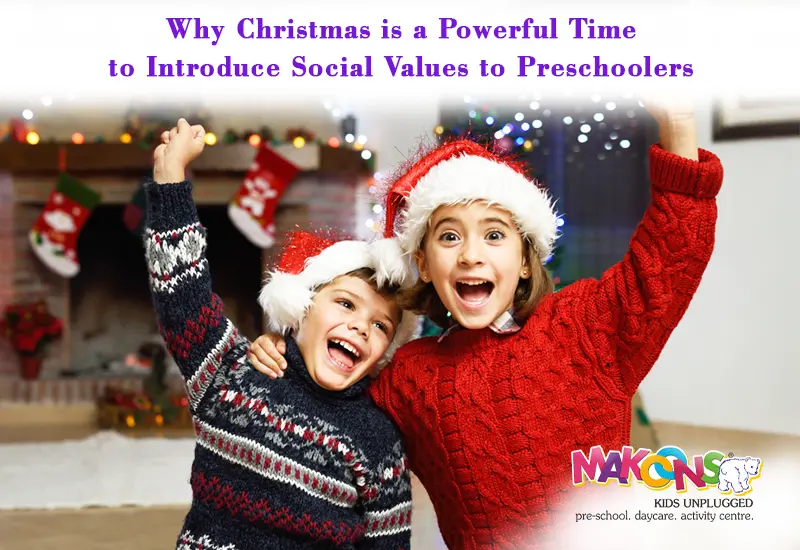
Christmas is the most wonderful time of the year. The houses feel warmer. There are more smiles from people. Families get together. For infants and toddlers, Christmas is the best season ever. Their days are full of lights, songs, gifts, and tales. However, Christmas is not just about enjoyment. It is also the right time to instill social values in toddlers through play.
Young children learn best through experiences. Christmas creates many such moments. These moments help shape behavior, emotions, and thinking. This makes Christmas and value education a natural match. Let us explore why this festive season is so powerful for teaching values to preschoolers.
Preschool Years Are the Foundation Years
Early childhood is a crucial stage of life. This is when children start understanding the world. They learn how to talk to others. They learn how to share. They learn what is right and wrong. These lessons form the base of character development in play school.
Preschoolers observe everything. They copy adults. They notice emotions. They remember actions more than words. That is why early childhood social learning depends on real-life examples. Christmas provides many such examples simply and joyfully.
Christmas Brings Values to Life
Social values can feel abstract to young children. Words like kindness or respect may sound confusing. Christmas turns these ideas into actions. Children see people helping each other. They see sharing of food and gifts. They hear stories about love and care.
When values are lived, children understand them better. Christmas and value education work well because values are visible everywhere during this time.
Related Topic: 20 Christmas Activities that Kids Will Love This Festive Season
Kindness Through Simple Acts
Kindness is one of the first values children can learn. During Christmas, kindness is easy to show. Preschoolers can help wrap gifts. They can share toys with siblings. They can make cards for grandparents.
These small acts matter. They teach children that kindness feels good. Teaching values to preschoolers does not need big lessons. Simple actions leave strong impressions.
Sharing Becomes Meaningful During Christmas
Sharing is an important social value in early childhood. Christmas offers many chances to practice it. Children share sweets with friends. They take turns opening gifts. They play together during family gatherings.
When children share during happy moments, the lesson stays longer. They connect sharing with joy. This strengthens early childhood social learning positively.
Gratitude Is Easy to Teach at Christmas
Preschoolers often focus on getting gifts. This is a good chance to teach gratitude. Parents and teachers can talk about being thankful. Children can say thank you for gifts, food, and time spent together.
Gratitude is one of the main character-building traits in preschool education. It instills in kids a sense of appreciation for their possessions. Christmas is a perfect time for this lesson to be taught.
Related Topic: Christmas Decorations Preschoolers Can Make For Their Classroom
Helping Others Feels Natural During the Festive Season
Many families help others during Christmas. They donate food. They give clothes. They help neighbors. When preschoolers see this, they learn empathy.
They learn that not everyone has the same things. They learn that helping others is important. This supports social values in early childhood in a gentle way.
Stories and Songs Carry Strong Messages
Christmas stories are rich in meaning. They talk about love, hope, and care. Songs talk about peace and joy. Preschoolers love stories and music. They listen with interest.
These stories support Christmas and value education. They introduce values without pressure. Children absorb messages through repetition and emotion.
Family Time Strengthens Social Learning
Christmas often means family gatherings. Preschoolers spend time with parents, grandparents, and cousins. They learn how to greet others. They learn patience. They learn to wait their turn.
Such moments are important for early childhood social learning. Children learn social rules by watching adults. Christmas offers many chances for this learning.
Teaching Respect Through Traditions
Christmas traditions vary across families. Some decorate trees. Some cook special meals. Some attend prayers. Teaching children to respect traditions helps build respect for others, too.
This supports teaching values to preschoolers in a simple way. Children learn that different families may do things differently. Respect grows from this understanding.
Emotional Learning Happens Naturally
Preschoolers feel many emotions during Christmas. They feel excitement. They feel happiness. Sometimes they feel disappointment too. These emotions offer teaching moments.
Adults can help children name feelings. They can guide children to manage emotions. This supports character development in preschool and emotional growth.
Related Topic: What Christmas Teaches Preschoolers About Kindness and Empathy
Learning Through Play and Celebration
Play is a powerful teacher. Christmas games and activities involve teamwork. Children play together. They solve small problems. They learn cooperation.
This playful environment strengthens social values in early childhood. Learning happens without force. Children enjoy the process.
Preschoolers Learn by Watching Adults
Children watch how adults behave during Christmas. They notice how adults speak. They notice how adults help others. These actions matter.
When adults model kindness and patience, children follow. This makes Christmas and value education very effective.
Building Long-Term Values
Values taught during preschool years stay for life. Christmas creates strong memories. Lessons learned during happy times last longer.
Teaching values to preschoolers during Christmas helps build a strong moral base. These values guide children as they grow.
Simple Conversations Make a Big Difference
Adults do not need long speeches. Short talks work best. Asking simple questions helps. Questions like “How did that make you feel?” encourage thinking.
These conversations support early childhood social learning. They help children connect actions with feelings.
Creating Safe and Loving Spaces
Christmas often feels safe and loving. Children feel secure. This safety helps learning. When children feel loved, they listen better.
This environment supports character development in preschool. Values grow best in loving spaces.
Schools and Homes Can Work Together
Preschools can include Christmas themes in lessons. Homes can support the same values. This creates consistency.
When children see the same values everywhere, learning becomes stronger. Social values in early childhood grow with repeated exposure.
Focusing Beyond Gifts
It is easy to focus only on gifts. Adults can guide children to see beyond themselves. Talking about giving is important.
This balance is key in Christmas and values education. It teaches children that Christmas is about love, not just things.
A Season That Teaches Naturally
Christmas does not force lessons. Values flow naturally. Children learn without stress. Joy becomes the teacher.
This makes Christmas a powerful time for teaching values to preschoolers.
Conclusion
Christmas is not just a festival. It is like a place where children learn important life lessons. It teaches the value of giving, waiting, understanding, and loving. Through simple experiences, Christmas helps children learn important social values in a natural and meaningful way.
For preschoolers, these lessons shape character. They build empathy. They build understanding. They build strong values.
When adults guide gently, Christmas becomes a powerful tool. It supports social values in early childhood. It strengthens character development in preschool. Most of all, it helps children grow into caring human beings.







 Twitter