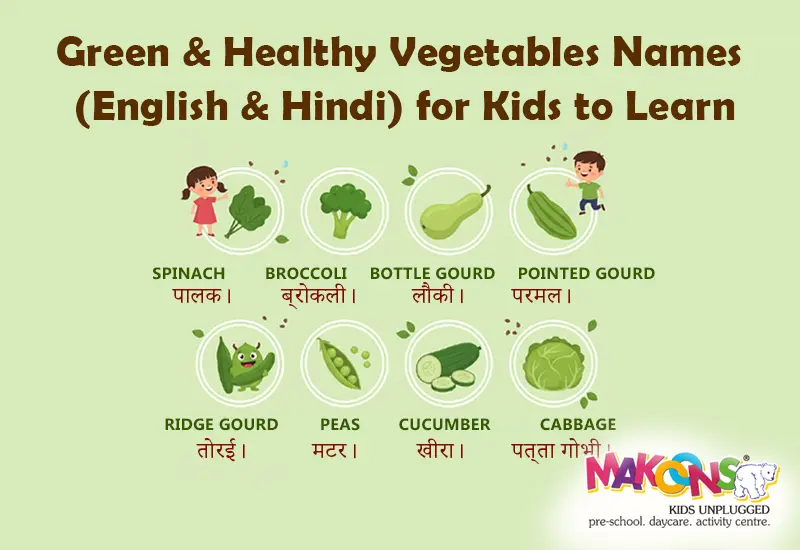
Kids must start eating vegetables from a young age. With this, it becomes necessary for them to learn the names of vegetables. They must know the names of the vegetables in both English & Hindi. Parents and teachers must take this responsibility to help them learn vegetable names. Let’s know some of the common vegetables kids can begin their learning with. We’ll also see how we can include some activities in preschool to make children learn about veggies.
Why Kids Should Learn Vegetable Names?
Kids enjoy learning new things. When you teach them vegetable names early, it helps them in many ways.
- They learn new words.
- They get to know healthy food.
- They know about their favorite vegetable.
Green Vegetables Names in English and Hindi for Kids
- Spinach (Palak)
- Broccoli (Broccoli)
- Peas (Matar)
- Cabbage (Patta Gobhi)
- Fenugreek Leaves (Methi)
- Coriander Leaves (Dhaniya)
- Mint Leaves (Pudina)
- Bottle Gourd (Lauki)
- Bitter Gourd (Karela)
- Green Beans (Phali)
Healthy Vegetables Names for Kids
- Carrot (Gajar) – Good for the eyes.
- Tomato (Tamatar) – Good for skin and immunity.
- Beetroot (Chukandar) – Gives energy and improves blood.
- Cucumber (Kheera) – Keeps the body cool.
- Potato (Aloo) – Soft and easy to eat.
- Pumpkin (Kaddu) – Helps in digestion.
- Cauliflower (Phool Gobhi) – Full of vitamins.
- Lady Finger (Bhindi) – Helps kids grow.
- Brinjal (Baingan) – Soft and healthy.
- Sweet Corn (Makka) – Tasty and gives strength.
- Potato – Aloo
- Tomato – Tamatar
- Onion – Pyaz
- Peas – Matar
- Carrot – Gajar
- Cabbage – Patta Gobhi
- Spinach – Palak
- Pumpkin – Kaddu
- Beans – Phali
- Corn – Makka
- Potato – Aloo
- Tomato – Tamatar
- Onion – Pyaz
- Garlic – Lahsun
- Ginger – Adrak
- Green Chilli – Hari Mirch
- Lemon – Nimbu
- Carrot – Gajar
- Beetroot – Chukandar
- Radish – Mooli
- Turnip – Shalgam
Green Vegetables Names
- Spinach – Palak
- Fenugreek Leaves – Methi
- Mustard Leaves – Sarson
- Coriander Leaves – Dhaniya
- Mint Leaves – Pudina
- Curry Leaves – Curry Patta
- Lettuce – Lettuce
- Peas – Matar
- Green Beans – Phali
- Bottle Gourd – Lauki
- Ridge Gourd – Turai
- Bitter Gourd – Karela
- Capsicum – Shimla Mirch
- Cabbage – Patta Gobhi
- Broccoli – Broccoli
- Zucchini – Zucchini
- Green Pumpkin – Hari Kaddu
Root and Stem Vegetable Names
- Yam – Jimikand
- Taro Root – Arbi
- Sweet Potato – Shakarkandi
- Lotus Stem – Kamal Kakdi
- Spring Onion – Hara Pyaz
- Raw Banana – Kaccha Kela
Other Healthy Vegetables
- Cauliflower – Phool Gobhi
- Lady Finger – Bhindi
- Brinjal – Baingan
- Pumpkin – Kaddu
- Cucumber – Kheera
- Drumstick – Sahjan
- Corn – Makka
- Sweet Corn – Meetha Makka
- Mushroom – Mushroom
- Tomato (green/red) – Tamatar
Related Topic: 7 Days of a Week Names | Learn Days in English Easily
How to Teach Vegetable Names to Kids in a Fun Way
1. Use Real Vegetables
- Display ordinary vegetables from the kitchen to them.
- Allow them to feel, smell, and possess those vegetables.
- Children acquire knowledge principally with the help of their senses.
2. Use Picture Cards
- You can make easy flashcards at home.
- Draw pictures or print them.
- Say the name in English first, then Hindi.
3. Play Sorting Games
Children’s education should be made fun and practical: ask them to classify everyday veggies according to attributes such as hue, shape, size, or their own chosen measures.
4. Vegetable Basket Activity
- Place different vegetables inside a basket.
- Ask the child to pick one and say its name.
5. Story Time with Vegetables
- Create small stories like “The Green Pea Family” or “Mister Potato Goes to School”.
- Stories help children remember words for a long time.
6. Market Visit
- Take the kids to the vegetable market.
- Show them how vegetables look before cooking.
- Let them point and name the vegetables they know.
7. Vegetable Drawing
- Kids love drawing.
- Help them label the names.
Related Topic: 5 Oceans of The World: Names & Sizes
Reasons Why It Is Important to Learn Vegetable Names
- Learning the names of vegetables contributes not only to vocabulary.
- This also supports children’s development in the formation of healthy food habits.
- Vegetables are recognized, and this is the way they feel connected to food.
- Thus, they become more and more ready to take in the vegetables and with no fuss.
- They feel that they have gained knowledge of the names in both languages, thus becoming more proud of themselves.
Conclusion
Vegetables not only serve as an ornamental item but are also the source of taste and nutrition. The learning process of vegetable names in two languages for children is not only a matter of ‘smart eating’ but also of ‘staying healthy’. Undoubtedly, the learning of vegetables is much more than a formal classroom lesson.
What are some common vegetables names in English and Hindi?
Some common examples include Potato (Aloo), Tomato (Tamatar), Carrot (Gajar), Spinach (Palak), and Cabbage (Patta Gobhi). These are basic vegetables that kids can easily recognize and remember.
How can parents teach vegetable names to kids easily?
Parents can use real vegetables, flashcards, and fun games to teach names. Letting kids touch, see, and identify vegetables makes learning more interactive and memorable.
At what age should children start learning vegetable names?
Children can start learning vegetable names as early as 2–3 years old. At this stage, they are curious and can easily pick up simple words through repetition and daily exposure.
How can teachers make learning vegetable names fun in preschool?
Teachers can include activities like sorting vegetables by color, storytelling, role play, and naming games. These playful methods help children learn faster without feeling bored.







 Twitter