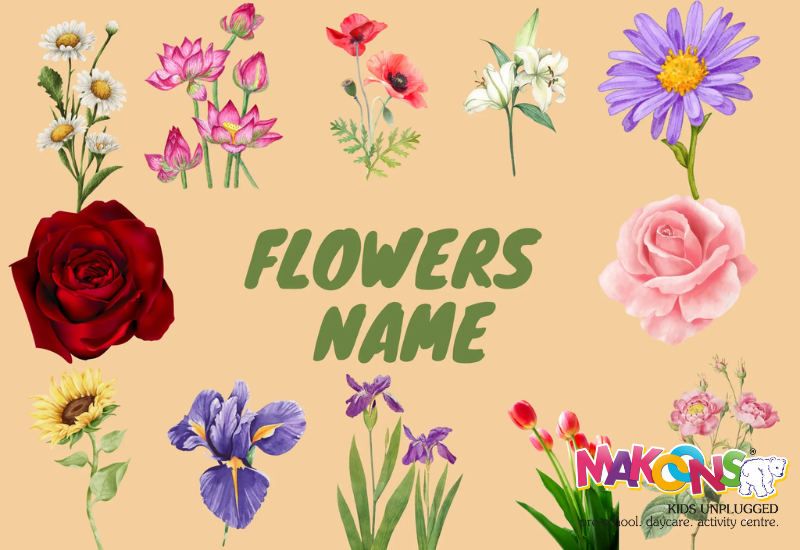
Why Kids Should Know About Flowers
Your child spots a bright yellow bloom in the park. “Mumma, what’s that?” they ask, eyes full of wonder. You pause. Is it a marigold? Or maybe a dahlia?
Honestly, most of us struggle with flower names beyond roses and sunflowers. But here’s the thing – children are natural explorers. Show them once, and they’ll spot that flower everywhere for the next month.
At Makoons, we’ve noticed something interesting. Kids who learn about different types of flowers start paying attention to nature in ways that surprise everyone. They notice butterflies more. They want to water plants. They ask why some flowers smell nice and others don’t.
Teaching flower names for kids isn’t about turning them into botanists. It’s about helping them connect with the world around them. Plus, knowing flower names in English and Hindi gives them vocabulary in both languages naturally.
30 Common Flower Names in English and Hindi
Here’s a handy table with flower names your kids will actually see around them:
| Sr. No. | Flowers Name in English | Flowers Name in Hindi |
| 1. | Rose | गुलाब (Gulab) |
| 2. | Lotus | कमल (Kamal) |
| 3. | Sunflower | सूरजमुखी (Surajmukhi) |
| 4. | Marigold | गेंदा (Genda) |
| 5. | Jasmine | चमेली (Chameli) |
| 6. | Hibiscus | गुड़हल (Gudhal) |
| 7. | Lily | कुमुदिनी (Kumudini) |
| 8. | Tulip | कन्द पुष्प (Kanda Pushp) |
| 9. | Orchid | आर्किड (Orchid) |
| 10. | Dahlia | डेहलिया (Dahlia) |
| 11. | Bougainvillea | बोगनवेलिया (Bougainvillea) |
| 12. | Mogra | मोगरा (Mogra) |
| 13. | Chrysanthemum | गुलदाउदी (Guldaudi) |
| 14. | Lavender | लैवेंडर (Lavender) |
| 15. | Petunia | पिटूनिया (Petunia) |
| 16. | Poppy | अफीम का फूल (Afeem ka Phool) |
| 17. | Daffodil | नरगिस (Nargis) |
| 18. | Calendula | गुले अशर्फ़ी (Gule Asharfi) |
| 19. | Pansy | बनफूल (Banphool) |
| 20. | Ixora | रुग्मिनी (Rugmini) |
| 21. | Zinnia | झिन्निया (Zhinnia) |
| 22. | Periwinkle | सदाबहार (Sadabahar) |
| 23. | Plumeria | चम्पा (Champa) |
| 24. | Crossandra | अबोली (Aboli) |
| 25. | Morning Glory | रेलवती (Relvati) |
| 26. | Poinsettia | लाल पत्ती (Lal Patti) |
| 27. | Gerbera | गरबेरा (Gerbera) |
| 28. | Amaryllis | नरगिस लिली (Nargis Lily) |
| 29. | Tuberose | रजनीगंधा (Rajnigandha) |
| 30. | Bluebell | नीलकुरिंजी (Neelkurinji) |
Print this out, stick it on the fridge, and watch your kids start pointing out these flowers everywhere.
Understanding Different Types of Flowers
Not all flowering plants work the same way. Here’s how different types of flowers behave:
Based on Their Lifespan:
- Annual Flowers – Live for just one season. Marigolds and zinnias bloom beautifully, drop seeds, and die. Next year, new plants grow from those seeds. Kids find this complete life cycle fascinating.
- Perennial Flowers – These types of flowers come back every year. Roses, hibiscus, and bougainvillea might look dead in winter, but they’re just resting. This teaches children about patience and natural cycles.
Based on Blooming Seasons:
- Summer Bloomers – Sunflowers, hibiscus, and bougainvillea love heat. Their bright colors look even more vibrant against hot summer skies.
- Winter Bloomers – Marigolds, petunias, and pansies prefer cooler weather. Many flower names in our table actually bloom best during Indian winters.
- Year-Round Bloomers – Periwinkle (sadabahar literally means “always spring”) blooms whenever it feels like it, giving color throughout the year.
Based on Flower Structure:
- Simple Flowers – Have all parts in one bloom. Hibiscus is a perfect example to show kids.
- Composite Flowers – Here’s something wild: that big sunflower “face” isn’t one flower – it’s hundreds of tiny flowers packed together! Same with marigolds. Kids’ minds get blown when they learn this.
Understanding the Structure of a Flower
When kids ask about parts of a plant, here’s the simple breakdown:
Basic Parts of a Plant:
- Roots – Underground, soaking up water and nutrients
- Stem – Like a straw carrying water upward to the whole plant
- Leaves – The food factories that catch sunlight and make energy
- Flowers – The reproductive parts that eventually make seeds
What’s Inside the Structure of a Flower:
- Petals – The colorful parts that attract bees and butterflies
- Sepals – Green bits underneath protecting the bud before it opens
- Stamens – The parts with yellow powdery pollen (the male bits)
- Pistil – The center part where seeds form (the female bit)
Hands-On Learning Tip: Grab a big hibiscus flower and gently pull it apart with your kids. Let them see each part, feel the pollen on their fingers. Suddenly the structure of a flower isn’t boring – it’s real and right there in their hands!
Most Common Flowers Found Across India
Some flower names pop up constantly because these flowering plants absolutely love Indian conditions:
Gulab (Rose)
- Grows literally everywhere in India
- Available in every color imaginable
- Used in weddings, worship, cooking, and beauty products
- If kids learn just five flower names, rose should top the list
Genda (Marigold)
- Those cheerful orange and yellow blooms near every temple
- Handles heat beautifully and grows super easily
- Kids often help string marigold garlands for festivals
- One of the first flower names children naturally learn
Gudhal (Hibiscus)
- Large red flowers you spot everywhere
- Big enough that even toddlers can identify them
- Used for hair oil, herbal tea, and traditional remedies
- Perfect for teaching the structure of a flower
Chameli (Jasmine)
- Small white flowers with intense sweet fragrance
- Smell gets stronger in the evening
- Women wear them in hair for special occasions
- Kids identify this through scent even before seeing it
Bougainvillea
- Those bright pink, purple, or orange cascades on walls
- Fun fact: The colorful parts aren’t flowers – they’re leaves!
- The actual tiny flowers hide inside
- Kids find this nature trick absolutely hilarious
These common types of flowers make perfect starting points for teaching flower names for kids.
Rare and Special Flowers in India
While teaching everyday flower names, throw in some rare ones. Kids love special things:
Neelakurinji (Bluebell):
- Blooms once every 12 years!
- Entire hillsides in Nilgiris turn blue when it happens
- Your child might see it bloom maybe 5-6 times in their whole life
- This rarity absolutely captures young imaginations
Brahma Kamal:
- Blooms only at night in Himalayan regions
- By morning, it’s completely gone
- Families stay up specifically to watch it bloom
- Teaches kids about appreciating fleeting, rare moments
Why These Matter: Talking about rare flowering plants alongside common flower names helps children understand biodiversity and why protecting nature matters.
Fun Activities to Learn Flowers Name
Here’s what actually works when teaching different types of flowers to kids:
Flower Hunt Walks
- Make evening walks into games – who spots chameli first?
- Count how many types of flowers you find in one park
- Take pictures and later match them to flower names in your table
Flower Pressing
- Let kids collect fallen flowers (teach them not to pluck from plants)
- Press between heavy book pages for a week
- Create scrapbooks with pressed flowers labeled in both English and Hindi
Grow Something Together
- Even a small pot with marigold seeds works
- Kids who watch flowering plants grow from seeds develop real connection
- Learning flower names becomes personal when they’ve grown them
Draw and Color
- Kids draw flowers they’ve observed
- Color them while learning their names
- This visual memory helps flower names stick better
Smell Game
- Blindfold kids and let them identify flowers by scent
- Jasmine, rose, and mogra have very distinct fragrances
- Makes learning flower names a multi-sensory experience
Why Learning Flower Names Actually Matters?
Teaching flower names might seem small, but the significance of it comes greatly. Children who identify different types of flowers start noticing plants more broadly. They ask about trees next. Then insects. Then birds. One simple entry point – learning flower names for kids – creates bigger curiosity about nature.
At Makoons, we’ve seen quiet kids become chatty when they spot a flower they recognize. “That’s gudhal!” they announce proudly. That confidence boost from simply knowing something? It matters more than we realize.
Understanding flowering plants and the structure of a flower also builds groundwork for science later. But the best reason is simpler: we want kids who notice beauty around them, who care about living things, who feel connected to nature.
Ready to Start the Flower Adventure?
Grab that table of 30 flower names, head outside, and start exploring with your kids. They’ll mispronounce half of them initially. They’ll forget some and need reminding. That’s completely fine. The goal isn’t memorizing every flower name perfectly. It’s about noticing. Caring. Looking at the world with curious eyes.
Because every kid who learns to name the flowers around them becomes a kid who sees the world differently. More colorfully. More connected. And that’s worth way more than just a list of flower names in English and Hindi – it’s about building a lifelong relationship with nature. Follow Makoons for more interesting blogs to keep your kids engaged.
Read Also : Easy Interesting 20 Short Story in English With Moral For Kids







 Twitter