Education is changing with time. Children today do not learn only from books and classrooms. Technology is now a part of learning. Schools mainly use two methods. One is traditional learning. The other is hybrid learning. Both methods affect children in different ways. Knowing this helps parents and teachers support child learning development.
What Is Traditional Learning?
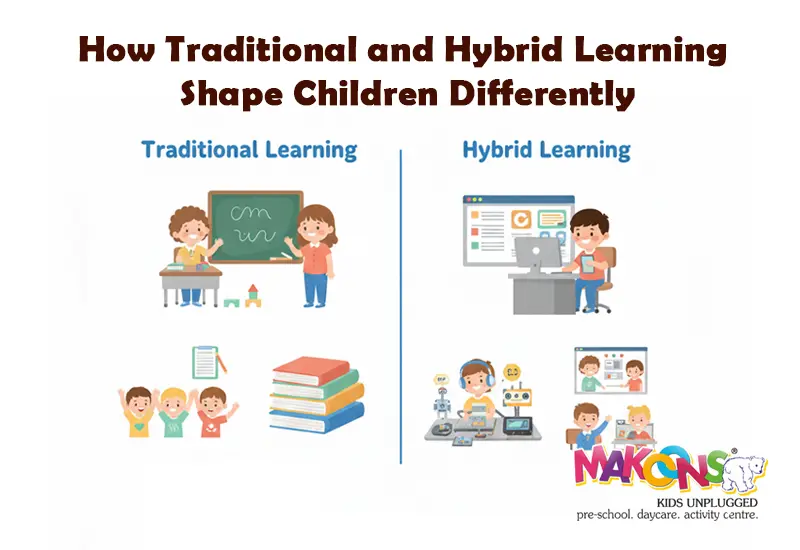
Traditional learning takes place in classrooms that require physical attendance. Students learn together in a shared space which they occupy with their teacher who provides instruction from the front of the classroom. The classroom uses books and notebooks and blackboards together with written assignments as its standard teaching materials.
The system requires all students to study the same material at identical times. The teacher determines how fast students will progress through the instructional material. The educational system uses homework together with exams to evaluate student comprehension of learning material. This method has been used for many years and is still common today.
What Is Hybrid Learning?
Hybrid learning is a mix of classroom learning and online learning. Children learn partly in school and partly using digital tools. These tools may include videos, apps, and online classes.
In hybrid learning, children may watch lessons at home and practice in class. Some days they attend school. Other days they learn online. This method uses modern education methods and technology.
Traditional Learning vs Hybrid Learning
When we examine traditional learning and hybrid learning, we observe distinct differences between the two educational methods. The traditional learning method requires students to learn through direct face-to-face instruction. Hybrid learning combines two teaching methods by delivering education through both face-to-face and online instruction.
Traditional learning follows a fixed schedule. Hybrid learning offers more flexibility. Children may learn at different speeds in hybrid learning. Both methods have their own strengths.
Learning Styles in Children
Every child learns in a different way. Some children learn better by listening. Some learn by seeing pictures or videos. Others learn by doing activities.
Traditional learning mostly supports listening and reading. The teacher explains and children write notes. Hybrid learning supports more learning styles in children. Videos, games, and activities help children understand better.
This variety helps many children stay interested and focused.
Social Skills and Interaction
Social skills are very important for children. Daily interaction with classmates occurs in traditional educational environments. The students interact with each other through talking and playing and studying activities. This process enables them to acquire skills in sharing and teamwork and effective communication.
Students studying in classrooms have more opportunities to interact with others than they do in online education. Hybrid learning provides students with both onsite social time and digital interaction opportunities. Digital tools teach children essential communication skills.
Discipline and Routine
Daily learning activities guide students through their educational process. Students follow a daily schedule that includes waking up, attending school, participating in classes, and returning home. The established daily schedule helps children develop their skills in discipline and time management.
Students in hybrid learning can choose between home and school-based learning. On some days, children are permitted to study from their home environments. The situation offers advantages, but it presents various difficulties. Young children need help with time management because they cannot handle it without assistance. They require help from grown-ups.
Role of Teachers
In traditional learning, teachers are the main source of information. They explain lessons and answer questions in person.
In hybrid learning, teachers act as guides. They support both online and classroom lessons. They also help children use technology safely. This is an important part of modern education methods.
Use of Technology
Technology is a big part of hybrid learning. Children use phones, tablets, or computers. They learn basic digital skills at an early age.
This matches current early education trends. Children become comfortable with technology. However, too much screen time can be tiring. Traditional learning limits screen use and focuses more on books and writing.
Parental Involvement
In traditional learning, parents help mainly with homework. Children spend most of the day in school.
Parents who choose hybrid learning need to provide additional support for their children’s school activities. Parents help their children with three tasks which include logging into their accounts and following their study schedule and finishing their schoolwork. The practice helps parents establish better connections with their children although it creates challenges for parents who work during the day.
Assessment and Feedback
Traditional learning uses exams and written tests. Results may take time.
Hybrid learning often uses online quizzes. Feedback can be instant. Teachers can track progress easily. This helps support child learning development.
Emotional Well-Being
Children need emotional support to learn well. Traditional classrooms give children a sense of belonging. They feel part of a group.
Hybrid learning can reduce stress for some children. Learning at home may feel comfortable. But children still need real interaction. A balance between classroom learning vs online learning is important.
Preparing Children for the Future
Traditional learning builds strong social and communication skills. Hybrid learning builds digital skills and self-learning habits.
Both skills are needed in the future. Many jobs today use both offline and online work.
Conclusion
Human development receives different outcomes through traditional learning methods and hybrid learning systems. Traditional learning develops student abilities to follow structured routines and maintain self-control while interacting with others. Hybrid learning develops student abilities to adapt flexibly and use digital tools while studying through various educational methods.
Children require different methods because no single approach works best with all of them. Parents and teachers should choose based on the child’s needs. Understanding traditional learning vs hybrid learning helps make better choices for healthy child learning development.







 Twitter