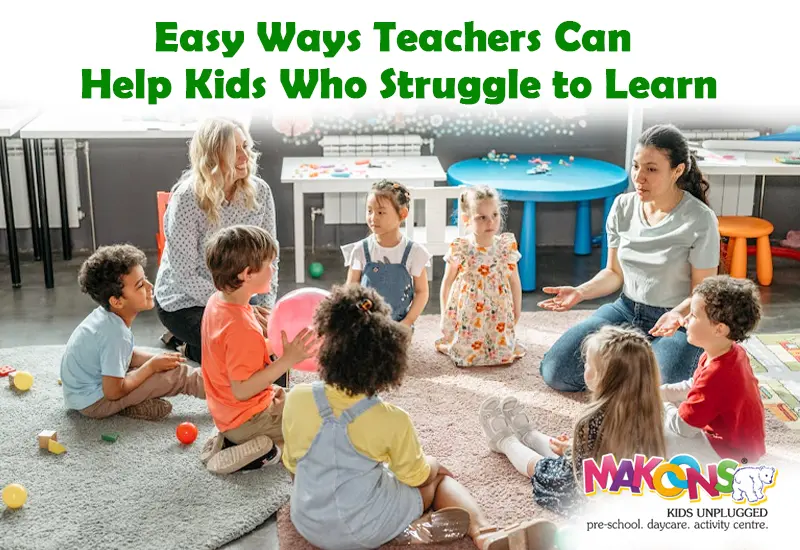
All children study at their speed, some children acquire new skills faster, other children require more time and instructions. It is no wonder to find children in a nurturing preschool in Thane or any part of India that cannot learn concepts such as numbers, letters or even regular routines. However, every child can succeed with the help of the correct support, patience, and method of teaching.
One of the most essential tasks of a teacher is knowledge about learning problems in preschool and provision of appropriate equipment and motivation. Once managed with empathy and imagination, these early education obstacles can turn into learning experiences not only for the children and their parents but also for the teachers to be creative and inspirational.
The Learning Difficulties in Preschool
It is not that learning problems in preschool are an indication that a child is not bright. They merely point to the fact that the brain of a child perceives information in different ways. Other children can also struggle to concentrate, retain instructions or fine motor skills required to write. Some other people could have problems with the language, speech, or emotional control.
Typical learning problems in preschool are:
- Difficulty in the recognition of letters/sounds.
- Problem with following instructions.
- Poor hand-eye coordination
- Difficulty in socialization or concentration.
- Speech or vocabulary retardation.
Early identification of these signs will enable a teacher to offer early-productive learning to a child, which could be a life-long change in academic and emotional growth.
The importance of Early Intervention
Preschool years are the beginning of lifelong learning. This level influences the self-confidence and interest as well as attitude of a child towards education. By finding out and assisting children in learning at an early stage, the children are likely to:
- Develop the faith in their potential.
- Develop a love for learning
- Prevent frustration and apoplexy.
- Develop communication and problem-solving skills.
Child learning development should be supported by empathy and positive reinforcement so that children could feel safe about exploration, errors and persistence.
Provide a Favorable and Relaxing Environment
Children who are not learning easily will feel safe and concentrated in a well designed and nurturing environment. They can be overwhelmed by noise, clutter or the excessive instruction being given.
Preschool classroom tips:
- Maintain the classroom and be simple in appearance.
- Lighting and colors are soft and soothing.
- Create regular patterns – regularity helps the children to feel safe.
- Plan the schedules or tasks using visual aids such as picture charts and colour-coded schedules.
Children with learning problems react well when they are aware of the expectations. A relaxing environment develops focus and lowers stress.
Related Topic: How Parents and Teachers Can Work Together to Support Nervous Kids
Multi-Sensory Teaching Playback
All children learn in different ways; some of them are visual learners, others are auditory, and some learn through doing (kinaesthetic). A mix of these strategies can assist the teachers to reach all children.
The teaching strategies that are effective in Preschool include:
- Visual learning: Take flash cards, picture books and posters in color.
- Auditory learning: Sing rhymes, Count rhythmically and repeat instructions well.
- Tactile learning: Clay, sand and finger-painting: These materials are used to consolidate motor abilities.
- Kinesthetic learning: It is also a type of learning that involves movement, such as hopscotch to count or yoga with an alphabet.
As an example, in teaching about the letter A, a child can look at the letter, pronounce it, draw it in the sand, and imitate a word that can be related to it such as the word apple. This ensures that learning is interesting and unforgettable.
Break Monotonous Jobs into Small, Simple Parts
Young children are confused by complex instructions, particularly where they have learning difficulties. Lessons must be divided into small manageable steps by the teachers.
Example:
Additional examples instead of, say, draw a circle, color it, and put your name below it are:
- “Let’s draw a circle.”
- “Now, color inside the circle.”
- Name: Fill in your name beneath the circle.
The step-by-step, preschool teaching approach would allow the children not to feel overwhelmed and feel successful at the end of each phase. Major in minor achievements – these make confidence and motivation.
Promote Individual Learning and Classroom Discussion
Children do tend to learn through one another. Simple preschool games like puzzles, sorting games or storytelling might be paired with students to enable struggling learners to observe and copy others.
Group activities promote:
- Communication and teamwork
- Problem-solving skills
- Emotional confidence
At a good preschool in Thane, teachers also frequently rely on so-called buddy systems, that is, assigning a more self-confident child the role of a nurturer in relation to a child who requires more attention. This brings a conducive atmosphere that makes everybody feel treasured.
Monitor, Document and Individualize Level of Learning
The learning process of each child is an individual one. The teacher ought to follow students closely and find out patterns that they respond to- what makes them concentrate, what makes them angry, and what skills they need assistance in.
On these observations, develop a personal approach to learning. For example:
In case a child has problems with recognizing letters, aim at phonics and visual games.
In case of poor fine motor skills, playdough and threading beads are to be used.
Frequent contact with the parents will make sure that the learning strategies are supported at home as well. School and home collaboration plays a very important role in child learning development.
Related Topic: What Makes a Preschool Classroom Truly Supportive for Children?
Use Positive Reinforcement
Words of praise and encouragement do the trick. Rather than identifying what the child did wrong, emphasize on what he/she did good.
Use phrases like:
- “You tried really hard!”
- “That’s great progress!”
- “Let’s do it together next time.”
Positive reinforcement makes children learn to enjoy the process of learning as opposed to fear of failure. They should be rewarded not only with success but also with effort, which makes them continue to make efforts, which is a critical element of early learning support.
Improve Play-Based Learning
A child has his language of play. Games and the introduction of fun in the lessons make the learning interesting and a stress-free process.
Preschool classroom ideas of how to learn through play:
- 1,2,3,4,5… Toys can be counted; Colored blocks sorting.
- Teaching story telling using puppets.
- Letter treasure hunt, playing around the classroom.
- Singing counting songs or rhymes of alphabets.
Learning through play improves memory and lessens difficult subjects to fear. It is also a great method of acquiring motor, social and emotional skills at the same time.
Co-operate with Parents and Specialists
Educators tend to be the initial ones to recognize the learning difficulties, yet the cooperation with the parents and specialists in child development may result in improved results.
Encourage parents to:
- Read with their child on a regular basis.
- Play at home in sensorial activities.
- Screen time should be limited and talk to be promoted.
- Routine the learning in the classroom.
In case of severe or chronic problems, contacting an early learning support specialist or child psychologist may be considered to give an opinion and the best approaches with regard to the needs of the child.
Be Patient and Empathetic
Effective teaching is based on patience. The learning challenges in children can require them to be explained more than once or to have additional practice. The teachers should not forget that even slow progress is progress.
Empathy makes children feel that they have been understood and appreciated. When the teacher demonstrates that he or she believes in oneself, then the child starts believing in themselves as well. Each act of support is a factor leading to good emotional and academic grounds.
The Bigger Picture: Creating Inclusive Classrooms
A friendly classroom embraces learning differentiation and disability. It seems to me that all children, both those who learn well and those who learn slowly feel like they belong and are valued.
Inclusivity is emerging as a value in most of the major preschools of Thane. The teachers are educated not just in academics but also in learning the development of child learning in the emotional and behavioral facets. These settings foster equalities, empathy, and life long learning.
Related Topic: 10 Must-Have Features in Your Preschool Selection Checklist in 2025–26
Conclusion
To assist the struggling children in learning is not to mend them but to know them. It is possible to turn frustration into confidence by the means of careful preschool teaching methods, a kind heart and an imaginative mind.
Each child should feel accomplished, curious and proud of what they are doing. When preschools are more about heart than about learning, children do not only learn letters and numbers, they learn to trust, be fearless and confident. In an Indian preschool nurturing institution in Thane or any other part of India, it is not about perfection, but progress one step, one smiling face, and one proudly saying I did it. at a time.
How does breaking lessons into smaller parts help children learn better?
When lessons are divided into smaller chunks, children can focus on one concept at a time. This reduces confusion and helps them build understanding step by step instead of feeling overloaded.
Why is a personalized teaching approach important for struggling students?
Every child learns differently. A personalized approach allows teachers to adjust the pace, teaching style, and activities based on each child’s needs, helping them learn more effectively and confidently.
How can teachers build confidence in children who struggle to learn?
Teachers can focus on effort rather than results, give positive feedback, and celebrate small achievements. This helps children feel motivated and encourages them to keep trying without fear of failure.
What role does the classroom environment play in helping struggling learners?
A supportive and positive classroom environment makes children feel safe and understood. When teachers build strong relationships and encourage participation, students are more likely to engage and improve their learning.







 Twitter