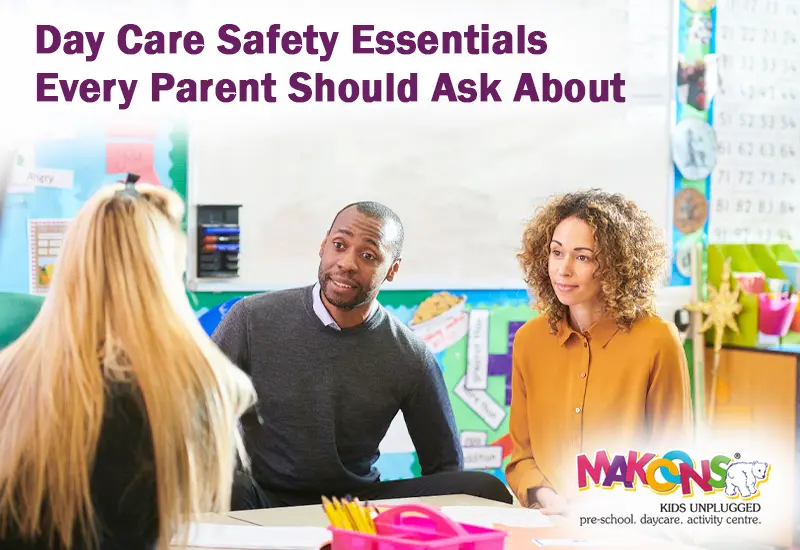
Selecting the right daycare for your kid can feel exhilarating and stressful, all at the same time! As parents, we want our children to be safe, nurtured, (and happy) when we are not present. However, beyond the bright classrooms and smiling faces of teachers, a quality daycare falls on the key element of the daycare industry: safety. However, recognizing what constitutes safety in a daycare is less about instinct and more about the correct questions to ask and the right things to look for when observing a daycare center.
Understanding Why Safety Matters in Daycare?
What Are The Safety Factors?
A childcare center is not merely a place for children to engage in activities and play — a childcare center is a home-away-from-home for children for a few hours a day. Childcare safety features and measures were established to decrease children’s risk of physical danger, health hazards and emotional distress. A safe and secure space provides children with the opportunity to freely explore, learn, and develop in a healthy way.
The Parents’ Involvement In Understanding Safety
While regulations and licensing are there specifically to help maintain safety oversight at the daycare, not all daycare centers maintain the proper safety conditions to care for children. Because of this, being informed and being an advocate for their safety is the role of the parents. Your own parents daycare checklist will assist you to observe the facilities, question the educators, and demonstrate how the daycare is working to maintain safety in general.
The Safety Inventory For Daycares
Initially, Every daycare facility safety operation is based on first developing a detailed safety inventory. The safety inventory should contain the following primary categories:
1. Building Development and Safety
Controlled Entry and Exits
While observing safe care, only restrict the entry of the child to the facility. The day care should have locked doors and gates. Staff are to process a record of any entry and visitors need to sign in and out. Surveillance cameras and entry documentation provide an added safety measure.
Emergency Exits with Documentation
All emergency exits should be identifiable. Fire extinguishers also should be located. Staff should be able to verbally isolate and during an emergency, go with children to evacuate them.
Safe Classroom/Play area (No sharp edges or tip furniture and slippery floors)
The classroom should be organized with labeled and locked locations for supplies and or materials.
Do not use left or tall slides without proper drainage or absorbent surface flooring.
Use matting on floors that are slippery.
Use tables that are round edges as opposed to square will limit injuries when running into narrow escape spaces of the child care space.
Electrical outlets secured, cords out of reach.
| Checklist item | What to look for |
| Emergency exits | Clearly labeled, accessible |
| Electrical/Mechanical safety | Capped, visible, and non-visible |
| Evidence of fire safety | Extinguishers, notice, and/or fire drills being completed |
| Flooring | Slip-resistant, no barriers, access walk ways |
| Furniture | Use rounded objects and support children in using appropriately sized furniture with rounded corners. |
Health and Hygiene Considerations
Cleaning regularly
Cleaning regularly is part of any preschool health and safety program. Does the caregiver suspect that they understand and recognize that a daily cleaning schedule exists? Ask about Food Safety and Nutrition whether or not the Department of Health oversees this. If food is served, ask about the handling and preparation of food. Is the food being prepared in a safe kitchen? Does the facility check for allergens? Do they keep a diary or log of the food served? This is all important information to have for your child care safety checklist!
Related Topic: Best Daycare Franchise in India | How to Start Your Own
Illness Policy
A good child care will have an established illness policy. If your child arrives at daycare with any illness, a fever, coughing, or vomiting, or feels ill, then same sick regularly. Children should be kept home at all times to reduce any illness from being shared at all.
Staff Training and Supervision
Background Checks
Background checks of staff are on every child care centre safety checklist. Ask administrators what their process is for hiring staff. Do they complete or require police check, contact references? This shows you a level of commitment on the part of the centre they are sent to. Safe and competent staff should take care of your children.
Staff-to-Child Ratio
Having less children per caregiver is better supervision. A good ratio for toddlers is 1 caregiver to 4-5 children. By having less children, there are less accidents, and more one-on -one care.
First Aid and CPR
In any profession, there is a possibility of an emergency and staff are prepared and trained in basic first aid and CPR. An emergency can happen at any moment, and with the staff already on site, it just may be a matter of time before their training saves a life.
Ongoing Training
As with all guidelines, as recommendations for health and safety change, staff should too. Ongoing staff development and training in child safety, hygiene, and emergency/safety procedures should be an ongoing activity for the child care facility.
Childproofing
Safe play equipment
Conduct a thorough assessment of the play area. The toys should be safe and non toxic, age appropriate and should not have removable pieces to choke on. Anything that is present in the play equipment should be clean, sturdy, and in good shape.
Occupants and fixtures
Storage containers should be securely anchored to prevent tipping over. Burglar bars or safety guards should be used in all windows.
Gates and Barriers
Kitchen or stairways should be blocked off with gates to ensure accidents do not happen. Any edges, or corners should be cushioned for protection during accidental collisions.
Related Topic: Best Daycare Chain with 350+ Branches – Trusted by Parents
Emergency Preparedness
Fire safety protocol
Ask if there are fire drills periodically, and if the staff know how to use a fire extinguisher.Each classroom should also have an emergency exit map posted in the classroom.
Medical Emergency
Every good daycare center has a first-aid kit stock that is readily available, and an assigned staff or nurse that is trained and authorized to tend to medical emergencies. In cases of emergencies, the parent should always be contacted right away.
Disaster Preparedness
Whether a natural disaster occurred, a short circuit or a blackout, all daycare centers should have a prepared plan, in case of each emergency. Their plan and response may show that they care about responding to incidents and the safety of children.
Security and Monitoring
CCTV Monitoring
One of the newer daycare center inspection tips is to check the placement of the camera. CCTV cameras should be placed within the different classrooms, entrances, and outdoor playgrounds while considering privacy laws of the staff and children. Ask whether or not cameras are live streamed for parents to view, or list of ways that safely storage of the footage is used/kept.
Visitor Monitoring
There should be some form of a logbook or digital record that logs each visitor that enters the building. The only adults who are provided to pick up children, should be the adults that are listed in the consent form, and the adult will be asked for identification (if necessary) the adult will show identification.
Drop Off/Pick Up Procedures
Establish routines for drop-off and pick-up to lessen confusion and ensure that the child is living with an authorized adult.
Emotional Safety and Well-Being
Positive environment:
While physical safety is important, so is emotional safety. Educators need to create a nurturing, supportive environment where children will feel that their dignity and safety is being protected.
Bullying and discipline policies
The basic safety provisions in preschool are not only physical safety, but how to respond to disciplinary practices. In no case should punishment be punitive. Teachers use positive reinforcement and redirection.
Updates for parents
Transparency is an essential part to establishing trust. Providing regular updates, developmental reports, with open lines of communication will assist you in being aware of child behavior, health and development.
Checklist for Parents – What to Ask Before Enrolling
After you have made the commitment to enroll a child in a daycare, it is important to use this checklist during a visit – so that maybe it gives you a prompt to start a conservation.
1. What qualifications and training do your staff undergo?
2. How often are surfaces and toys cleaned and sanitized?
3. What safety policies are in place for possible emergencies?
4. Is the staff’s background checked?
5. What are your practices for food preparation and allergens?
6. What is your staff/child ratio?
7. If there is a medical emergency, how is that managed?
8. Do you have CCTV, or another monitoring system to insure child safety?
9. How often do you review and change your practices regarding safety?
10.What is your policy regarding illness and injury?
Asking these questions will help make sure that you are not simply selecting a daycare for your circumstances or reputation; but rather for your own verified knowledge of a safe pace to protect your child on a daily basis.
Related Topic: How To Start A Preschool Or Play School In India?
Helpful Guidelines for Parents When Considering a Daycare
Parents can conduct informal surveys when they are visiting the center. Some daycare checklist guidelines will help you with a quick assessment:
- Observe if the environment feels clean, tidy, and promotes being child-friendly.
- Observe how the teachers interact with children. Are they engaged and gentle?
- Check whether there are safety signs or any emergency information visibly posted or easily accessible.
- Check out the bathrooms, kitchen, and napping area. Are they clean?
- Check the toys to see if they are not worn out or used up.
- Every day, informal observations can go a long way to noticing how the daycare is taking its safety responsibilities seriously.
Preschool Health and Safety: A Shared Responsibility
The Responsibility of the Parent
Once enrolled, your responsibility does not end there. Be mindful of communicating regularly with your caregiver, updated medical information, and ongoing health procedures. Think about times when you will share specifically about allergy information, emergency contacts, and pickup procedures.
The Responsibility of the Daycare
The daycare ought to have a transparent system: we will let you know any policy changes, changes in safety, or changes due to incidents, etc. Parents and teachers can work effectively together to create a safe daycare center.
Conclusion
Choosing a daycare is much more than the daycare center right around the corner from your house or work; it is about the caregiver that will help ensure comfort, health, and happiness regularly in your child’s experience. Having the daycare safety checklist organized will allow a parent to highlight decision-making regarding kinds of daycare centers that address preschool safety essentials, and provide peace of mind.
The best daycare safety checklist involves a combination of physical safety, emotional safety, and either ongoing or systematic communication between daycare and family members. Parents who regularly engage with the daycare, ask questions, and share emotional support and regularly check in with the safety, equipment, etc., could have peace of mind knowing their children are safe.
In current society, “child safety daycare” is less of a privilege, and more of an expected need. The more thorough you are with your check, the better it will likely be for the first days and weeks of going to daycare for your child and yourself. After all, the wrong expectations of safety in a daycare could overshadow, or even prevent, your own child’s development or learning, and grow into a confident capacity, without safety observations in their learning at daycare.
Related Topic: Starting a Makoons Preschool in Your City: What You Need to Know







 Twitter