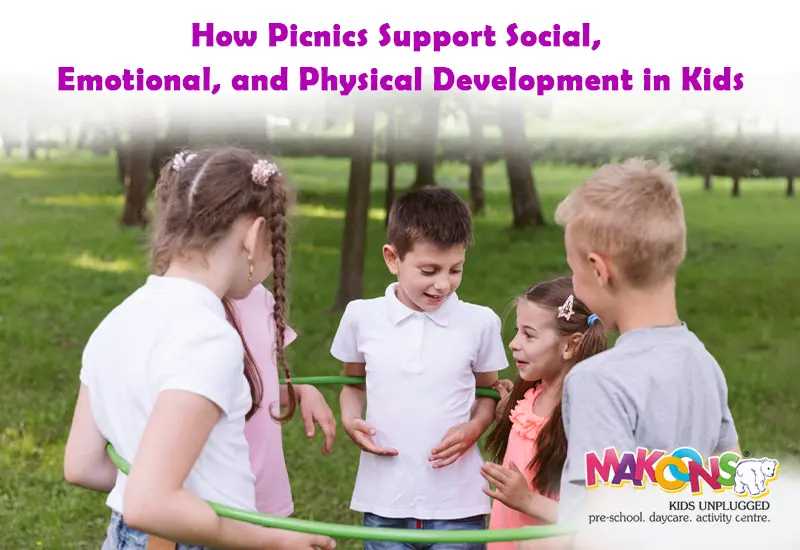
Picnics do not only involve fun days outside with food, games and laughter. To children, they are valuable learning processes that define behavior, skills and personality. Outdoor activities expose children to nature, new environment, and interactions in groups which have a very vital role in development. However, picnics when well coordinated are effective in outdoor activities in child development, namely, in terms of assisting children to learn, explore, and grow up.
This article will discuss the advantages of picnics on children, how they affect their social, emotional and physical development. We will also talk about useful concepts in order to make your next picnic interesting and informative.
Why Children Should Spend Time outdoors?
The majority of kids nowadays spend more time indoors – watching TV, mobile phone screens and organized lives. However, outdoor settings offer the children unstructured play time where they are able to move around freely, interact with each other, and explore the world around them.
Studies indicate that an outdoor activity facilitates learning:
- Reduces stress and anxiety
- Enhances attention capacity and concentration.
- Promotes innovation and solving troubles.
- Helps physical health and immunity.
When picnics are combined with outdoor time, it is a to-be-remembered experience with exploration, attachment, and entertainment.
Social Good about Picnics with Kids
Another of the largest advantages in picnics among kids is the fact that they assist in developing relationships and communication skills. The social development in children is promoted in small yet effective ways through picnics.
1. Sharing and Cooperation
Children get to know how to: pass snacks, play games with the group, and how to set up mats.
- Take turns
- Share resources
- Listen to others
- Work as part of a team
The skills are beneficial in enabling them to adapt more in schools, friendships, and subsequent social places.
2. Building Confidence
Picnics are a casual time that children are not afraid to discuss, inquire and give their opinion. They obtain self-confidence and communication skills when they are exposed to their peers, teachers, or relatives.
3. Learning Competence and Decency
With group work among children, children learn:
- Simple regulations (wait, walk in line, clean up).
- The reverence to space and property.
- Polite behavior and manners
The positive attitudes and social responsibility are developed by these interactions.
The value of Play and Nature in Emotional Development
Picnics contribute a lot to emotional growth in the form of play. Outdoor activities relax the mind and enable the children to be more expressive.
1. Relief and Relaxation.
Nature works like therapy. It is good to children: open spaces, fresh air, sunlight and greenery.
Reduce emotional tension
Feel more contented and free.
Be emotionally resilient.
Children tend to be happier, relaxed, and more balanced since they are able to spend a time outside.
2. Seldom-Emotional and Distinctive
Independence is promoted by simple decisions, such as the choice of snacks, games or where to sit. Children begin to have confidence in their decisions and become more responsible.
3. Handling New Experiences
Children learn to fit in a new place, a new sound, a new people and a new situation. They also get to know how to deal with excitement, curiosity and even fear. This enhances emotional maturity and pliability.
Physical Advantages: Moving, Exploring and Being Active
Among the best direct effects of picnics among kids is better health and energy. Picnics encourage natural physical growth process among children where movement occurs freely due to play.
- Gross Motor Development
- Running, jumping, climbing, balancing:
- Muscle strength
- Coordination
- Stamina
- Body awareness
Children do not get bored like in the case of structured exercise because they are actually having fun.
2. Fine Motor Skills
Picking flowers, opening lunch boxes, gathering stones, or drawing in the sand help in the control of fingers and hand-eye coordination.
3. Better Health Habits
Outdoor activities promote the love of movement among children. Outdoor games regularly lower the chances of obesity and help keep the hearts, bones and immune systems healthy.
Outdoor Activities as a Learning Experience
Picnics offer an outdoor classroom – in any direction, there is something new to explore. This is the reason why outdoor learning is so effective as an educational tool.
1. Nature-Based Learning
The children can see plants, insects, birds, clouds, and seasons. They are intrinsically curious and form inquisitive minds and thus do early scientific thinking.
2. Creativity and Problem Solving
Children are taught to solve problems and think creatively when constructing tents using sticks, arranging games, or determining how to get across a puddle.
3. Real-Life Lessons
Picnics too impart real life lessons:
- Orthodoxy and proper morals.
- Time management
- Safe behavior outdoors
Such lessons take longer to fade away as compared to explanations in the textbook.
Activities of Children in groups at picnics
To make picnics more interesting, bring basic group games to children that will enhance teamwork, cooperation, and amusement.
Some great ideas include:
- Treasure hunts
- Relay races
- Passing-the-ball games
- The songs and dance classes around the circle.
- Storytelling under a tree
- Nature scavenger hunts
Such activities strengthen the social growth of children besides promoting physical fitness.
Feeling Safe and Accepted at Picnics
Although picnics are entertaining, careful planning will leave each and every child part of the group and secure.
Keep in mind:
- Encourage gentle behavior
- Pay attention to the shy and left out children.
- Compete with and without competition.
- Give water and breaks.
- Be allergic or food restricted.
Children can contribute more to the experience as they are more forthcoming when they are emotionally safe.
Parents and Teachers Advice
In order to make the best out of picnics with kids, you should take into account the following:
- Plan age-appropriate games
- Select clean and safe picnic sites.
- Have a balance of free play and facilitation.
- Bring first-aid kits and sunscreen and water.
- Ask children to assist in providing setup and clean up.
- Give time to contemplate nature.
When the picnic is well organized, then learning, fun and safety will be achieved together.
Final Thoughts
Picnics form a perfect combination of learning, adventure and fun. They promote outdoor activities in development of children, which enables them to develop socially, emotionally and physically. Whether it is a food-sharing activity, a team game, going out to see nature, or just laughing at each other, each outdoor activity will make childhoods healthier and happier.
The picnics can be made meaningful experiences rather than outings by taking into consideration the group activities with children, nature time and playful interactions. They assist in developing friends, confidence, self-reliance, empathy and curiosity.
Next time you are taking your family out on a trip or school field trip, just keep in mind: even a simple picnic can be a great learning experience- creating memories, skills and a lifetime adoration of nature.







 Twitter