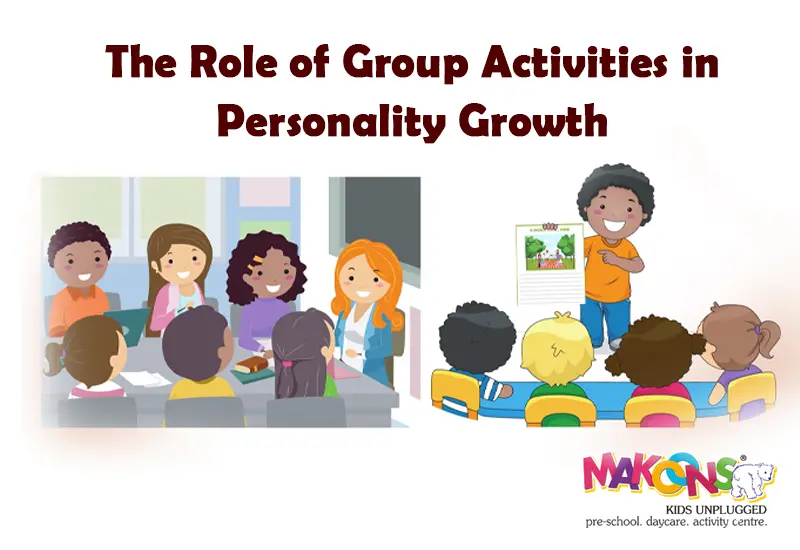
Children do not develop personality automatically as they grow up. It is influenced by experiences, school setting, society, and day to day lives. Group activities are one of the best methods that can be used to foster personality development among children. Even though children are engaged in common activities, games, and group learning activities, they acquire key life skills that assist them to become well-developed individuals in the society as basically responsible, confident, and socially conscious.
The modern digital society is so busy and fast-paced that children spend more than usual time on the screens and less time on people. That is why group activities of kids are even more important. These activities enable the children to communicate, cooperate, problem solving and relationship building which are important in personality development.
We should also see the benefits of group activities in personality development and why it is necessary to all children.
What Are the Group Activities of Kids?
Group activities among the children are either a structured or unstructured activity whereby children will engage in an activity as a group or unit towards a common purpose. These can be classroom activities, team sports, classroom conversations, storytelling, role playing games, art projects or outdoor adventure.
These kinds of activities also promote interaction among children, exchange of ideas and learning amongst children. They make children realize that collaboration is crucial and acquire the necessary social and emotional skills.
The Importance of Group Activities to Personality Development
1. Development of Social Skills.
Development of social skills is one of the largest advantages of group activities. Working as a team, children acquire skills of communicating, listening, and valuing the opinion of others.
The children learn through group participation:
- How to take turns
- How to share resources
- How to understand emotions
- Conflict resolution peacefully.
The skills will assist the children to develop healthy relationships and socially secure individuals.
2. Enhance the Communication Skills of the kids
One of the important dimensions of personality is communication. The group activities help children in their natural expression of themselves in a clear and confident manner.
Through communication with peers, children are able to develop:
- Verbal communication skills
- Listening skills
- Belief in being able to express ideas.
- Public speaking comfort
Having good communication skills as kids allows them to perform better at school, make friends and achieve their future careers.
Related Topic: 30+ Fun & Educational Activities for Preschoolers: Physical, Learning & Special Education Ideas
3. Help Kids use the skills of Teamwork
Group activities help children to know that cooperation can be important to success. In their mutual work, they are taught the importance of collaboration, responsibility, and teamwork.
The skills in teamwork among children comprise:
- Working toward common goals
- Supporting teammates
- Scholarly attitudes toward other opinions.
- Understanding group roles
Young children who learn to be part of a team early in their lives, end up becoming flexible and problem-solvers in life.
4. Enhance Self-esteem Building in Children
Being involved in the group activities will assist children to conquer fear and hesitation. Whenever they are able to accomplish something in the company of their peers, they feel proud and confident.
Building confidence in children through activities like group presentation, team sports and team projects make children:
- Develop self-belief
- Overcome shyness
- Take leadership roles
- Build positive self-image
This trust is very important in achieving a sound and well-rounded personality.
5. Encourage Emotional Growth
Working in groups makes the children learn about their feelings as well as those of other individuals. They get to know to listen, feel patient, and be able to control their feelings.
When children struggle in a group, they have an opportunity to learn how to:
- Manage frustration
- Celebrate others’ success
- Accept failure gracefully
- Manage conflict in a peaceful manner.
These are emotional skills that are necessary in the development of a personality.
6. Develop Leadership Skills
Kids in groups tend to have a chance to take leadership roles or manage fellow group members. This assists them in the acquisition of leadership.
The experiences of leadership instruct children:
- Decision-making skills
- Responsibility
- Accountability
- Problem-solving abilities
Experience in leadership at an early age leads to growth of personality in children.
Related Topic: 51 Super Fun Activities Every Kid Will Love
Group Activities that Help Personality to Grow
1.Team Sports
Through sports, football, cricket and basketball, children get to learn how to be disciplined, to work in a team and to be tough. They also enhance physical fitness and confidence.
2. Group Art and Craft Projects
Group art work promotes creativity, interaction, and forbearance. Children get to know how to integrate ideas and work together.
3. Role-Playing and Drama
Drama activities enhance the ability to communicate, express feelings and imagination. They are used to assist children to get rid of stage fear and gain confidence.
4. Group Storytelling
Storytelling groups assist children in speaking, active listening, and developing imagination as well as developing social skills.
5. Problem-Solving Games
Group games and puzzle challenges are used to train kids in cooperation, logical thinking, and teamwork.
Encouraging Group Activities in Teachers and Parents
Adults need to provide conducive environments in order to maximise the advantages of group activities.
Tips for Parents:
- Promote group outings and teamwork.
- Limit screen time
- Offer the group learning opportunities.
- Complimentary cooperative conduct.
Tips for Teachers:
- Add group assignments in the classroom.
- Organize group discussions
- Rotate leadership roles
- Enhance participative inclusion.
Constant support assists the children to have good personalities.
Benefits of Group Activities in the Long Run
The lifetime benefits of group participation are:
- Better social adjustment
- Increased emotional intelligence.
- Effective communication skills.
- Better problem-solving skills.
- More confidence and self-sufficiency.
Active participation of children in group activities can frequently make them socially effective and emotional balanced adults.
Related Topic: Fun Activities to Help Kids Focus in Class
Difficulties and The Way to Cope with Them
Certain children might also be shy or uneasy during the group involvement. Parents and teachers may assist by:
- Starting with small groups
- Delegating positive reinforcement.
- The permission to participate gradually.
- Developing conducive and secure settings.
Even introverted children will gain a lot with time through the benefits of group activities.
Conclusion
The activities done in groups are crucial to the development of the personality of a child. They give socialization, emotional education, teamwork and confidence building. In participation of group activities consistently among kids, the young ones acquire much needed skills in life which include communication, cooperation, leadership and empathy.
A strong personality growth occurs when a child is invested in group learning experiences and this prepares a child to have a successful future in school, relationship and in the career. These activities need to be encouraged among parents and teachers in order to foster holistic development.
FAQs
Q1. What is the significance of group activities in the development of personality in children?
Ans: Group activities enable children to acquire social skills, communication skills, capability to act in teams and emotional intelligence which are vital in personality growth.
Q2. What do you think are some of the confidence building activities that could be used with children?
Ans: The examples are group presentation, role-playing, team sports, partner art, and storytelling.
Q3. Why are group activities helpful in generating communication skills among the kids?
Ans: They promote children to share ideas, listen, socialise with others and engage in discussions.
Q4. Can group activities help shy children?
Ans: Yes, gradual participation in supportive group settings helps shy children build confidence and improve social skills development.
Q5. How often should children participate in group activities?
Ans: Children should engage in group activities regularly, ideally daily in school settings and weekly through extracurricular programs.






 Twitter