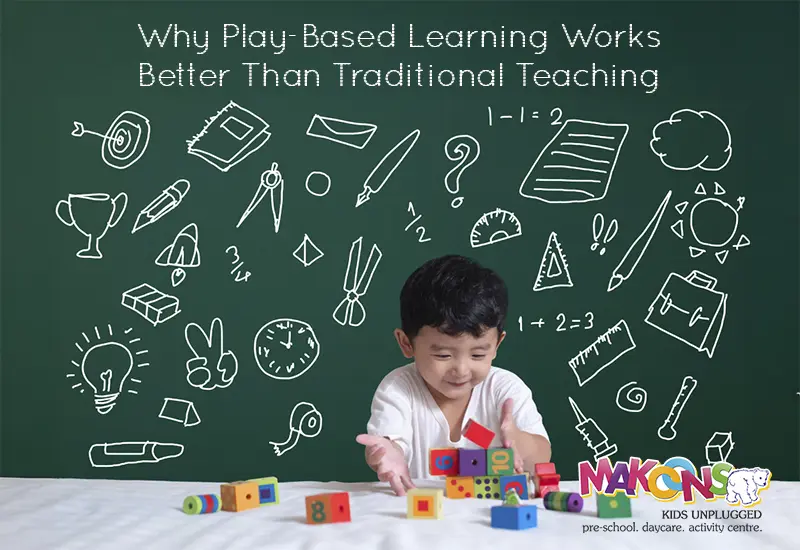
Have you ever witnessed children building a tower out of blocks, pretending to cook a meal in a fancy toy kitchen, or freely expressing their imagination through crayons? If you have witnessed this – you have witnessed true learning. Children learn best when they are engaged, when they are curious, and when they are having fun. This is why play-based learning in preschool programs is getting so much popularity globally.
Traditional teaching approaches place value on the memorization and the repetition of black and white facts. Play-based learning approaches will already be aligned with the way children learn best – in real play and collaboration. Play is also as important in any preschool approach to learning because it encourages creativity, develops problem solving, and builds social interactions which are often ignored by most worksheets and lesson plans.
This blog post will explore why learning through play at preschool is more effective than traditional black and white approaches, the different benefits of play in learning, and how parents and teachers can support play as a legitimate form of learning.
What is Play-Based Learning?
Through learning-based play, children can develop valuable skills through games, social interactions, activities, and imaginary worlds. When children learn through play and realize it is an active rather than passive process, they learn through an engagement process.
Core Principles
Child-Centred: The child’s interests shape the playscape
Active: Opportunities to interact with others
Experimental: Learning through trial and error
Enjoyable: Learning should be fun and relaxed
Established pre-school programs based on play, do all of these things, and give children the ability to master math, language, science, life skills, etc., while engaging in play, and not feeling pressured or rushed.
Traditional Instruction in Contrast to Play Based Learning
Traditional Teaching
In the traditional classroom, a teacher leads the lesson while the children sit, listen, and follow the instructor.
This past method is based on:
- Memorization of the facts
- Explicitly structured lessons
- Standardized tests
Play Education Methods
Children learn through:
- Creating, making and experimenting
- Pretend play
- Hands-on activities
Social Development
Group games offer children an opportunity to develop an understanding of cooperation, collaboration, and communication.
Development of Emotions- Play allows children to express emotions, learn how to deal with frustration, and build patience through play.
Physical Development
Running, jumping, building, and drawing – help improve motor development and coordination.
Intellectual Development
Whether counting blocks or solving puzzles, the play preschool environment is vital to developing memory, reasoning and creativity.
Why is Play Important to Education?
1. Encourages Creativity
Play encourages imagination. This is the time children become authors of their own stories, builders of their structures, and develop their problem solving in their way.
2. Develops Problem-Solving Skills
For instance with block play, when children build a tower, and it tumbles over – they determine how to rebuild it sturdier.
3. Builds Confidence
Children gain self-esteem when they master a task while at play.
4. Supports Academics
Math: Sorting, counting, and patterns
Language: Storytelling, songs, and role playing
STEM: Investigating plants, water, sand, etc.
These are just a few examples that demonstrate how the benefits of play and education, in the classroom, extend beyond just playing and learning.
Engaging in Preschool Learning Through Play
Role Play & Pretend Play
Children can perform real-life situations which people participate in (shopping, cooking) or play in the role of someone (doctor, caregiver). These forms of play allow for children to learn lessons about life experiences while helping to allow the child the opportunity to practice their spoken language.
Sensory Play
Playing with things such as water, sand, or finger-painting, can provide children with sensory experiences while supporting the development of fine motor skills, and allowing their curiosity to be met.
Construction Play
The use of construction blocks, Lego, and figurines allow children to practice balancing things, designing things, and cooperative play.
Outdoor Play
Physical play that involves running, climbing, and group game play, helps children to develop their physical abilities and socialize.
These are all examples that will show how learning-based physical activity programs for kids support positive development and learning in many ways.
Preschool Play-based Curriculum: What It Looks Like
A Typical Day
| Time | Activity | Learning Focus |
| 9:00-9:30am | Circle Time (songs, and greetings) | Language and social |
| 9:30-10:15am | A free play station | Creativity and choice |
| 10:15-11:00am | Outdoor play | Physical skills |
| 11:00-11:30am | Storytelling role play | Imagination, empathy |
| 11:30-12.00 pm | Hands-on math and science exploration | Academic concepts |
This preschool play-based curriculum provides children hands-on exploration of every subject in a fun engaging way!
Activity Learning for Kids: At Home and In School
At School
Educators have play centers, including:
- Math center with blocks and counting games
- Science center with plants, water, or magnifying glasses
- Art center with crayons, clay, and paint
At Home
Parents can promote play in an activity-based learning for kids context by:
- Cooking together.
- Playing board games.
- Doing art or craft projects with building supplies.
Why Play-based Education Methods are more Effective?
- Engages the child as a whole
- Play educates the whole child, or in other words, the physical, emotional, social, and cognitive development, not just academics.
- Syncs up with the natural learning style of children
- Being curious and active is natural for preschoolers, so sitting still does not come naturally to most preschool aged children. When children participate in play-based-learning, they engage with natural ways of learning.
- It Provides children with the chance to become lifelong learners
- If children are having fun and learning, and are interested in the subject area, they are more likely to carry that interest with them into later grades after school.
Overcoming Possible Disadvantages of Play-based Learning
Classroom Management
Some teachers worry that play will create chaos. However, providing structured play stations and routines can manage chaos associated with play in the classroom.
Assessment
Instead of using traditional assessment methods (tests), preschool learning through play assessments were made by observation. Educators would observe how students problem-solve, communicate, and create.
Parental misunderstanding
Some parents consider play to be “just fun,” and that learning is not happening. Schools should have training and workshops to communicate the importance of play in their child’s education from preschool and regularly communicate new learning about the role of play.
The Long Term Effects of Play-Based Education
Academic Success
Children that engage in play education methods often do better academically, later in life, because they developed an understanding of the concepts in preschool.
Social Readiness
The cooperative skills that children experience and learn through play will provide an excellent basis for their group projects in later days of schooling.
Emotional Resilience
Children can learn patience, resilience, and confidence when teachers and parents support their learning through play.
Conclusion
In a play-based environment, children are involved in meaningful play, which nurtures confidence, social competence, and academic preparedness in them while still having fun.
The advantages of play in education go far beyond academics, they develop children as curious, creative, and confident learners – the value of providing activity-based learning for kids programs prepares them not only for schooling, but for life.
So when we ask what better suits the learning of children – play or traditional teaching – it is easy to make a decision: play is not only fun, it is also the most effective and natural way for a child to immerse themselves in being intentionally and meaningfully educated.
Read Also : Fun Learning Activities to Do at Home with Preschoolers






 Twitter