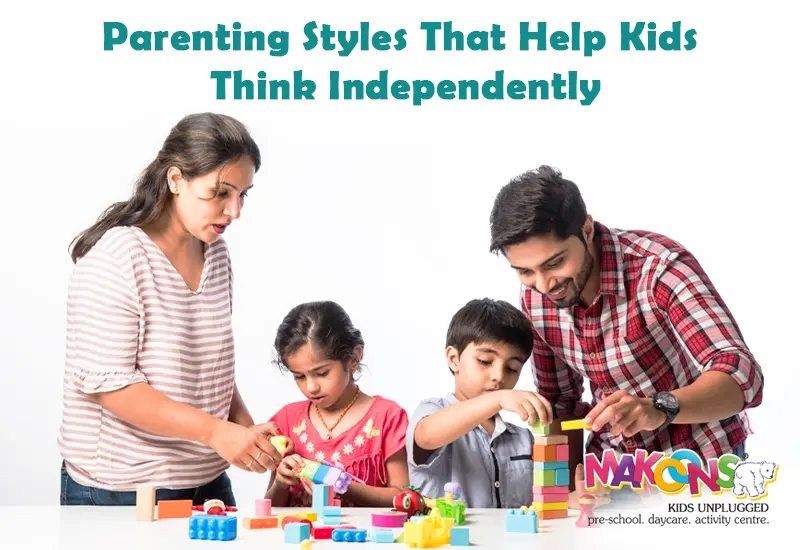
Any parent would wish his or her child to become a competent, self-assured person who is able to independently make decisions and solve problems. The most effective form of nurturing is under a system of parenting that is aiming at instilling independence, at an early stage. Autonomy does not imply letting the children do everything themselves; it is about guiding them but allowing them to be left alone to investigate, choose and learn through experiences.
We shall discuss the impact of various parenting styles on independence in this article, practical parenting tips that can be used with preschoolers, and strategies on how to bring up confident kids with positive parenting styles.
The Importance of Independent Thinking in Children
Thinking on their own promotes children:
- Develop problem solving capabilities and decision making.
- Build self-efficiency.
- Address problems with strength.
- Get the habit of being responsible at a tender age.
Parents who employ positive parenting styles in fostering independence bring up not only obedient children but also considerate, imaginative and able to make good decisions.
Parenting and Their Effects on Independence
According to psychologists, there are four broad parenting styles, which include authoritarian, permissive, neglectful, and authoritative. All of them have a different impact on independent thinking in children.
1. Authoritarian Parenting (Strict and Rule-Oriented)
Concentrates on complacency and authority.
Such children might have a problem with decision-making since they are overly dependent on figures of authority.
Autonomy is dissuaded.
2. Permissive Parenting (Much Too Lenient)
The parents are affectionate but have minimal rules.
Children are free but unstructured and this can interfere with confidence and responsibility.
Independence can develop to be selfish instead of equal.
3. Neglectful Parenting (Uninvolved)
Little direction or care.
Children become self-sufficient, sometimes due to necessity, but they do not have emotional stability and self-confidence.
Balanced and Supportive Authoritative Parenting.
4. Brings together warmth and structure
Promotes decision making among children within the limits of safety.
Time-tested and proven the most effective in terms of promoting child independence and nurturing confident and capable children.
5. Good Parenting Skills to promote Independence
Independent thinking in children can be cultivated through small but effective changes in day to day routines, especially by parents.
6. Give Choices Within Limits
Rather than deciding on behalf of your child, give him or her two or three options to make, but these options should be safe.
Sample: Would you like to wear the red shirt or the blue one?
This cultivates the decision making ability and maintains boundaries.
7. Encourage Problem-Solving
When your child has a problem do not be tempted to intervene right away.
Ask guiding questions: What in your opinion can we do with this?
Give encouragement and allow them to find their own solutions.
8. Give Age-Related Responsibilities
Simple chores such as packing their school bag, watering plants or setting a table make them responsible. These activities assist in promoting independence in children at an early age.
9. Encourage, but do NOT keep praising
Praise: “I like that you wanted to find other ways of figuring that puzzle out.
Excess praise: You are the brightest child in the world!
Motivation is encouraged through intrinsic motivation, whereas over-praise may require kids to be dependent on external approval.
10. Model Independent Behavior
Parents set a better example to kids than what they tell them. Demonstrate independence through the ability to handle challenges peacefully, make decisions wisely, and accept the choices of other people.
Parenting Advice on Preschoolers:
The preschool years are a very important period to inculcate independence. These are some of the tips of effective parenting of preschoolers:
- Promote self-care such as dressing, eating or cleaning up toys.
- Be inquisitive and respond to questions in a calm manner and be inquiring.
- Implement habits that children will be able to adhere to with a minimum number of reminders.
- Minimize protecting–don’t keep kids off the playground all the time; permit climbing, exploring, and playing.
- These practices are little measures on how to make sure that you bring up self-confident children who can be independent thinkers.
The Secret of Raising Confident Kids Who Can Think on Their Own
There is a hand in hand match between confidence and independence. These are the ways parents can make a combination of both:
- Glorify hard work, not outcomes – Prefer improvement, not perfection.
- Value your child’s opinions – Pay attention when they tell you their ideas, even when they are not similar to yours.
- Be curious – allow them to ask questions and learn answers in experience.
- Freedom versus boundaries – Excessive control kills independence but excessive freedom leads to confusion.
Conclusion
The styles of effective parenting are important towards influencing the development of independent thinking amongst the children. Authoritative parenting techniques coupled with the positive parenting techniques are the best methods of promoting child independence when compared to all other methods. Parents will actually find out how to raise confident children that will succeed in life by providing options, motivating problem-solving, and confidence building by supportive guidance.
To raise independent thinkers does not imply letting children do things by themselves but rather raising children who are able to think and make sound choices and become strong and competent individuals.
How can parents help children think independently?
Parents can help children think independently by giving them choices, encouraging problem-solving, and allowing them to take small responsibilities like packing their school bag or cleaning their toys. These activities help build confidence and decision-making skills.
Why is independent thinking important for kids?
Independent thinking helps children develop problem-solving skills, confidence, and responsibility. It also prepares them to handle challenges and make better decisions as they grow.
At what age should parents start encouraging independent thinking?
Parents can start encouraging independent thinking from the preschool years by letting children make simple choices, ask questions, and try tasks on their own with guidance.
What are simple ways to build independence in preschool children?
Simple ways include letting children dress themselves, asking their opinions, encouraging curiosity, and allowing them to solve small problems instead of immediately helping them.







 Twitter