
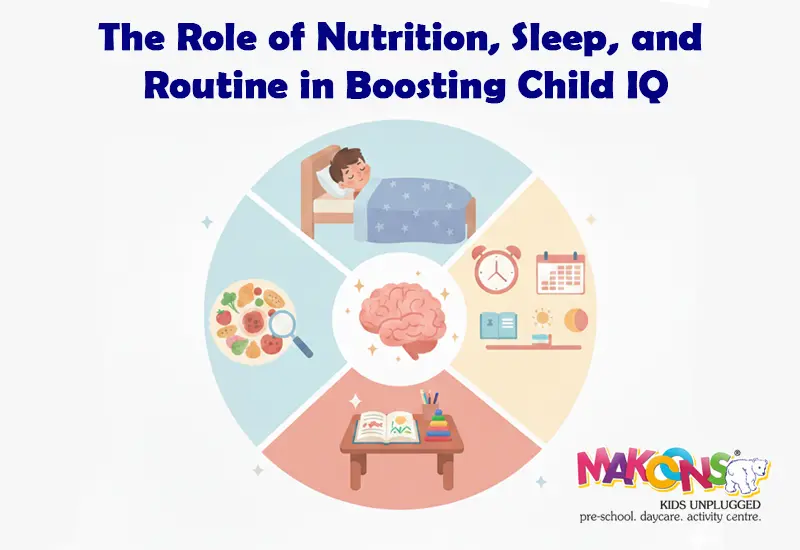
Every parent is interested in their child being gifted and confident. Many people think IQ depends only on birth. That is not true. Child IQ can grow...
Every parent is interested in their child being gifted and confident. Many people think IQ depends only on birth. That is not true. Child IQ can grow with the right care. Daily habits create a major impact on our lives because they shape our daily activities. The development of our brain depends on our nutritional intake and our sleep patterns and our daily practices.
The basic elements of this matter create a strong impact. The daily activities of children who maintain proper eating and sleeping habits together with their established routines lead to enhanced brain function. This blog explains how these habits help naturally improve child intelligence.
Child Brain Growth Factors
A child’s brain grows fast in early years. Most brain growth happens before the age of five. During this time, the brain makes new connections every day. These connections help children think, learn, and remember.
Child brain growth factors include food, sleep, environment, and daily activities. Love and care also matter. Among all these, nutrition, sleep, and routine are things parents can control easily. Good habits at home help children learn faster. Bad habits can slow brain development.
Nutrition for Child Brain Development
Nutrition for child brain development is very important. The brain needs energy to work. This energy comes from food. If a child does not eat well, the brain cannot work properly.
Proteins assist in constructing brain cells. The foods milk eggs pulses curd and nuts provide nutritional benefits. Healthy fats support memory function and concentration abilities. The fats occur naturally in fish and seeds and nuts.
Brain functioning requires iron as an essential component. Iron deficiency results in fatigue and decreased concentration abilities. Green vegetables and dates and jaggery and lentils serve as iron sources. Zinc plays a role in cognitive processing and memory retention. Grains and seeds and dairy products contain the mineral.
Fruits and vegetables protect the brain. They keep brain cells healthy. Water is also important. When children do not drink enough water, they feel tired and confused.
Related Topic: Top 10 Books to Improve Attention and Thinking Skills in Kids
Diet for Improving Child IQ
A diet for improving child's IQ should be simple and balanced. Children should eat home food as much as possible. Fresh food is better than packaged food.
Breakfast is very important. It gives energy for school and play. A good breakfast helps children focus better. Milk, fruits, eggs, and grains are good options.
Children should eat at fixed times. Skipping meals can affect learning and mood. Too much junk food is not good. Junk food has more sugar and less nutrition.
Too much sugar can make children restless. It can also affect focus. Parents should limit sweets and cold drinks. Healthy snacks like fruits and nuts are better.
Eating together as a family is helpful. It builds good habits and emotional bonding.
Sleep and Child IQ
Sleep and child IQ share a strong relationship. The brain needs sleep to achieve rest and growth. The brain uses sleep time to save the knowledge that the child acquired throughout the day.
The child requires adequate sleep to achieve successful learning. The child may experience three different states of exhaustion which include anger and slow movement. Sleep deprivation has negative effects on both memory and concentration abilities.
Adults require less sleep than children do. Preschool children need around 10 to 13 hours of sleep. School-going children need about 9 to 11 hours.
Children who sleep well maintain their ability to stay calm while remaining active throughout the day. This method enables them to learn new information with greater effectiveness. Sleep patterns that follow a routine assist with brain development throughout the sleep cycle.
Related Topic: Understanding ECCE in Preschool Franchises: A Complete Guide
Importance of Sleep Routine for Children
A sleep routine for children is very helpful. Sleeping and waking up at the same time every day improves sleep quality. The body gets used to the routine.
Before bedtime, children should relax. Loud play and screen time should be avoided. Mobile phones and TV affect sleep. Reading a book or listening to a story is better.
The sleeping place should be quiet and comfortable. The room should not be too bright. Heavy food before sleep should be avoided.
When children follow a sleep routine, they wake up fresh. They feel happy and ready to learn. This supports better IQ growth.
Daily Routine for Kids
A daily schedule for children establishes rhythm for their complete day. The program enables children to understand their upcoming activities and their corresponding time schedule. The routine creates an environment that makes them feel secure.
The routine establishes a framework that helps children to organize their activities throughout the day. The system creates equilibrium between academic work and recreational activities and dining times and sleeping periods. The implementation of a daily schedule reduces stress levels in children.
A good routine includes wake-up time, meal time, study time, play time, and sleep time. It should also include free play.
Routine helps improve memory and focus. When activities repeat daily, the brain learns faster.
Healthy Habits for Child Intelligence
Healthy habits for child intelligence are built slowly. Parents should be patient. Small daily habits make a big difference.
Physical activity is very important. Running, jumping, and playing help brain growth. Movement increases blood flow to the brain.
Outdoor play is good for learning and mood. Screen time should be limited. Too much screen use affects attention.
Reading books helps language skills. Talking to children daily helps thinking and confidence. Asking simple questions helps them express ideas.
Praise effort, not just marks. This builds confidence and curiosity.
Also Read: How Drawing And Story Play Improve Language Skills
How Nutrition, Sleep, and Routine Work Together?
Nutrition, sleep, and routine work as a team. They support each other. When children eat well, they sleep better. When they sleep well, they follow routines easily.
Fixed meal times improve digestion. Fixed sleep times improve energy. Together, these habits improve learning ability.
These habits also improve emotional health. Calm children learn better. A peaceful mind supports higher thinking.
Role of Parents
Parents should be consistent. Habits do not change in one day. Changes should be slow and steady.
Children should be involved in simple decisions. Let them choose fruits or bedtime stories. This builds responsibility.
Every child is different. Avoid comparison. Focus on your child’s growth.
Long-Term Benefits
Good nutrition, proper sleep, and routine help in many ways. They improve health, learning, and behavior.
Children become more confident and independent. They perform better in school. They develop strong thinking skills.
These habits build a strong base for future life.
Conclusion
Improving child IQ does not need special tools. Simple habits are enough. Nutrition for child brain development gives the brain fuel. Sleep and child IQ are closely linked through memory and focus. A daily routine for kids brings balance.
Healthy habits for child intelligence support natural brain growth. Child brain growth factors work best when practiced daily. A balanced diet for improving child IQ, a good sleep routine for children, and a fixed routine help children grow smarter.
