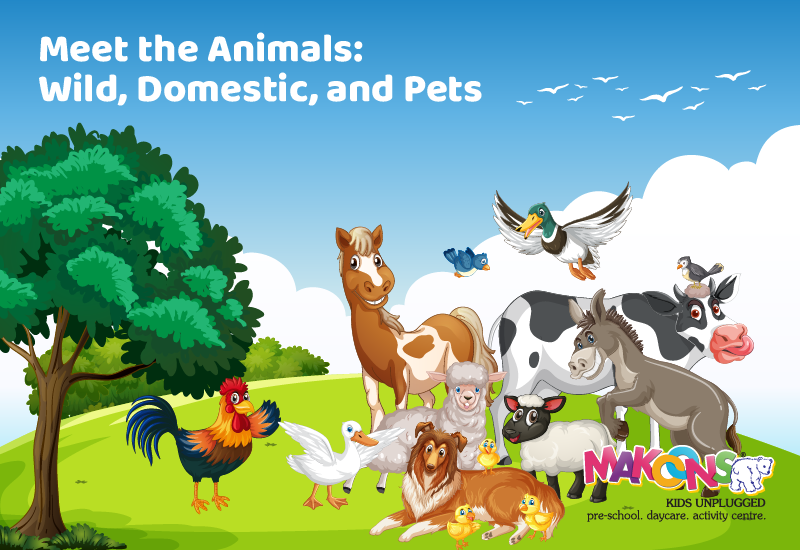
We are surrounded by animals. Some live in our homes, while others may live on farms or in forests! They vary their size, shape, colour, and also behavior. For small kids , learning and knowing about animals is like entering an exciting and entertaining world full of wonder and exploration. We will examine the various kinds of animals for preschoolers in this blog, including domestic, wild, and pet animals, and discover their homes, habits, and significance.
Let’s explore the amazing realm of animals, both large and small.
What Are Animals?
Animals are living beings which have the ability to move, breathe, eat, and grow. Some may have scales, while others are feathery and furry and bouncy! Each animal plays a unique part in nature and also has a unique way of life.. For this reason, we divide them into three main animal categories for children: domestic animals, wild animals, and pet animals.
Wild Animals: Rulers of the Jungle
Open areas like –Oceans, deserts, mountains, and forests are home to wild animals. They care for themselves in the wild and they do not coexist with humans . Without assistance from any humans, these animals hunt or gather food, defend themselves from others, and raise their young ones on their own.
Some examples of wild animals are:
- Lions
- Tigers
- Elephants
- Zebras
- Bears
- Giraffes
Large and open areas are important for these animals to live and roam around. Multiple wild animals can be found in national parks, safaris, and occasionally zoos, where they are taken care of in a secured environment.
In the wild, animals and their different types of habitats are so fascinating. A bear lives in a cave, a lion in a den, and birds in tall treetop nests. Every single wild animal uses the different types of materials found in nature to construct, build or locate its own shelter.
Wild animals are way too powerful, swift, and sometimes frightening, but they are also crucial and important. They contribute to the health and also balance of nature.
Domestic Animals: Our Farm Friends
Domestic animals live with or are near humans , in contrast with wild animals. These animals have been well domesticated and trained to help and assist us in our day-to-day life. They live in backyards, on farms, or even close to small towns and cities.
Some common domestic animals include:
- Cows (give us milk)
- Goats
- Horses (used for riding or carrying loads)
- Chickens (give us eggs)
- Sheep (give us wool)
Domestic animals are amiable and rely on people for shelter, food, and water. They typically reside in stables, sheds, or barns—special homes created for them by humans—and are neither dangerous nor wild
Youngsters love and enjoy going to different farms to observe and feed these domestic animals. It teaches kids to love and appreciate nature and how these animals support us in our daily life.
Pet Animals: Our Furry Companions
Let’s now introduce our favourite group: children’s pets! Animals that live in our homes are called pets. They are very playful, and affectionate. Pets are like family members . They need food, love, care, and veterinary examinations frequently.
Some popular pet animals include:
- Dogs
- Cats
- Rabbits
- Hamsters
- Parrots
- Goldfish
These animals also reside in unique homes. A fish takes comfort in a fishbowl or aquarium, a dog in a comfortable doghouse, and a bird in a cage. Kids learn responsibility and compassion through caring for a pet animal. Also ,pets can make children feel content and at ease.
Always Keep in mind that not every animal can be kept as a pet in your home . Despite their adorable and cute appearance, wild animals like snakes and monkeys are not safe in homes.
How Do We Know Which Animal Belongs Where?
We teach animal categories to children in order to improve their learning. It is easier for kids to know how to act around animals when they know if they are domestic, wild, or pets.
Here’s a simple way to understand:
- If it lives in a jungle and hunts – it’s wild.
- If it helps humans and lives on a farm – it’s domestic.
- If it lives inside your house and loves cuddles – it’s a pet!
This straightforward categorisation added children in remembering information about animals and their kind lifestyles. Also, it increases awareness and respect for the proper treatment of animals.
Animals and Their Homes: A Little Peek Inside
Each and every animal needs a safe place to sleep and rest. It is because houses are a necessity for defence against inclement weather and also predators.
Young kids enjoy learning about new animals and their habitats, so here are some examples :
- Dog – Doghouse
- Cat – Basket or bed
- Cow – Shed
- Bird – Nest
- Lion – Den
- Rabbit – Burrow
- Horse – Stable
Teaching kids about animal habitats also helps them visualise and imagine how animals eat, sleep, and care for their young ones. It also adds fun to storytime!
Why Teach Kids About Animal Types?
Learning about the different types of animals for young kids builds knowledge, their awareness, and empathy. Children discover the following:
- How animals live
- What they eat
- Where they stay
- How they help nature and people
- Which animals can be touched or played with
Fun interesting new words like “burrow,” “herbivore,” and “den” are also added to the vocabulary of your kid. When kids talk about animals or see animals, they also practice listening, speaking, and asking multiple questions.
And let’s be honest — talking about animals is just plain fun!
Interesting Methods for Studying Animals Here are some suggestions for enlivening animal education:
- Storybooks with animal characters
- Songs and rhymes like “Old MacDonald Had a Farm”
- Animal puzzles and flashcards
- Pretend play where children can act like their favourite animals .
- Some field trips to zoos and farms.
- Crafts like making paper masks of lions or parrots
- Animal sounds games – “Who says moo?”
For young students, these activities make learning about domestic and wild animals incredibly interesting.
Final Thoughts:
Love All types of Animals, Big or Small
Every animal has a unique personality and unique type of behavior, whether it’s a roaring lion in the forest, a gentle cow or buffalo on the farm , or a cute puppy at home. Children who know about animal classifications are better able to appreciate the beauty of all living things around them .
Children adopt a passionate, considerate perspective on the world when they learn new things about animals and their habitats, distinguish between domestic and wild animals and what are pet animals? and also determine which animals are suitable as pets for young children.
Ask your kid , “Is it wild, domestic, or a pet animal ?” the next time they see a dog barking, a bird singing, or a tiger roaring in a book or on a screen. The speed at which they pick it up will surprise you more than anything else.
Read Also : Easy Interesting 20 Short Story in English With Moral For Kids







 Twitter