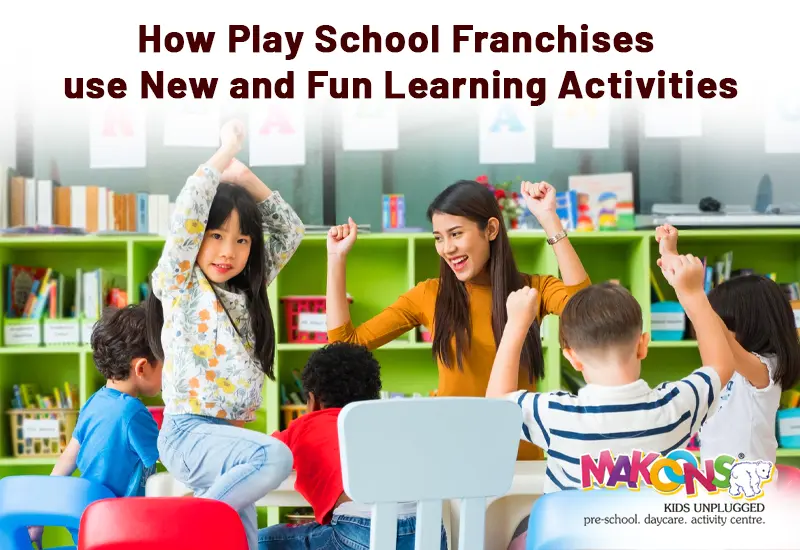
The play school franchise sector in India is changing, using new and exciting activities to promote various aspects of child development and satisfy parental expectations of a quality, engaging, and fun early education experience. The current leaders in the play school franchise sector have moved beyond providing care to intentionally design environments where learning is play and play is learning. What follows is a deeper exploration of how a play school franchise effectively implements creative, research-based practices, the unique nature of the best preschool franchise, the changing play school franchise landscape in India, the value behind preschool franchise opportunities, a look at the preschool franchise costs and returns, and finally how franchises keep children, parents, and franchisees happy.
The Evolving Landscape of Preschool Franchise in India
India’s early education franchise sector has exploded over the past few years. Parents across the country-from Metro’s to Tier II and III cities- are looking for structured, trained children in a safe, nurturing environment where children may learn quickly. Preschool franchise business models are becoming the preferred option because they provide:
- Proven, easy to replicate systems
- Now brands that parents trust and engage with
- Turn-key systems to provide curriculum, ongoing staff training, or marketing support for the footprint
The typical investment options of a low of ₹5 lakhs to as much as ₹25 lakhs depending on the content location, facilities and brand. Premium franchises located in competitive markets may have a high price, however, you can mitigate risk because that system has been tried, tested, and has support from the franchisor.
Related Topic: Top Cheapest Play School Franchise Opportunities in India
Franchise Your Way to Success: Proven Business Models with Support For You
Play school franchises capitalize upon selling a total package that gives you the opportunity to de-risk and maximize the value:
Tried and Tested Curriculum: Play-based, age-appropriate curriculum founded upon research that allows a child to be engaged in their learning in meaningful and fun ways.
Training and Support: Franchisors provide extensive training for business operations, pedagogy, child safety, hygiene, marketing, and hiring, all of which is valuable for a new business owner.
Continuous Improvements: The best preschool franchises will be updating their curriculum, adding new play school activities, and integrating feedback from parents and teachers to remain competitive in the education market.
Brand Reputation: Associating yourself with well known play school franchises can help get the trust ball rolling and ensure enrollments, based on the reputation of established educational pipeline and child-centered pedagogy.
Technology: Digital and technology platforms can help with all aspects of registrations, billing, communication with families, and tracking children’s progress in relation to the curriculum, so you can spend less time managing the day-to-day of the business and more time planning and practically working to improve your practice.
Related Topic: How to Choose the Right Play School Franchise for Your Location
Play School Activities: Fun with a Purpose
Leading franchises are aware that students learn the best whilst engaged in hands-on play based learning experiences are the most positive play school activities. The very best play school activities include:
1. Themed Centers Activity Areas
- Dramatic play corners (role play as a doctor, shopkeeper, or chef)
- Science tables for experimenting and data recording (mixing ingredients and measuring amounts)
- A construction/play area with blocks, recycled materials or magnetic sets.
2. Storytelling and Interactive Puppet Shows
A daily story, puppet or role-play changes the vocabulary development, promotes creative imagination, and develops self-confidence in speaking in public that most children (and adults) could benefit from being further developed and exposed.
Here Are the Key Engagement Experiences a Preschool Should Provide For Its Children:
1. Music, Dance, and Movement
Action songs, dance parties, yoga sessions, and musical games to build motor skills and listening skills.
2. STEAM Exploration
Science, tech, engineering, arts, and math activities, in age-appropriate ways: nature walks, building a bridge, color mixing, easy coding toys.
3. Outdoor and Nature Play
Gardening, sand/water tables, and organized outdoor games to develop social skills, risk-taking, and learning appreciation of nature.
4. Messy Art & Sensory Play
Clay, paint, slime, and messy, sensory bins to gather tactile learning experiences and creativity.
5. Early Numeracy & Literacy Games
Rhyming, pattern matching, puzzle play, and very early math games to include all-day routines.
Keeping Kids and Parents Engaged
Most of the best preschool franchises also want to innovate around:
- Regularly updating parents and families via apps, photo galleries, blogs, or digital parent reports once every 1-2 months lower in academics (stem and preschool learning apps).
- Family engagement activities such as parent-child workshops, open houses, and festivals.
- Celebrating cultural diversity with events that recognize and include all families, such as festivals, folklore, story times, and activities.
- Creating consistent updates and warm communication helps regional/area trust and builds community by word-of-mouth and retention.
Factors Appearing With Success in Preschool Franchise Opportunities
1. Concentrated on Tier II and Tier III Cities
With rapid growth in income and not enough quality institutes, small towns are an ideal target for franchise growth.
2. Safety, Health, Sustainability
Higher levels of safety practice implemented such as frequent cleanings, secure entries/exits and using green and sustainable practices.
3. Focus on Technology as a Learning Tool and Experience
Using digital admission and parent engagement software for admissions; providing digital literacy modules (introduction) and learning games.
4. Inclusion and Equity
Emerging trends include children with special needs, multicultural resources, and gender-neutral play.
Franchises that think fast lead within the market and have access to the most talented people, families, and clientele.
Related Topic: Start a Preschool Franchise Under 5 to 10 Lakhs in 2025 that Offers High Returns
Understanding Preschool Franchise Cost in India
Low-Investment Brand Overview – Some reputable franchises can start between ₹5 lakhs–₹10 lakhs
Popular Brand Overview – generally range between ₹10 lakhs and ₹25 lakhs for initial capital (franchise fee, set-up costs, materials, and working capital included).
Premium Brand Overview – In major metros, or even with a few additional features, set-up capital can go up to ₹30 lakhs to ₹50 lakhs.
Franchisees must pay a royalty for the brand’s support, branding, and ongoing curriculum. Royalty can range as low as 12% to sometimes more than 25% in revenue. Opening independently has a significant risk attached to it, while opening as a franchise means the investment is far less.
How Fun Learning Activities Promote the Success of a Preschool Franchise
- Greater child engagement = better learning and parent satisfaction.
- Novel activities surrounding learning, or bringing concepts from a lesson plan, greater dispersion around your brand, or unique and novel lesson plans = differentiation within the market.
- Learning is based on play encourages more parents to enroll their child with better advertisement from word-of-mouth in the community.
- Offering something new = faster adaptation to newly acquired knowledge or adapted to new trends or governance parties.
Parents and Entrepreneurs – Why We Choose Franchising?
Parents find familiar brands, with learning taking place through modern, emergent, and contemporary forms of learning, together with safety, and learning through skills-based play.
Entrepreneurs find a built in business model with an easy entry in the market. Along with centralized support for everyday needs in running a business, and the opportunity to open additional school franchises.
Conclusion
In 2025 and beyond, play school franchises in India are more than a short return on investment – fun learning activities specific to early development, strategies, family first, and support to be focused on building learners that are interested in learning, creative thinkers, and workers who collaborate. Play school franchise networks have increased the standard preschool education across the countries by providing fun learning activities and distribution of modern system support to professionals, and, be sure that the parent recognized the brand that the investment was reasonable, without question about whether their child’s learning would progress. At the end of the day, if you are a parent trying to decide what play school is the best for your child, or you are an entrepreneur interested in franchise play school, search out and trust/prioritise supported emerging leader brands that clearly demonstrate learning curriculum, price justified and consistent, and impact are strong.
How do you support play-based learning?
Playful learning is encouraged by providing open-ended materials, creating, and facilitating-not directing-experiences that inspire children's natural curiosity.
How to make play school successful?
The needs of a successful play school are child-friendly, safe, appealing, and colorful environment; a play-based curriculum that stresses holistic development; and very well-trained and caring staff.
What are some playful learning activities?
- Bingo
- Stars and Numbers
- block construction
- sensory play
What are enjoyable activities?
fun activities range from leisurely indoor hobbies to exciting outdoor activities such as hiking, camping, playing team sports such as soccer and basketball, as well as creative hobbies like painting, cooking, and building LEGO models, among many other activities.







 Twitter