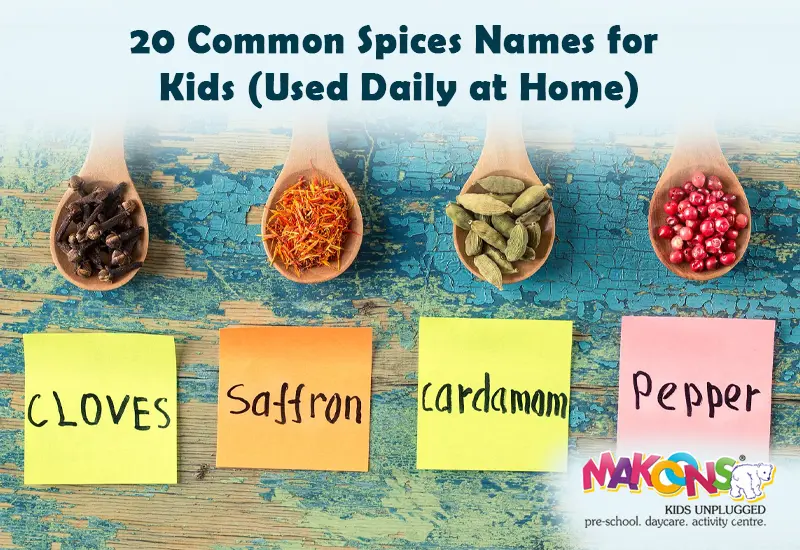
Children are curious by nature more so about the things they observe in everyday life. Learning in the kitchen is one of the most enjoyable locations and spices can be used as an entertaining experience to expose children to the world of colors, smells, and flavors. Children do not have to be taught names of spices like a lesson. It may occur during the process of cooking, during the work in the kitchen, or even during the playing.
Spices are used in most Indian homes and therefore they were ideal in early learning. These are typical Indian spices that we not only eat but we also share a culture. Let us discuss some spices that children usually see every day at home that they might not recognize by their name.
Reasons That Kids Should Learn About Spices
The knowledge about spices makes children:
- Build vocabulary
- Identify colors and textures.
- Understand food habits
- Relate the learning to reality.
When there is an easy and fun method of introducing children to the kitchen spices, children learn to find it easier and more memorable.
20 Names of Spices Are:
1. Turmeric (Haldi)
Turmeric is bright yellow and it is very easy to identify by kids. It finds application in the daily Indian cuisine. Parents will always say to kids that haldi makes us stay healthy.
2. Cumin Seeds (Jeera)
Cumin is a brown and small seed that is rich in smell. Children tend to witness jeera in smoking oil. It is an excellent spice in teaching sound and smell recognition.
3. Mustard Seeds (Rai)
Mustard seeds are minute and circular. When they are put in oil they pop and jump that kids find exciting. This is the reason it is one of the most enjoyable learning spices that children have.
4. Coriander Seeds (Dhaniya)
The seeds of coriander are light brown and round. They are fresh smelling and are usually pounded into powder at home.
5. Coriander Powder
Coriander seeds are used as coriander powder. It is also usually used on vegetables and curries. Children are able to learn about the possibility of a single spice to change form.
6. Red Chili Powder
Chili red powder is fiery red. The parents can tell that it is spicy, and that children tend to take less of it.
7. Green Cardamom (Elaichi)
Elaichi is little, green and sweet-smelling. It is frequently applied in candy and milk. Children like to recognize this spice through smell.
8. Black Pepper (Kali Mirch)
Black pepper resembles small black balls. The parents may tell them that it makes food a little hot and that it is good on cold and cough.
9. Cloves (Laung)
The Cloves are a dark brown; they are in the form of small nails. They are commonly served with rice and tea.
10. Cinnamon (Dalchini)
The sticks of cinnamon are brown and sweet in smell. Children love to have cinnamon sticks in their hands and to know that spices may be in the form of sticks as well.
11. Bay Leaf (Tej Patta)
Bay leaves are long and dry. They are put into the rice and curries to add flavours. Children are able to study leaf shapes using this spice.
12. Asafoetida (Hing)
Hing is pungent, and it is employed in extremely low quantities. Kids are told by their parents that hing is good for digestion.
13. Fenugreek Seeds (Methi Dana)
Methi seeds are little and yellow. They taste slightly bitter. At home, kids are often exposed to them being submerged in water.
14. Fennel Seeds (Saunf)
The seeds of fennel are green and sweet. It is easy to remember many kids who already eat saunf after meals.
15. Star Anise (Chakra Phool)
Star anise resembles a star, which is very interesting to children. It is an excellent means of learning and combining shapes.
16. Nutmeg (Jaiphal)
Nutmeg is round and brown. It is normally grated prior to usage. Parents also have a chance to demonstrate to kids how a single spice could be tough and tender at the same time.
17. Mace (Javitri)
Mace is a product of nutmeg that resembles dried strands of orange. Children like to hear about the fact that two spices grow on the same plant.
18. Dry Ginger Powder (Saunth)
Dry ginger powder tastes warm and brown in colour. Parents usually tell them that it is good for their health.
19. Sesame Seeds (Til)
Sesame seeds are small and white or black. They are applied in sweets and snacks. During activities, kids are so fond of counting them.
20. Curry Leaves
Curry leaves are green fresh leaves that are used in most of the houses. Children tend to assist in washing them hence the learning is natural.
Related Topics: Learn 50 Fruits and Vegetable Names in English and Hindi with Makoons Preschool
Edible Spice Names With Kids Fun Teaching Games
Parents can enjoy spice learning by:
- letting kids smell spices
- presenting actual spices rather than photographs.
- playing matching games
- allowing children to assist in the preparation of food.
These basic exercises make the list of Indian spices in kids an entertaining one.
Related Topics: Teaching Preschoolers All Body Parts Names in English
Final Thoughts
To educate children on the spices, there can be no books or flashcards. Even the kitchen is a classroom. Parents can teach the children by exposing them to spices names during their daily cooking activities.
All these typical Indian spices are some of the daily life aspect and as children learn them, they are sure and inquisitive. Real experiences enable the learning process to be more memorable and to be more interesting to children.
Cooking at home, spices are used on a daily basis, which can be a fantastic learning experience, and can relate food, culture and fun with patience and play.
What are some common spices names in English and Hindi?
Some common spices include Turmeric (Haldi), Cumin (Jeera), Cardamom (Elaichi), Cloves (Laung), and Cinnamon (Dalchini).
Why should kids learn spices names?
Learning spice names helps children improve vocabulary, recognize everyday kitchen items, and understand food culture.
How can children easily learn spices names?
Children can learn spices by seeing real spices in the kitchen, smelling them, and playing simple matching or naming games.
How many spices are commonly used in Indian kitchens?
Indian kitchens use many different spices such as turmeric, cumin, mustard seeds, fennel, and black pepper, which are part of everyday cooking.







 Twitter