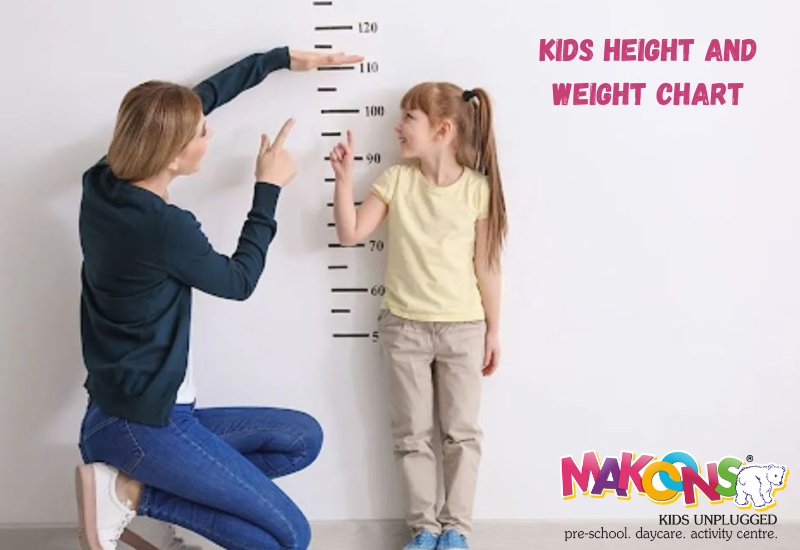
As parents, we celebrate every line we mark on the kitchen door and every extra pound our little ones gain. Yet, beyond the smiles and photos, tracking growth through a Kids’ height and weight Chart is far more than sentimental—the numbers offer a scientific view into your child’s nutrition, vitality, and whole-body health.
At Makoons Preschool, we believe those little figures hold whole chapters. That’s why at Makoons Preschool, we weave playful learning, joyful exploration, and attentive measure-ups into our everyday life. Together, we’ll decode what those charts reveal, why the lines might vary a bit, and how to nurture steady, happy growth, without the stress.
Why Tracking Growth Matters More Than You Think?
Tracking your child’s growth is more than a cute line on the fridge—it’s a quick check-in on wellness. A Kids’ Height and Weight Chart works like a growth diary of your child’s health, helping pediatricians notice:
Nutritional gaps: Is there enough iron, calcium, or those little vitamins?
Developmental whispers: A slow growth might hint at hormonal or genetic needs.
Long-term risks: Starting obesity or a lower weight now can create ripples into adult health.
At Makoons, we measure growth with giggles—cue the monthly “who’s the tallest” treasure hunt—so kids cheer at the numbers, never flinch.
Decoding the Kids’ Height and Weight Chart: A Simple Breakdown
What’s “Normal”? Weight and height chart for kids, it’s not an exact number, it’s a range! Growth isn’t one-size-fits-all. Here’s a height and weight chart according to age:
| Age | Girls (Avg Height) | Girls (Avg Weight) | Boys (Avg Height) | Boys (Avg Weight) |
| 2–3 years | 85–95 cm | 11–15 kg | 86–96 cm | 12–16 kg |
| 4–5 years | 100–112 cm | 15–20 kg | 102–115 cm | 16–22 kg |
See that spread? That’s why your pediatrician checks if your child stays in their curve, not just hitting one number.
Special Note: Girls Grow Differently!
An age-weight chart for females often shows girls gaining weight slightly faster in early childhood but growing more slowly post-age 10 vs. boys. And that’s okay!
5 Factors That Shape Your Child’s Growth Curve
1. Genetics (The Blueprint)
If you and your partner are tall, your child will likely follow suit! Ethnicity matters too—Indian kids may have different averages than global charts.
2. Nutrition (The Fuel)
Protein builds muscles. Calcium strengthens bones. Iron powers brains. At Makoons, our meal plans are designed by child nutritionists to include:
- Calcium-rich lassi or almonds
- Protein-packed dals and eggs
- Vitamin-heavy fruits like papaya and mango.
3. Sleep (The Growth Hormone Hour)
Did you know? Kids grow most during deep sleep! Preschoolers need 10–13 hours daily. Our daycare routines include quiet naps to recharge those growing bodies.
4. Activity (The Strength Builder)
Running, jumping, and dancing build muscle and bone density. Our outdoor playtime isn’t just fun—it’s fitness in disguise!
5. Health & Environment (The Support System)
Illnesses or stress can pause growth. Clean water, pollution-free spaces, and emotional safety matter. Makoons’ air-purified campuses and emotional wellness programs create safe havens for growth.
Red Flags vs. Green Lights: When to Relax or Reach Out
Don’t Panic If…
- Your child is smaller or lighter than average but growing steadily.
*(Example: If they’ve always been in the “25th percentile” – meaning 75% of kids their age are taller/heavier – but follow their own smooth curve, that’s their normal!)* - They temporarily lose or gain a little during/after illness.
(Appetite changes are common – growth usually bounces back!)
Do Consult a Pediatrician If…
- Growth stops or slows dramatically for 6+ months.
(Example: No height gain or weight change over half a year.) - Their measurements fall in the extreme low or high ends of the growth chart.
(Example: Below the “5th percentile” – meaning 95% of kids are taller/heavier – or above the “95th percentile”.)
Makoons’ Tip: We simplify growth tracking! Our biannual reports show your child’s progress in their own lane – with clear notes if we spot anything needing a doctor’s eye. No confusing terms, just caring insights.
Busting 4 Major Growth Myths
1. Myth: “Milk Alone Makes Kids Taller”
- Truth: Milk helps, but balanced diets win! Leafy greens, nuts, eggs, and whole grains are just as crucial.
2. Myth: “Heavy Kids Outgrow Their Weight”
- Truth: 70% of overweight kids become overweight adults. Early action prevents lifelong risks.
3. Myth: “Preschoolers Don’t Need Growth Tracking”
- Truth: Ages 2–5 are critical for setting lifelong health patterns.
4. Myth: “Growth = Only Height/Weight”
- Truth: Social, cognitive, and emotional growth are equally vital! Our ACMES curriculum at Makoons nurtures all dimensions.
How Makoons Makes Growth Tracking Joyful & Stress-Free?
At Makoons Preschool, we don’t Just Measure—We Nurture! Our Kids’ Height and Weight Chart approach is part of a bigger picture:
| What We Do | How It Helps Growth |
| Nutrition Plans | Balanced meals for bone/muscle health |
| Yoga & Outdoor Play | Builds muscle, coordination, and stamina |
| Emotional Safety | Less stress = better growth hormones |
| Parent Workshops | Teach growth charts + home nutrition |
Real Stories:
“My daughter was underweight at 3. With Makoons’ diet plan and growth tracking, she’s now thriving at the 25th percentile—and loves the ‘height chart’ games!” — Priya, Delhi parent.
Conclusion: Growth Isn’t a Race—It’s a Garden to Tend
A Kids’ Height and Weight Chart isn’t a report card—it’s a compass. It guides us to nourish, move, and celebrate each child’s unique journey. At Makoons Preschool, we pair data with joy: growth charts become games, meals turn into adventures, and every child blossoms at their own pace.
Ready to see your child thrive?
Visit Makoons to experience our holistic growth programs today!
Where Every Child Grows Strong—Inside & Out.
Read Also : Which Toys Are Best To Improve The Minds Of Children?







 Twitter