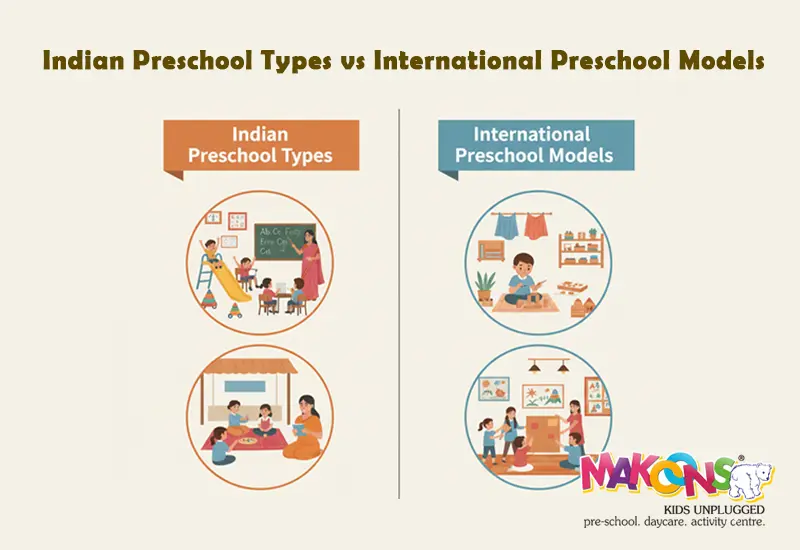
Preschool is a child’s first step into structured learning. Parents today have many options. Some preschools follow Indian systems. Others follow international methods.
This creates confusion. Which one is better? What is the real difference?
This blog explains Indian preschool types and international preschool models in a simple way. It helps parents understand teaching styles, curriculum focus, and learning goals. The aim is clarity, not promotion.
Why Preschool Education Matters?
Preschool education helps children between 2 and 6 years. It builds basic skills. These include language, motor skills, social behavior, and emotional balance.
A good preschool prepares children for formal school. It does not rush learning. It supports growth at the child’s pace.
Different countries follow different approaches. India has its own models. International systems bring global ideas. This makes preschool comparison important for parents.
Overview of Indian Preschool Types
India has many preschool formats. They vary in structure, teaching style, and cost.
Below are the main types of preschools found in India.
1. Traditional Indian Preschools
These are the most common. They are often neighborhood-based schools.
Key features:
- Fixed daily schedule
- Teacher-led classrooms
- Focus on alphabet and numbers
- Worksheets and written work
Children sit at desks. Teachers explain concepts. Parents often see fast academic progress.
This model suits families who value early structure.
2. Montessori Preschools in India
Montessori is popular across Indian cities. It follows a child-centered approach.
Key features:
- Self-directed learning
- Special learning materials
- Mixed-age classrooms
- Teachers act as guides
Children choose activities. They learn through hands-on work. There is less pressure. This is a major part of preschool curriculum India today.
3. Play Schools
Play schools focus on comfort and care.
They suit very young children.
Key features:
- Short class hours
- Songs, stories, and games
- Basic social interaction
- Minimal academic work
The goal is adjustment. Learning is informal. These schools prepare children emotionally.
4. CBSE or ICSE-Based Preschools
Some preschools align early learning with CBSE or ICSE boards.
Key features:
- Structured lesson plans
- Early reading and writing
- School readiness focus
- Teacher-controlled classrooms
These schools aim to ease the transition to formal schools. They appeal to academically focused parents.
Related Topic: Preschool Curriculum In 2026: What Schools Should Teach—And What They Shouldn’t
Overview of International Preschool Models
International preschool models focus on overall development. They are often inspired by global research.
These models follow global preschool standards. They value thinking skills and independence.
Let us explore the most common ones.
1. Montessori (International Format)
International Montessori is more flexible than the Indian versions.
Key features:
- Deep focus on independence
- Long uninterrupted activity time
- No exams or tests
- Individual progress tracking
Children move freely. They learn life skills early. The environment is calm and organized.
2. Reggio Emilia Approach
This model started in Italy.
It is gaining attention worldwide.
Key features:
- Learning through projects
- Strong focus on creativity
- Children’s ideas shape lessons
- Teachers observe and document learning
Art, discussion, and exploration are central. Children express their thoughts in many ways.
3. Waldorf Preschool Model
Waldorf focuses on imagination and rhythm.
Key features:
- No formal academics in early years
- Storytelling and pretend play
- Natural materials
- Fixed daily routines
Technology is avoided. Children learn through experience. Emotional balance is a priority.
4. Play-Based and Inquiry-Based Models
Many international schools use blended models.
Key features:
- Learning through questions
- Group activities
- Problem-solving tasks
- Teacher as facilitator
These models help children think. They encourage curiosity.
Related Topic: How to Choose the Right Preschool Curriculum for Your Child
Curriculum Comparison: India vs International
Curriculum is a major difference point.
Preschool Curriculum India
Indian preschool curriculum often includes:
- Alphabet recognition
- Numbers and counting
- Writing practice
- Rhymes and recitation
Progress is visible. Assessment is common. Parents see measurable output.
International Preschool Curriculum
International models focus on:
- Social skills
- Critical thinking
- Emotional growth
- Real-life learning
There are fewer worksheets. Observation replaces testing. Learning outcomes appear gradual.
Teaching Style Differences
Teaching methods differ clearly.
Indian preschools:
- Teacher explains
- Child listens
- Group learning
International preschool models:
- Child explores
- Teacher supports
- Individual learning paths
Neither is wrong. They serve different goals.
Classroom Environment
Indian classrooms are usually structured. Children sit in rows or groups. Activities are planned.
International classrooms are flexible. Children move freely. Learning zones are common. This affects the child’s comfort and confidence.
Related Topic: Curriculum Planning Tips for New Preschool Owners and Educators
Parent Expectations and Involvement
Indian preschools involve parents through:
- Homework
- Regular assessments
- Performance feedback
International models involve parents through:
- Observations
- Learning reports
- Discussions
The focus shifts from results to growth.
Cost and Accessibility
Indian preschool types are affordable. They are widely available.
International preschool models cost more. They need trained teachers and resources. Availability is mostly in urban areas. This impacts the choice for many families.
Cultural Influence on Preschool Education Models
Culture shapes learning.
Indian preschools reflect:
- Discipline
- Respect for authority
- Early academic success
International models reflect:
- Independence
- Expression
- Child rights
Parents should consider family values.
Which Preschool Model Is Better?
There is no single answer.
Indian models suit children who:
- Need structure
- Adapt well to routine
- Enter traditional schools
International models suit children who:
- Learn through exploration
- Need flexible pacing
- Show creative thinking
The child’s nature matters most.
Making the Right Preschool Comparison
Before choosing, parents should:
- Visit the school
- Observe classrooms
- Talk to teachers
- Understand teaching goals
Do not choose based on trends alone. Choose based on the child’s needs.
Final Thoughts
Both Indian preschool types and international preschool models have strengths. They follow different preschool education models. Each prepares children in its own way.
The best preschool is one that:
- Supports growth
- Builds confidence
- Respects childhood
Understanding this preschool comparison helps parents decide wisely.







 Twitter