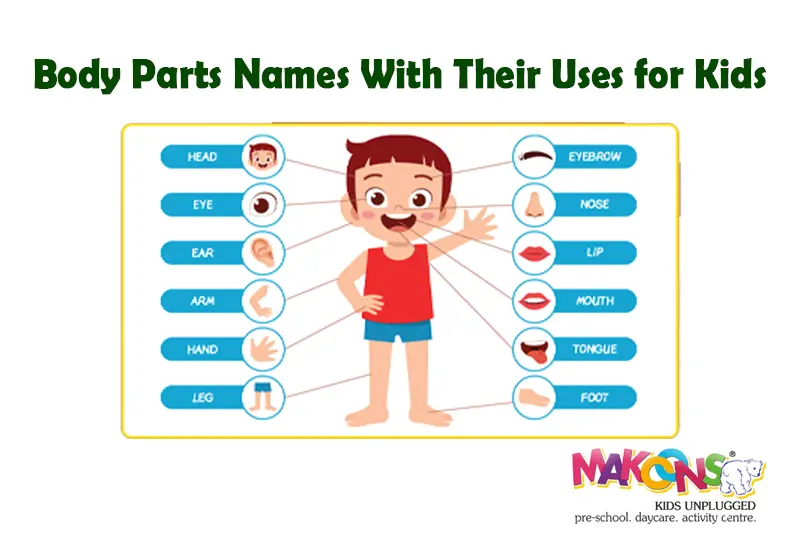
Educating children on their bodies is a significant measure towards creating awareness, confidence, and curiosity. Body parts teaching to children not only makes them learn how their bodies work but also facilitates communication, safety and early science.
The introduction of children to the parts of the human body in a simple and entertaining manner by parents and teachers enhances the vocabulary, observation and simple health awareness. Here, we shall discuss the names and application of body parts in child-friendly ways that can be used to help teach body parts in preschool activities and early science lessons.
The Importance Of The Teaching Of Body Parts
We have to first know why it is important before we discuss the list:
- Tells about pain or discomfort in an understandable manner.
- Develops body consciousness and self-confidence.
- Encourages healthy habits
- Favors early vocabulary development.
- Gives a basis to early science to children.
At home or in schools, interactive learning can be achieved using a simple body parts chart of kids.
1. Head
Use: The head has significant components such as the brain, eyes, ears, nose, and the mouth.
- Protects the brain
- Helps us think and learn
- Maintains the senses of sight, hearing and smell.
One of the most significant human body parts that children should know is the head since it regulates the most body functions.
2. Eyes
Application: Eyes assist us to look at the world.
- Recognize colors and shapes
- Read books
- Watch people and objects
When learning body parts in preschool, teaching kids about eyes is a good place to begin as vision is the most important part of learning and exploration.
3. Ears
Use: Ears help us hear sounds.
- Listen to music
- Hear conversations
- Be vigilant against danger (car horns etc.).
The ears are valued in honing listening skills, which provide fundamental science to children and learning in classrooms.
4. Nose
Uses: The nose assists us in smelling and breathing.
- Smell food and flowers
- Detect smoke or bad odors
- Help with breathing
You can also allow children to recognize various smells when learning how to use certain parts of the body when teaching the names and uses of the body parts.
5. Mouth
Use: The mouth assists in the eating and speech.
- Chew food
- Talk and sing
- Express feelings
The mouth has the role of working with the tongue and teeth. This is the explanation that makes the children understand the working of body parts that belong to kids.
6. Hands
Application: Hands assist us in holding, writing and creating.
- Draw pictures
- Pick up toys
- Wave hello
Daily activities cannot be done without hands. You can include hands in your kids body parts chart to make kids have an idea about movement and coordination.
7. Legs
Application: Legs assist us to move around.
- Walk and run
- Jump and dance
- Play sports
The lesson of the legs promotes physical activities and demonstrates the value of exercises to a healthy development.
8. Feet
Use: Feet assist us to stand and stabilize.
- Keep us steady
- Help us walk and run
- Support the entire body
Feet form a very amusing portion of the human body parts in children’s lessons since children enjoy games such as balancing or hopping.
9. Stomach (Tummy)
Purpose: The stomach aids in food digestion.
- Breaks down food
- Gives energy to the body
- Keeps us strong
Simple explanation of digestion presents the idea of early science to kids in a simple manner.
10. Heart
Application: The heart helps in pumping blood all over the body.
- Keeps us alive
- Moves blood to all body parts
- Beats all day and night
Children can also feel their heartbeat after running. This renders the study of the heart interesting and engaging.
11. Brain
Use: The brain is the control center of the body.
- Facilitates our thinking and problem solving.
- Stores memories.
- Controls our movements.
- Fosters discovery and new learning.
All parts of the body work with the brain. It tells our hand to clap, our legs to walk, our mouth to talk.
12. Teeth
Function: Teeth break up food before it can be swallowed.
- Bite and chew food.
- Enable us to express ourselves clearly.
- Let us smile, and let us be healthy!
Twice a day children should brush their teeth to make sure they are strong and clean.
13. Tongue
Use: The tongue is used to eat food and communicate.
- Describes the tastes of foods as sweet, sour, salty or bitter.
- Assists us in communicating clearly.
- Pushes food while eating.
Tongue is used in eating and speaking functions with the mouth and teeth.
14. Neck
Function: The neck is the area that joins the head to the rest of the body.
- Supports the head.
- Guides us in differing directions.
- Helps to see forward, backward, left and right.
15. Shoulders
Use: The shoulders are the joints that join the arms to the body.
- Help lift our arms.
- Simplify throwing and reaching.
- Assist upper body motion.
16. Arms
Use: Arms help us perform everyday activities.
- Carry school bags.
- Hug family members.
- Lift objects.
- Play games.
17. Elbows
Use: Elbows bend our arms.
- Make eating easier.
- Assist in writing and drawing.
- Allow us to throw and catch a ball.
Many activities in our daily life will be difficult if we do not have elbows.
18. Fingers
Use: Finger helps to hold and touch things.
- Use a pencil to write.
- Button clothes.
- Build with blocks.
- Have crayons and scissors available.
Children are developing their fine motor skills with the use of their fingers.
19. Skin
Temperature: The largest organ of the body is skin.
- Defends against germs.
- Gives us information about what is hot, cold, smooth or rough.
- Keeps our body safe from injuries.
Educating the children about skin also promotes proper skin hygiene.
20. Lungs
The function of the lungs is to provide us with air to help us breathe.
- Take in oxygen.
- Remove carbon dioxide.
- Provide the body energy for play and learning.
Help children to understand the function of lungs by asking them to take a deep breath and slowly breathe out.
Also Read: Top 10 Fruits to Eat During Summer Season
Bones And Muscles
The bones and muscles work together to help us move.
Bones
- Give shape to our body.
- Keep vital organs such as the brain and heart safe.
- Help us stand tall.
Muscles
- Pull on bones to make movement.
- Assist us in smiling, jumping, running and climbing.
- Make us feel the energy all day long.
Well-balanced nutrition, physical activity and adequate rest maintain strong bones and muscles.
External vs. Internal Body Parts
The first concept children can learn is that our body has external parts that we can see and there are parts within our body that work.
External Body Parts
These are the parts that we can see and touch:
- Head
- Eyes
- Ears
- Nose
- Mouth
- Neck
- Shoulders
- Arms
- Elbows
- Hands
- Fingers
- Legs
- Knees
- Feet
- Toes
- Skin
These parts of the body enable us to move, communicate, play, eat and explore the world around us.
Internal Body Parts
These are within us and help us stay healthy each day.
- Brain – helps us to think, learn and remember.
- Heart – pumps blood around the body.
- Lungs – to breathe oxygen.
- Stomach – Digests food.
- Bones – Make our body firm and strong.
- Muscles – make us move and active.
Children are taught the difference between external and internal body parts which forms the basis of their early learning in science.
Also Read: Essential Hygiene Practices Every School-Going Child Must Know
How The Parts Of The Body Work Together?
Our body is a team. All parts of the body have a purpose and each works with the other.
For example:
- The eyes see a toy.
- The brain interprets the eyes’ message.
- The legs stand as an aid to walking toward it.
- They are picked up by the arms and hands.
- It is held securely in the fingers.
- To supply energy, the heart pumps blood.
- The lungs assist us in breathing when we are active.
If all of our body parts are functioning together then we can enjoy all kinds of activities and games, learn and eat and we can run and dance and play.
Healthy Habits To Make Our Body Parts Strong
There are some simple things children can do to keep their bodies healthy.
- Wash hands before eating and after using the washroom.
- Brush your teeth twice a day.
- Take a bath regularly.
- Drink milk, eat fruits, vegetables and other nutritious foods.
- Hydrate and drink fluids.
- Do some form of exercise or play outside every day.
- Get an adequate amount of sleep every night.
- Use a bike helmet when riding bicycles and seatbelts when driving or travelling in a vehicle.
All parts of the body are strong and functional as part of small healthy habits.
Body Hygiene Tips For Kids
Cleanliness is key to staying healthy and refreshed.
Teach children to:
- Wash hands with soap for at least 20 seconds.
- Cut their nails regularly.
- Wear clean clothes every day.
- Cough and sneeze into the upper inside of their arm.
- Keep their ears, face and feet clean.
- Brush and floss their teeth regularly.
- Eat nutritious food and drink clean water.
Maintaining proper hygiene is one of the simplest means of keeping healthy.
Personal Safety And Private Body Parts (Age-Appropriate)
Children should be made aware that all parts of their bodies are significant and need to be valued.
There are parts of the body that are “private,” which are those that are covered by a swimsuit or underwear. Except for when:These parts are not to be touched or viewed by others:
- Parents/carers support bathing or dressing.
- A doctor is examining them and the person who is trusted is with them.
Helping children to learn the appropriate names of body parts will help them communicate if they feel uncomfortable.
Body parts: Fun Activities Teaching Children
When learning is playful, more of it can be effective. The following are the interesting ways of knowing body parts in preschool style:
Sing Songs
- Head, Shoulders, Knees and Toes.
- Action music that entails pointing out body parts.
Use Coloring Activities
- Present a printable chart of body parts of kids.
- Let children color each part
Play Matching Games
- Pair words of body parts with images.
- Play flashcard memory games.
Include Movement
- Ask kids to touch their nose
- Jump using both legs
- Clap hands together
Such activities ensure that it is fun and easy to remember the names and uses of body parts.
Understanding Good Touch And Bad Touch
Kids should be able to be told about safe and unsafe touch in a gentle and reassuring manner.
Good Touch
A good touch makes a child feel safe, loved and comfortable.
Examples include:
- A hug from my parents.
- Hand in hand on crossing the road.
- A big hug from a teacher or friend.
Bad Touch
When a child is touched the wrong way, it causes the child to feel scared, uncomfortable, confused, and/or unsafe.
Teach children to:
- Say “No” loudly.
- Get out of the situation.
- Report it to a trusted adult ASAP.
Remind children that if they feel something is not right, it’s ok to ask for help.
You May Like Reading: Simple Daily Activities to Improve Your Child’s Vocabulary at Home
Why It’s Important To Use Correct Body Part Names?
Children learn to use correct names for their body parts when they:
- Improve vocabulary.
- Be responsive and efficient with parents, teachers, and physicians.
- Accurately learn scientific concepts.
- Are comfortable discussing their bodies.
- Communicate the presence of pain, injury, or unsafe situations more effectively.
Correct names and not nicknames also help to develop healthy body awareness at an early age.
Age-Wise Learning Guide (2-5 Years)
Children learn about their bodies at various times. This is a parent/teacher guide.
Age 2 Years
- Identify the basic parts of the body including eyes, nose, ears, mouth, hands and feet.
- Point to parts of the body when prompted.
- Enjoy action songs like Head, Shoulders, Knees and Toes.
Age 3 Years
- Know more body parts like neck, shoulders, fingers, elbows, tummy, knees.
- Start to discuss what the different body parts do.
- Identify body parts from pictures.
Age 4 Years
- Learn about basic internal body structures, such as the heart, lungs, brain and stomach.
- Teach hygiene practices such as handwashing and tooth-brushing.
- Learn about external and internal parts of the body.
Age 5 Years
- Know how the parts of the body function as a whole.
- Understand healthy lifestyle, physical activity and nutrition.
- Start to learn about personal safety, private body parts and when something is not right to report to a trusted adult.
Advantages Of Getting Body Parts Educated
There are numerous long-term benefits of teaching body parts to kids:
- Enhances communicational abilities.
- Develops self-confidence in social environments.
- Encourages independence
- Promotes a healthy and safe environment.
- Enhances the science bases.
Using children’s knowledge on parts of human bodies, children are also more aware of personal space and body safety.
Basic Preschool Body parts Action Plan
Here is a quick plan on a weekly basis:
Day 1: Head and face parts
Day 2: Hands and arms
Day 3: Legs and feet
Day 4: Internals such as heart and stomach.
Day 5: Practice with games and songs.
The repetition makes children remember the names of body parts and can be used more effectively.
Final Thoughts
The lesson on learning body parts names and uses is not just a lesson about vocabulary. It is the start of the realization of how our bodies work and how we should take care of them. Introducing body parts to kids in the form of songs, games, and other interactive activities will make kids learn naturally and gladly.
These types of exercises with the help of a plain kids body parts chart and fun games will help in learning body parts preschool programs and laying a sound background in early science in the minds of kids.
Keep in mind that, when children are incurious and playing they learn best. So make every ordinary occasion a learning occasion – point at your eyes when you are reading, clap your hands when you are playing, count your toes when you are going to bed.
The human body is a marvel and educating kids about it is the beginning point towards healthy and confident development.







 Twitter