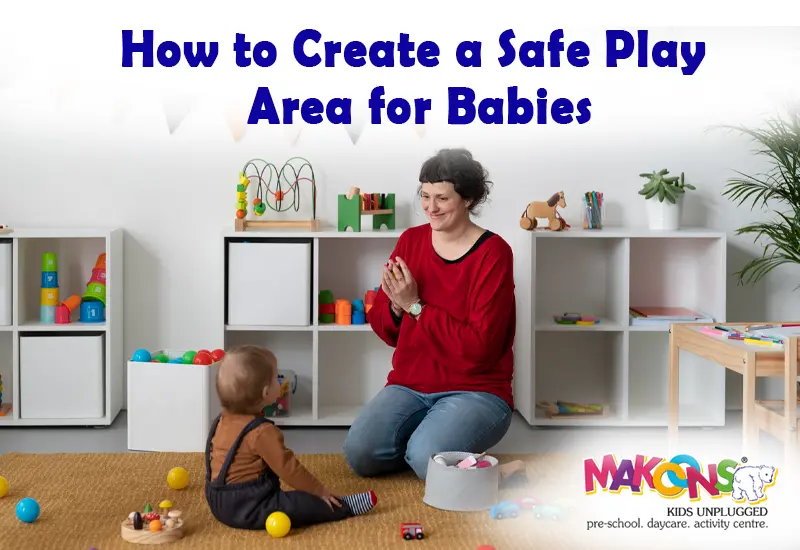
A child basically learns via games. The game is the best means of growing, exploring, and finally gaining trust for babies. But playtime must always be supervised and safe. A safe and well-designed play area for babies minimizes hazards and reassures parents. It further allows babies to move, crawl, and learn without danger. This guide will provide you with easy methods to create a home that is safe, clean, and fun play area for your child.
Why a Safe Play Area Is Important?
Babies are curious by nature. They touch, pull, chew, and crawl everywhere. This makes baby safety at home a top priority. A safe space lets your baby explore without fear of injury. It also helps build independence. Safe-environment infants tend to be more engaged in the activity and acquire the skill at a faster rate. Besides, a properly created play space will also aid in acquiring good habits right from the start.
Choosing the Right Location
Select a calm area of your residence. Steer clear of places beside staircases, cooking, or washing areas. Pick a spot that has decent lighting. Ensure that the surface is tidy and moisture-free. This area will be the primary play zone for your little one.
This is the initial move to set up safety zones for children. The site must be free from pointedly designed or unsafe furniture, glass tables, and heavy things that may fall.
Baby Proof the Space
Before placing toys, make the area safe. This is where baby proofing tips become very useful.
- Cover all electric sockets.
- Remove loose wires and cords.
- Use corner guards on sharp edges.
- Fix heavy furniture to the wall.
- Use safety gates near stairs.
These simple steps keep your baby safe while crawling or standing.
Use Soft and Safe Flooring
Wood or tiles are crucial to clear one’s mind. Babies often fall while learning to stand, crawl, and especially walk. Use carpets or might-have mats for extra padding. Foam play mats work very well. They reduce the risk of injury.
This also helps in setting up a toddler play zone setup that is comfortable and safe. Avoid slippery rugs. Make sure the mat stays in place.
Related Topic: How to Design a Safe & Hygienic Daycare Centre: A Complete Infrastructure Blueprint
Pick the Right Toys
Toys should match your baby’s age. Avoid small parts that can be swallowed. Always choose safe toys for babies that are:
- Soft and lightweight
- Made of non-toxic material
- Easy to clean
- Free of sharp edges
- Do regular checks. Throw away broken toys. Wash toys often to keep germs away.
Add Simple Indoor Play Ideas
Babies do not need fancy toys. Simple indoor play area ideas can keep them active and happy.
You can add:
- Soft blocks
- Colorful rattles
- Musical toys
- Activity boards
- Soft books
Rotate toys every few days. This keeps the area fresh and exciting.
Related Topic: What Makes a Preschool Classroom Truly Supportive for Children?
Create a Preschool-Style Safe Environment
A preschool safe play environment focuses on safety, structure, and freedom. You can copy this idea at home.
- Keep toys in low bins.
- Label storage boxes.
- Separate play zones from sleep zones.
- Keep cleaning wipes and tissues nearby.
This setup teaches babies to stay organized as they grow. It also helps them move easily within a safe boundary.
Set Up a Clear Toddler Play Zone
As your baby grows, crawling turns into walking and running. A proper toddler play zone setup becomes very important.
- Use soft fences or playpens.
- Add push toys for support.
- Keep climbing items low.
- Leave enough space for movement.
Make sure the area has no choking hazards. Keep small objects out of reach. Always supervise active play.
Keep the Area Clean and Safe
Cleanliness is essentially a safety issue when it comes to your baby at home. Since babies tend to put everything in their mouth, a dirty play area can give rise to infections.
- Wipe the floor daily.
- Clean toys every week.
- Keep pets away during playtime.
- Do not allow outdoor shoes in the play area.
These habits keep your baby healthy and safe.
Teach Safe Play Habits Early
Babies learn by watching. Show them how to play safely. Clap when they play gently. Redirect them if they throw toys or hit objects.
This helps in creating safe spaces for kids, not just physically, but behaviorally too. As they grow, they will understand boundaries.
Use Storage to Reduce Mess
Clutter can be dangerous. Toys lying around can cause slips and falls. Use simple storage ideas:
- Toy baskets
- Wall shelves
- Soft storage boxes
Teach your child to put toys away after playtime. This keeps your safe play area for babies neat and risk-free.
Keep It Fun and Stress-Free
A safe play area should not feel like a cage. It should feel warm and welcoming. Add soft colors. Use cheerful toys. Add small cushions. Talk, sing, and play with your baby.
Fun and safety can go together. When babies feel happy, they explore more and learn better.
Mistakes to Avoid
- Avoid keeping heavy decor items near the play area.
- The play zone should not be located next to curtains or blind cords.
- Do not fill the place with an excessive number of toys.
- Don’t allow hard plastic toys with jagged edges.
Implementing these minor measures makes a significant contribution to the baby’s safety in the house every day.
Related Topic: Explore Fun Activities for Toddlers in School: 0-4 Years Old
Conclusion
Creating a play area for your baby is not hard. It only needs care and simple planning. A well-designed safe play area for babies supports growth, learning, and joy. Use proper baby proofing tips to remove risks. Add smart indoor play area ideas to make it fun. Build a preschool safe play environment at home with structure and safety. Focus on a good toddler play zone setup as your baby grows. Always choose safe toys for babies and work on creating safe spaces for kids every day.







 Twitter