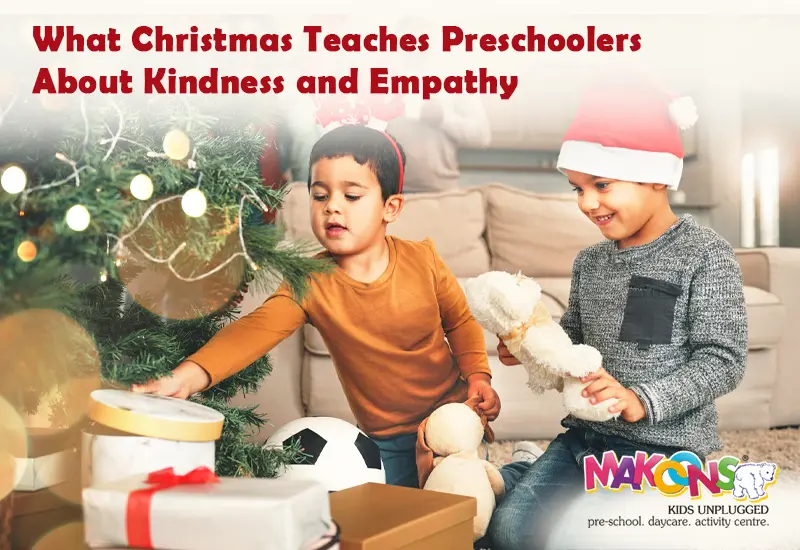
Christmas is a dreamy festival for little ones. Shining lights are everywhere. The air is full of singing. People unite. For little kids, Christmas is not only about sweets and presents. It is a time of learning. A good number of these lessons are the ones that build their character and thinking.
The festive period is a key contributor to the social development of preschool children. It softly shows the little ones how to be caring, sharing, and tolerating. All these tiny lessons allow the children to develop their morals to be good, and simply and powerfully most of the time.
Let us take a look at how Christmas is a practical “use it or lose it” experience in terms of teaching kindness and empathy to the very young ones.
Understanding Christmas Through a Preschooler’s Eyes
Preschoolers see the world in small moments. They notice smiles, hugs, and warm actions. Christmas offers many such moments. Children see parents helping others. They hear stories about giving. They feel joy when sharing time with family.
These small experiences help children learn big ideas. One key idea is caring for others. This is where Christmas values for preschoolers begin to take shape.
Kindness Starts With Simple Actions
Kindness does not need big words or big acts. For preschoolers, kindness is very simple. It is sharing a toy. It is saying thank you. It is helping a friend who feels sad.
During Christmas, these actions happen more often. Children may help decorate the tree together. They may share sweets with siblings. They may make cards for family members.
Each small act teaches that being kind feels good. Over time, this becomes part of their behavior. This is how kindness and empathy in early childhood grow naturally.
Related Topic: 20+ Games to Play on Christmas Day with Kids To Spend this December
Sharing Teaches Care and Patience
Christmas often includes sharing. Children share toys with visiting cousins. They wait for their turn to open gifts. They help set the table for guests.
Sharing is not always easy for young children. But Christmas makes it meaningful. When they share during a happy time, they connect sharing with joy.
This supports teaching empathy to young children. They begin to see that others also have feelings and needs. They learn that giving can make others happy too.
Stories That Build Empathy
Christmas stories play a big role in early learning. Many stories talk about kindness, love, and helping others. Preschoolers enjoy simple stories with clear messages.
When children hear stories about caring characters, they learn to relate. They understand how others feel. They see the results of kind actions.
Listening to such stories supports moral development in preschoolers. It helps them tell right from wrong in a gentle way. Stories make these lessons easy to remember.
Giving Without Expecting Anything Back
Gift-giving has great importance during Christmas celebrations. However, the little ones may consider the whole matter from a different angle – the giving side. By helping the kids with the giving process, adults manage to convey very important messages.
They are taught to consider the other person’s preferences. They are also taught to give without expecting anything in return. And thus, empathy is developed.
The whole process is a very proper way of teaching Christmas values to the little ones. Kids discover that their joy can come from seeing others happy.
Helping Others During the Festive Season
Christmas often includes helping people in need. Families may donate clothes. They may share food. They may help neighbors.
When preschoolers see this, they learn by watching. They understand that not everyone has the same things. They begin to feel concern for others.
This awareness is a key part of preschool social development. It helps children understand the world beyond themselves. It builds compassion naturally.
Family Time Builds Emotional Bonds
Christmas time is a time when family members come closer. There are plenty of things to do: eating, playing, and performing rituals. Children’s safety and love are guaranteed through these very moments.
The north pole of love makes the south pole of children cold, unable to show love to others. It is a sign of emotional development, and it also allows them to show love and concern.
A very close-knit family is like a tree that nurtures and spreads kindness and empathy in kids’ lives. Security in the family makes the child more likely to show kindness and understanding.
Related Topic: 20 Christmas Activities that Kids Will Love This Festive Season
Learning to Say Sorry and Forgive
With excitement comes small conflicts. Preschoolers may argue over toys or treats. Christmas becomes a chance to guide them gently.
Parents and teachers can show how to say sorry. They can show how to forgive. These moments teach emotional skills.
This supports teaching empathy to young children. Children learn to understand feelings on both sides. They learn that mistakes can be fixed with kindness.
Role of Teachers in Teaching Christmas Values
Preschool teachers play a crucial role during the Christmas season. They create a warm and inclusive space. They encourage sharing and teamwork.
Group activities help children work together. Simple discussions help children express feelings. Teachers guide them with patience. These efforts support moral development in preschoolers. Children learn social rules in a safe and caring environment.
Celebrating Differences With Respect
Not all families celebrate Christmas the same way. Some may celebrate differently or not at all. Preschoolers begin to notice these differences.
Christmas can be used to teach respect. Children can learn that everyone is unique. They can learn to accept and include others.
This lesson supports preschool social development. It teaches empathy by helping children understand different traditions and feelings.
Gratitude Builds a Kind Heart
Christmas is a good time to talk about gratitude. Preschoolers can learn to say thank you. They can learn to appreciate what they have. Gratitude helps children focus on positive feelings. It reduces frustration and builds contentment.
This simple habit supports Christmas values for preschoolers. It encourages kindness and appreciation in daily life.
Lasting Lessons Beyond Christmas
The Christmas time overall was a period of teaching and learning. Kindness and understanding are the two main traits that children inherit as adults.
The first mentioned traits become a child’s character. They are visible in the child’s behavior at school and home. Besides, they impact social and emotional development. Performing kindness during the first years of life means the whole moral development of toddlers is influenced. Such values are characterized as the foundation of the kids’ future relationships.
Conclusion
For preschoolers Christmas is not just a feast, it is a learning period. It tells the kids about good virtues like kindness, empathy, sharing and care.
Kids learn through tales, small actions, and family gatherings how to treat their friends. These teachings are increasingly being recognized as the means of fostering kindness and empathy in the very young.
If we lovingly lead the children during Christmas, we will be molding the kind and loving ones. Their values will be present even when the decorations are no longer.







 Twitter