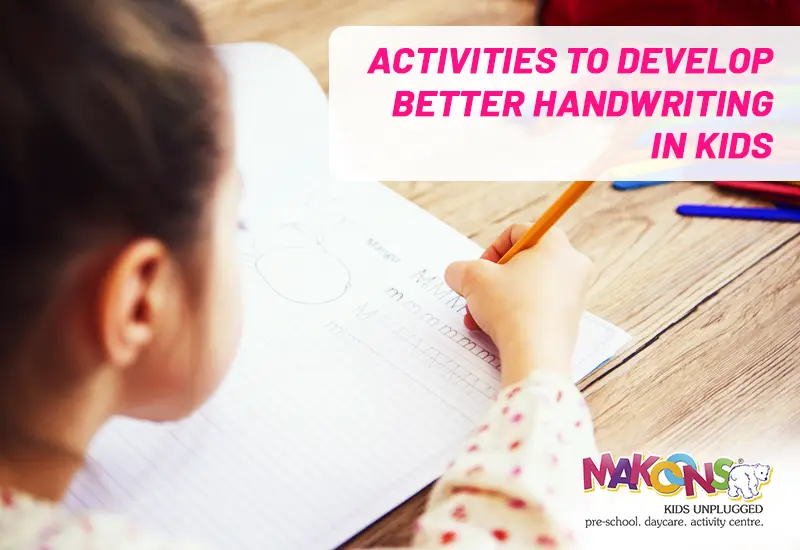
Handwriting is an important skill. Kids use it every day in school. Good handwriting makes work neat and easy to read. It also helps children feel confident.
But handwriting takes practice. Children need time and fun activities to learn. With the right support, every child can improve. In this blog, we will share 10 simple handwriting activities for kids. These are easy to do at home or in school.
Read more : Top Pre-Writing Activities for Preschoolers to Enhance Skills
1. Tracing Letters and Shapes
Tracing is the first step in writing. Kids follow dotted lines to make letters or shapes. It shows them how to move their hands.
Start with big letters. Move to smaller letters later. You can also add numbers or pictures. Kids can trace stars, circles, or hearts.
Tracing builds hand control. It also teaches pencil movement. Use colorful pencils or markers to make it fun.
2. Playing with Clay or Dough
Strong fingers are important for neat writing. Clay and dough help build strong hands. Kids can roll, squeeze, and press the clay.
Ask them to make letters with it. For example, roll clay into a snake and shape it into “A.” This makes learning letters playful.
Clay work is a fine motor skills activity. It trains fingers and hands. Strong hands make writing easier.
3. Coloring Inside the Lines
Coloring is not just for fun. It also teaches focus. Kids learn to control their hands while coloring inside lines.
Start with simple pictures. Then move to smaller spaces. Give them crayons first. Crayons need pressure, which builds finger strength.
Coloring improves neatness. It also makes kids calm and happy.
4. Pencil Control Worksheets
Good handwriting depends on pencil control. Worksheets with lines and curves help a lot. Kids can trace zigzags, waves, or spirals.
These shapes train hand movement. They also teach pressure control. Once kids master these, writing letters feels easier.
Make your own worksheets at home. Draw dotted lines and let kids connect them. Turn it into a game. Time them or count how many they can do.
5. Writing in Sand or Salt
Paper is not the only way to write. Sand, rice, or salt trays are exciting. Kids use their fingers to draw letters.
This feels fun and different. It also helps kids remember letter shapes. You can also give them a stick or toy to write with.
Sensory writing is great for preschool writing exercises. It is playful and stress-free.
6. Finger Exercises and Games
Fingers need to be strong for good writing. Simple games can help.
Ask your child to squeeze a sponge. Let them pick beads with tweezers. They can also button clothes or string beads.
These games are fun. They also build fine motor skills. Strong fingers mean smoother and faster writing.
7. Copying Words and Sentences
Once kids know letters, let them copy words. Start with easy words like “cat” or “dog.” Slowly move to small sentences.
Copying helps kids learn spacing. They see how letters join together. They also practice size and neatness.
Keep sentences short and fun. For example, “I like cake” or “The sun is hot.” Fun words keep kids interested.
8. Writing with Chalk or Markers
Big writing is easier at first. A chalkboard or whiteboard is perfect. Kids can write large letters before moving to small ones.
Chalk is helpful. It makes kids press harder, which builds strength. Later, ask them to make the letters smaller.
You can also use a paintbrush with water. Kids can “paint” letters on a wall or floor. It is clean and fun.
9. Story Writing or Journals
Older kids can practice with stories or journals. Let them write about their day. Or ask them to write a short story.
Do not worry about mistakes at first. The goal is practice. Daily writing builds speed and comfort.
Encourage them to decorate their pages with drawings or stickers. This makes writing more exciting.
10. Handwriting Games
Games make writing fun. They also keep kids motivated.
Try an alphabet race. Show a flashcard and ask the child to write the letter fast. Play word treasure hunt. Hide words around the room and let them copy each word they find.
Another game is “connect the dots.” Draw dotted letters. Kids connect the dots to make the letter complete.
These games are playful. Kids practice without pressure.
Extra Tips for Parents and Teachers
- Use the right pencil. Short, thick pencils are best for beginners.
- Watch posture. Kids should sit straight with feet flat on the floor.
- Keep practice short. Ten minutes a day is better than long sessions.
- Encourage effort. Praise your child for trying, not just for neat writing.
- Show good writing. Kids copy what they see. Write neatly when they are around.
Why Handwriting Matters?
Some parents ask, “Do kids still need good handwriting?” The answer is yes. Even in the digital world, handwriting is important.
Writing by hand helps kids learn better. It builds memory and focus. It also improves spelling and reading.
Handwriting practice for children is not just about neat letters. It is also about patience, discipline, and confidence. Kids feel proud when they see their neat work.
Final Thoughts?
Handwriting is a skill. Like all skills, it improves with practice. These 10 activities, tracing, clay play, coloring, sand writing, copying, and games, are simple and fun.
As parents and teachers, our job is to guide and encourage. Practice should feel like play, not a chore. With daily effort, kids will improve slowly.
Neat handwriting takes time. Be patient. Celebrate small wins. Soon, your child will write with confidence and joy.
So start today. Choose one or two activities. Make handwriting practice a part of daily life. Watch your child’s skills grow step by step.
Read Also : Fun and Safe Science Activities for Little Learners







 Twitter